Parents and educators seek simple, durable alphabet cards to spark early literacy. The following five products offer bold visuals, uppercase and lowercase letters, and engaging activities designed for toddlers and preschoolers. Each option emphasizes letter sounds, recognition, and hands-on learning, helping young children connect letters with words and objects. Below, discover key features, image previews, and practical guidance to choose the right set for your child’s pace and goals.
| Product | Brand | Notes |
|---|---|---|
| School Zone Alphabet Flash Cards | School Zone | 52 unique illustrations; bold letters; includes uppercase and lowercase; thick cardstock |
| Merka Toddler Flash Cards | merka | 58 double-sided cards; includes alphabet, colors, shapes, numbers |
| Carson Dellosa 54 Alphabet Flash Cards | Brighter Child | 26 uppercase and 26 lowercase; full-color images; bonus activity cards |
| THE BAMBINO TREE Alphabet Flash Cards | THE BAMBINO TREE | 5-level SATPIN system; separate uppercase/lowercase cards; teaching ideas |
| Mudpuppy My ABC’s Ring Flashcards | Mudpuppy | Double-sided; ring binder; colorful everyday object illustrations |
The selections above balance traditional flash card concepts with interactive features that support memory, phonics, and early word recognition. Readers will find a mix of single-letter focus, double-sided formats, and engaging visuals suitable for home use, preschool classrooms, and travel activities.
School Zone Alphabet Flash Cards

School Zone’s Alphabet Flash Cards are designed to engage toddlers with vibrant, bold letters and friendly visuals. The set covers the full alphabet with both uppercase and lowercase letters and features 52 distinct illustrations that link sounds to familiar objects, helping children associate K with kite, for example. The thick, glossy cardstock adds durability for daily use and travel. A practical option for parents seeking a straightforward entry into letter recognition, phonics, and basic word-building activities.
Merka Toddler Flash Cards

Merka’s 58-card set expands beyond the alphabet to include colors, shapes, and numbers, providing a compact toolkit for early learning. These double-sided cards promote interaction, reinforce uppercase and lowercase letter recognition, and foster vocabulary development in toddlers aged 1-4. The variety supports repeated practice and flexible activities—ideal for combined literacy and concept instruction in home or preschool settings.
Carson Dellosa 54 Alphabet Flash Cards
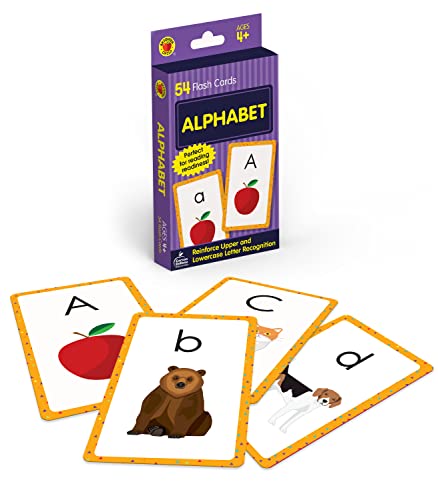
Carson Dellosa’s alphabet cards combine thorough letter coverage with practical learning aids. The kit includes 26 uppercase and 26 lowercase cards, each paired with full-color images to reinforce beginning sounds. Bonus resource cards offer game ideas and activities for extended learning. The double-sided design emphasizes recognition and phonics, supporting both PreK and kindergarten learners as they build reading readiness and language fluency.
THE BAMBINO TREE Alphabet Flash Cards

The Bambino Tree introduces letters through a five-level SATPIN system, easing learners into letter sounds with color-coded progress. Separate uppercase and lowercase cards support matching activities, while included mini-games and teaching methods enhance classroom and home learning. This set is designed for preschool through early elementary learners, combining structured practice with engaging, teacher-inspired strategies to boost retention and motivation.
Mudpuppy My ABC’s Ring Flashcards

Mudpuppy’s Ring Flashcards present a durable, double-sided design on a convenient ring binder. Cards feature everyday object illustrations tied to each letter, supporting visual recognition and word association. The ring mechanism makes it easy to flip through cards during quick practice sessions or travel—beneficial for parents seeking portable, tactile learning tools that reinforce letter-sound connections and early vocabulary in a multisensory format.
Buying Guide: Key Purchase Considerations And Comparisons
- Name and scope: Decide whether you want a traditional alphabet focus or a broader early-learning set that includes colors, shapes, and numbers. Sets like Merka combine multiple concepts, while others emphasize pure letter recognition and phonics.
- Card design: Consider uppercase vs. lowercase coverage, font clarity, and illustrations. Bold, high-contrast letters with clear object associations aid quick recognition for toddlers.
- Durability and size: For toddlers, sturdier cardstock and slightly larger cards reduce wear and tear and make handling easier. If you plan frequent travel, a ring binder or compact packaging improves portability.
- Learning supports: Look for sets that include activities, games, or teacher-friendly ideas. Bonus cards or included teaching tips can extend use beyond simple flash cards.
- Age suitability: Ensure the product aligns with your child’s developmental stage. Some sets target ages 1-3, others 3-5 or 4-6; choose accordingly for optimal progress.
- Progression: A five-level system or sequential learning path helps track improvement over time. If progress indicators are not explicit, supplement with guided activities to structure practice.
- Durability vs. value: Higher-quality sets may be more expensive but last longer and include more features (double-sided cards, images, and activity suggestions). Balance budget with expected usage.
- Compatibility with routines: Consider how the cards fit into existing routines—short daily sessions, classroom centers, or travel activities. Portability and quick setup support consistent practice.
- Brand and reviews: Reputable brands and user feedback can indicate durability, printed image quality, and age-appropriateness. Cross-check multiple products to identify common strengths.
Across these options, the common thread is supporting early literacy through engaging visuals, letter recognition, and phonics practice. When selecting, align the set with your child’s preferred learning pace, whether they benefit from targeted letter-by-letter work or a broader, activity-rich approach. Supplementary activities—like tracing letters, naming objects, or short reading games—can further reinforce concepts introduced by the cards.