Parents and caregivers looking for engaging, educational, and durable toys can explore a curated mix of cause-and-effect, fine motor, sensory, and pretend-play options. The following five products are selected for compatibility with early learning goals, safety, and age-appropriate development. Each item combines hands-on interaction with cognitive growth, making them suitable for babies, toddlers, and young kids alike.
Summary of Selected Products
| Product | Brand | Focus Area | Age Range |
|---|---|---|---|
| Battat – Cause And Effect Toy | Battat | Color sorting, cause-and-effect, fine motor | 18+ Months |
| Toddlers Montessori Wooden Educational Toys | KMTJT | Shape sorting, color and fruit recognition | 1-3 Years |
| iPlay, iLearn Press to Go Car | iPlay, iLearn | Sensory play, pretend mobility, fine motor | 6-18 Months |
| Joyreal Montessori Busy Board | Joyreal | Fine motor, dexterity, tactile exploration | 18+ Months |
| Wolmund Toy Learning Play Cell Phone | Wolmund | Interactive sounds, color and light cues | 12+ Months |
Battat – Cause And Effect Toy: Pop Up Pals
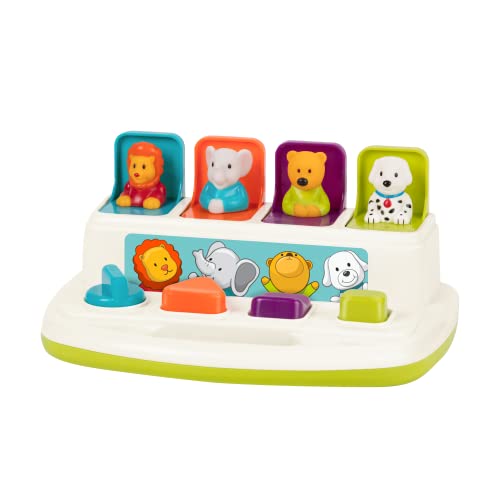
The Battat Cause And Effect Toy blends color sorting with engaging popping action, teaching young children basic physics concepts through play. Press a button and a friendly animal pops up, offering a tangible cue for cause-and-effect. The toy features a variety of buttons—turn, press, flip, and slide—encouraging exploration of fine motor control and hand-eye coordination. As children manipulate the pieces, they discover different animals and color patterns, reinforcing early cognitive and spatial skills in a safe, compact design.
Key educational benefits include understanding cause-and-effect relationships, color recognition, shape exploration, and the development of early problem-solving skills. The toy’s durable construction makes it suitable for busy toddlers and early preschoolers, while its compact size supports independent play sessions or cooperative play with caregivers. This product is well-suited for light travel or classroom centers, offering sensory variety without overwhelming clutter.
Toddlers Montessori Wooden Educational Toys

This Montessori-inspired wooden set emphasizes hands-on learning with 12 fruit blocks, 8 carrots, 10 worms, and a five-sided cart for sorting and stacking. Crafted with large particles, polished edges, and non-toxic water-based paint, this toy supports safe exploration for toddlers. The design encourages color and shape recognition, early math concepts, and fine motor development as children sort, match, and assemble different pieces. The range of play methods keeps youngsters engaged while reinforcing basic cognitive schemas and hand-eye coordination.
Educational potential includes fruit and color recognition, shape matching, and sorting activities, all built around a variety of game modes. These activities promote concentration, memory, and problem-solving in a playful context. The wooden material offers durability and a tactile experience preferred by many caregivers seeking age-appropriate, long-lasting toys. The product also supports early STEM-related play through manipulatives that invite experimentation and discovery.
iPlay, iLearn Press to Go Car Toy

The Press to Go Car is designed for infants and young toddlers, featuring a rounded-edge ABS construction and a battery-free action that activates with a simple press. Our design emphasizes safety and ease of use, with no small parts and smooth surfaces suitable for curious babies. Bright colors and cartoon characters stimulate visual perception and early cognitive development, while the mechanical “press to go” function supports cause-and-effect learning and hand strength development. It’s a practical option for fostering independent play and initiating pretend play scripts.
Strengths include safe materials, simple operation, and immediate feedback from motion. This toy also supports sensory development through bright colors and dynamic motion cues. Parents may appreciate its portability for car rides or quiet playrooms, where minimal setup and safe, non-electronic interaction are valued. While it lacks electronic sounds, the tactile feedback and mobility provide a strong developmental benefit for early walkers and new crawlers alike.
Joyreal Montessori Busy Board: Sensory Learning

The Joyreal Busy Board combines Montessori principles with sensory exploration. It features multiple switches and 19 LED lights aligned with different tactile inputs, providing a robust set of stimuli for fine motor development, hand-eye coordination, and problem-solving. The board is portable, making it suitable for travel or busy home environments, and supports children as they progress through varying levels of complexity. Batteries (2 AAA, not included) power the LED elements, expanding engagement with light interactions.
From a learning perspective, the busy board enhances dexterity and cognitive planning as children navigate switches, lights, and textures. It also offers a quiet, screen-free alternative that keeps little hands busy for extended periods. The sturdy wooden construction adds to durability for daily use and travel, though caregivers should supervise younger children who are still exploring with mouth-safe materials. The toy aligns well with early Montessori-inspired play patterns and broad sensory learning goals.
Wolmund Toy Learning Play Cell Phone

The Wolmund Interactive Toy Phone offers eight modes, including mobile, piano, color, fruit, drum, game, math, and question modes. This multi-sensory toy supports early cognitive development, language skills, and cause-and-effect reasoning through interactive play. Soft, LED lights and adjustable volume deliver a safe and engaging sensory experience, while the USB charging design adds a modern convenience that reduces battery concerns. The phone-like appearance makes pretend play more authentic, encouraging role-play and social interaction during playtime.
Key considerations include the breadth of educational modes, which cover sensory, cognitive, and language domains. The product is suitable for various ages within the target range, but caregivers should monitor screen-like interactions to maintain a balanced mix of hands-on play. For families seeking an engaging, non-traditional toy that blends familiar object play with developmental stimulation, this option provides a practical solution with lasting play value.
Buying Guide: Key Purchase Considerations
- Age appropriateness: Select toys aligned with the child’s current developmental stage to ensure safety and engagement. Look for age ranges on product pages and consider how the toy scales with growing skills.
- Safety and materials: Prioritize non-toxic finishes, rounded edges, smooth surfaces, and durable construction. Wood, BPA-free plastics, and water-based paints are common indicators of quality.
- Motor and cognitive development: Choose toys that promote fine motor skills (pushing, sorting, turning), gross motor milestones (pushing, crawling), and problem-solving (cause-and-effect, memory). Open-ended play options often yield broader growth.
- Multi-sensory stimulation: Toys with colors, lights, sounds, and textures can support attention, memory, and sensory processing. A mix of tactile and visual inputs tends to be most engaging.
- Portability and cleanup: For travel or daily routines, consider compact designs and easy-to-clean materials. Removable parts should be securely attached to minimize choking hazards.
- Longevity and adaptability: Products that tolerate repeated use and offer multiple play patterns tend to provide better long-term value as a child grows.
- Safety warnings and supervision: Always supervise young children during play, especially with small parts or electronic components. Check for choking hazards and age-specific warnings.
When comparing options, consider balance across categories: cause-and-effect toys for early logic, shape and color sorting for categorization skills, pretend-play instruments for social development, and busy boards for concentration and fine motor precision. A combination of wooden, fabric, and plastic elements can also diversify sensory experiences while maintaining safety standards. Finally, assess maintenance needs, including cleaning requirements and battery or charging considerations, to ensure ongoing enjoyment.