Choosing the right bike for an 11-year-old involves balancing size, weight, durability, and gearing that matches growing strength and curiosity. This guide highlights five suitable options designed for young riders who crave adventure—whether they’re on neighborhood streets, parks, or light off-road trails. Each model emphasizes safe braking, sturdy frames, and age-appropriate geometry to support confidence and progress. Read on to compare features, and use the buying guide at the end to refine your choice.
| Product | Brand | Why It Stands Out |
|---|---|---|
| WEIZE Kids Mountain Bike, 20 Inch | WEIZE | Dual suspension, 6 speeds, durable high-carbon frame for safety and comfort |
| Glerc 20 Inch Kids Bike, 21-Speed | Glerc | Front suspension, 21 speeds, smooth gear shifts for varied terrains |
| 67i BMX Bike 20 Inch | 67i | Front & rear U brakes, four steel pegs for tricks, adjustable seat |
| cubsala Freestyle BMX Bike, 18 Inch | cubsala | Beginner-friendly BMX with durable frame and precise braking |
| KWOJU Kids Bike Fat Tire, 20 Inch | KWOJU | Fat tires, 7-speed drivetrain, strong safety braking system |
WEIZE Kids Mountain Bike, 20 Inch — Dual Suspension

The WEIZE 20-inch mountain bike targets riders aged 6-10 but offers features that can continue to serve an 11-year-old who rides on light trails or unpaved paths. The frame is described as high-carbon steel, providing a strong, durable foundation while maintaining a lower standover height to aid mounting and dismounting for growing riders. A dual full-suspension setup helps absorb bumps, contributing to stability on uneven surfaces. The bike also includes a 6-speed drivetrain, allowing young cyclists to adjust effort as they gain strength and confidence. Front and rear V-brakes offer straightforward stopping power for developing braking skills.
Key considerations for buyers include checking seat height adjustability to accommodate height growth and ensuring the tires are appropriate for the rider’s typical terrain. The 20-inch tire size is a common fit for many pre-teens, but always verify wheel size against your child’s inseam for a comfortable riding position. The WEIZE model blends safety with a ride-ready configuration ideal for expanding a kid’s outdoor adventures.
Glerc 20 Inch Kids Bike — 21-Speed with Front Suspension
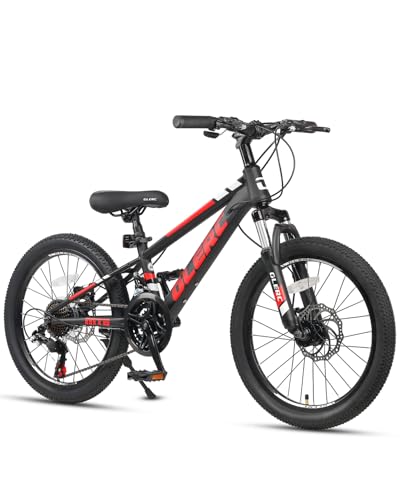
The Glerc 20-inch model is designed to expand a young rider’s capabilities with a 21-speed drivetrain, enabling smoother gear transitions over a variety of surfaces. A front suspension system helps absorb shocks on bumpy roads or gentle off-road trails, contributing to a more comfortable ride and better control for new riders. The frame is described as high carbon steel, providing durability for daily use. Responsive disc brakes deliver reliable stopping power, which is important for safety in urban environments and on light trails. This combination makes it a versatile option for a child ready to explore more challenging routes while maintaining manageable handling.
Considerations include ensuring proper gear adjustments for your child’s height and strength, and confirming that the 21-speed system is not overly complex for a user just transitioning from single-speed bikes. Overall, this bike emphasizes a balance of performance, durability, and growth potential.
67i BMX Bike 20 Inch — Safe Stopping And Tricks Ready

The 67i BMX bike targets kids who want to learn basic stunts while maintaining safety. It features front and rear U brakes that deliver prompt stopping power, which is critical for new riders building confidence. The design includes four steel pegs to enable basic tricks and grinding, appealing to riders who want to experiment with BMX-style maneuvers. An adjustable seat accommodates growth from ages roughly 8 to 12, allowing a single bike to cover longer periods of use. Overall, this bike emphasizes stunt-ready capability with reliable braking and adjustability, making it a popular option for older children who are ready for more dynamic rides.
Parents should assess the rider’s interest in tricks and ensure protective gear is in place. While the bike supports growth, it is important to supervise stunts and ensure local environments are safe for trick riding.
cubsala Freestyle BMX Bike, 18 Inch

The Cubsala Freestyle BMX Bike is designed as a solid first BMX option for younger riders who are exploring street, park, or trail settings. With a compact 18-inch frame, it suits younger riders beginning their BMX journey. The frame uses Hi-Ten steel, known for durability in beginners’ bikes. The drivetrain includes a 152 mm one-piece crank paired with a 32T chainring for predictable power transfer. Aluminum U-brake and handbrake levers provide precise braking control, essential for new riders learning how to modulate speed. This bike emphasizes ease of use, safety features, and a simple setup that helps kids gain confidence quickly.
As with any BMX-oriented bike, supervision during use and wearing protective gear are recommended, especially for younger riders learning balance and braking techniques.
KWOJU Fat Tire Bike — 20 Inch, 7-Speed

The KWOJU 20-inch fat-tire bike is built for versatility across surfaces, featuring 2.0-2.8 inch wide tires that provide stability on sand, snow, or soft ground. The 7-speed drivetrain offers a range of gears to handle hills and varied terrain, helping a child adjust effort as their endurance grows. Mechanical disc brakes with 160 mm rotors on both ends deliver reliable stopping power, contributing to safer rides in diverse conditions. The lightweight steel frame supports easy handling for younger riders while maintaining the durability needed for regular use in neighborhoods and parks.
Considerations include evaluating typical riding surfaces (paved vs. off-road) and ensuring tire pressure is appropriate for fat tires. The braking system and gear range make this bike a solid choice for families who want a capable ride that can handle more adventurous routes.
Buying Guide: Key Purchase Considerations And Comparisons
Age and height alignment: Verify the rider’s inseam or standover height to ensure the bike footpegs, pedals, and saddle allow comfortable mounting and full leg extension without overreaching. A few models listed here offer adjustable seat heights to accommodate growth.
Frame and build: Look for a sturdy steel or aluminum frame with reinforced joints. Dual suspension or front suspension can increase comfort on uneven surfaces; however, they add weight. For younger riders, a lighter frame with reliable braking is often preferable for easier handling.
Gearing and braking: For beginners, a simple single- or limited-gear system reduces complexity. As kids progress, more gears enable tackling varied terrains. Disc brakes generally offer stronger, more predictable stopping power than rim brakes, especially in wet conditions, but require more maintenance.
Wheels and tires: 20-inch wheels fit many pre-teens; ensure the tire tread matches your typical terrain. Fat tires provide stability on soft ground but add rolling resistance. Check tubeless compatibility if you plan to minimize flats.
Safety features: Consider bikes with quality brakes, visible reflectors, and a reliable kickstand or training wheels when needed. Proper protective gear, including a certified helmet, knee and elbow pads, remains essential for all new riders.
Maintenance: Regularly inspect brakes, gears, and tires. Some bikes come partially assembled and require basic tools; confirm what tools are included and whether household tools are sufficient for adjustments.
Riding goals and environment: If the child shows interest in off-road or BMX styles, choose a bike with appropriate geometry, stronger frame, and specific safety features for stunts. For casual neighborhood riding, prioritize comfort, stability, and ease of use.