Discover engaging, screen-free and screen-light toys that introduce children to coding, robotics, and engineering through play. This guide highlights five standout options that blend imaginative play with real-world skills, from mechanical coding robots to modular circuits. Each product section explains how it supports critical thinking, problem solving, and early programming concepts for kids across ages 3 to 12.
Summary Table of Selected Products
| Product | Brand | Key Benefit |
|---|---|---|
| Teach Tech Mech 5, Mechanical Coding Robot | Snap Circuits | Entry-level mechanical coding with mission-based activities |
| Snap Circuits Jr. SC-100 Electronics Exploration Kit | Snap Circuits | 100+ projects to build foundational electronics concepts |
| Botley The Coding Robot Activity Set | Learning Resources | Screen-free coding with quick-start and remote programming |
| Thames & Kosmos My Robotic Pet: Coding Chameleon | Thames & Kosmos | Unplugged coding with color sensing and gesture-responsive actions |
| Learning Resources Code & Go Robot Mouse Activity Set | Learning Resources | Early coding fundamentals with a light-up, responsive robot |
Teach Tech Mech 5: Mechanical Coding Robot
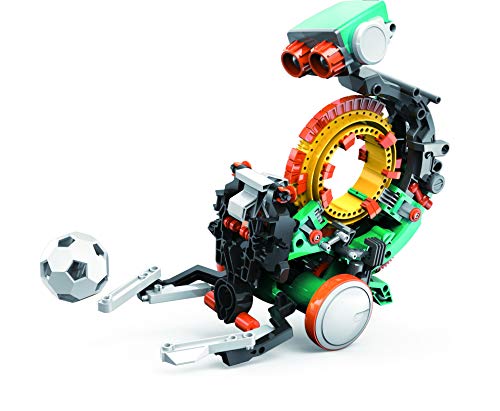
The Mech-5 unit from Snap Circuits introduces young engineers to basic mechanical engineering principles alongside coding concepts. The robot can throw, lift, kick, and draw, controlled by snapping coding buttons onto a rotating coding wheel. It emphasizes mission-based activities to sustain interest and develop problem-solving skills in a tangible format for beginners.
Its modular design supports guided exploration and independent experimentation, helping kids associate cause and effect with mechanical actions and simple sequences. The hands-on approach aligns with curricula focused on STEM readiness and early computational thinking, offering an approachable entry point for elementary-age learners and curious inquirers.
Snap Circuits Jr. SC-100 Electronics Exploration Kit

Snap Circuits Jr. offers a safe, beginner-friendly path into electronics with more than 100 projects using 29 parts and a full-color instruction manual. The kit is designed to introduce basic circuitry concepts to kids ages 8 and up, fostering creativity while teaching practical skills such as circuit design, voltage, and circuit protection. The modular parts snap together without tools, enabling quick experimentation and iteration.
With its structured yet open-ended projects, children learn sequencing, cause-and-effect, and troubleshooting. Educators and parents can align activities with project-based learning goals, reinforcing math and science standards in a playful context. The kit also scales well with other Snap Circuits kits for expanded projects and continued exploration.
Botley The Coding Robot Activity Set

Botley emphasizes screen-free coding for beginners, featuring a kid-friendly remote programmer and a straightforward, plug-and-play approach. Starting out right out of the box, Botley supports foundational coding concepts such as sequencing, loops, and simple algorithms, while encouraging independent play and group collaboration. The 77-piece Activity Set expands opportunities for guided challenges and creative games, making it a flexible option for home and classroom use.
The design prioritizes accessibility for younger learners (ages 5+), building confidence as children see immediate results from their code. As skills advance, Botley’s remote-control extension and varied activity cards promote longer attention spans and more complex problem-solving tasks. This makes Botley a practical stepping stone to more advanced robotics and programming kits.
Thames & Kosmos My Robotic Pet: Coding Chameleon

This color-sensing chameleon from Thames & Kosmos invites unplugged coding experiences. Children build a 15-inch mechanical reptile with articulated features, then use a color sensor, infrared sensor, and RGB LEDs to program responsive behavior via physical color cards. The absence of screens or software makes it ideal for tactile learning and fostering algorithmic thinking through gesture-based and color-driven commands.
Designed for imaginative play and engineering exploration, the kit emphasizes real-world sensing and feedback loops. It is well-suited for light-to-medium STEM curricula, helping kids reason about sensor data, state machines, and conditional actions while maintaining a high level of engagement through hands-on assembly and actuation.
Learning Resources Code & Go Robot Mouse
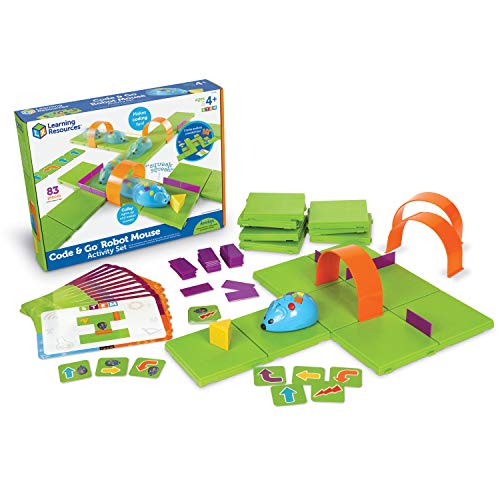
The Code & Go Robot Mouse builds early coding confidence with a friendly toy mascot. The mouse lights up, makes sounds, and travels along a colored path with programmable steps. It emphasizes fundamental coding concepts such as sequencing, logic, and basic problem solving, all in a screen-free format suitable for classrooms and home learning. The 83-piece set includes path cards and accessories to create varied challenges that scale in complexity as a child develops.
As a core introductory tool, the Robot Mouse supports hands-on exploration of cause and effect, enabling kids to translate instructions into tangible outcomes. It also accommodates small-group activities, promoting collaboration and discussion about code structure and debugging strategies.
Buying Guide: Key Purchase Considerations
- Age appropriateness: Choose toys aligned with the child’s developmental stage. Screen-free options can be ideal for younger children (ages 3–7) to build foundational skills, while more advanced kits (ages 8–12) offer deeper coding concepts and sequenced logic.
- Learning goals: Identify whether the focus is on mechanical actions, electronics, color sensing, or text-based programming. Some kits emphasize hands-on assembly and physical manipulation; others introduce block-based coding or Python for growth.
- Progression and scalability: Consider whether the toy can grow with the learner. Kits that couple with other kits or provide modular components offer extended value as skills advance.
- Screen exposure: If screen time is a concern, prioritize screen-free options like Botley, Robot Mouse, or color-sensing projects that still teach core coding concepts.
- Durability and safety: Look for sturdy plastics and age-appropriate safety features, along with easy-to-clean surfaces for repeated use and classroom settings.
- Educational value: Favor kits that clearly tie activities to STEM concepts such as sequencing, loops, conditionals, sensors, and feedback loops. Documentation and lesson ideas improve usability for parents and educators.
- Maintenance: Check battery requirements and replacement parts. Some sets require multiple AAAs or button cells; ensure replacements are readily available.
- Engagement style: Some children prefer mechanical construction and physical actions; others may enjoy digital programming or building modular circuits. A mix of styles broadens appeal and builds varied problem-solving muscles.
Across these products, learners gain exposure to foundational coding principles, early robotics, and practical engineering thinking without heavy screens. When selecting, balance the child’s interests with a clear path from simple tasks to progressively complex challenges, ensuring sustained curiosity and hands-on experimentation.