Finding engaging, educational toys for active two-year-olds helps develop language, fine motor skills, and early STEM concepts. The following selections focus on hands-on play, safety, and age-appropriate challenges, drawing from trusted brands and wooden or interactive options. Explore five items that align with early development goals and encourage curious, independent play.
| Product | Brand | Key Benefit |
|---|---|---|
| LeapFrog Learning Friends 100 Words Book, Green | LeapFrog | Vocabulary building with sound effects |
| Montessori Toys for 1-3 Year Old: Wooden Learning Color Sorting Toys for Toddlers | SMALL FISH | Fine motor and color sorting |
| Toddlers Montessori Wooden Educational Toys: Shape Sorting | KMTJT | Shape and color recognition |
| PEBIRA Montessori Toys: Wooden Sorting & Stacking Toys | PEBIRA | Color, shape, and size differentiation |
| LeapFrog 2-in-1 LeapTop Touch | LeapFrog | Pretend play with letters and numbers |
LeapFrog Learning Friends 100 Words Book, Green
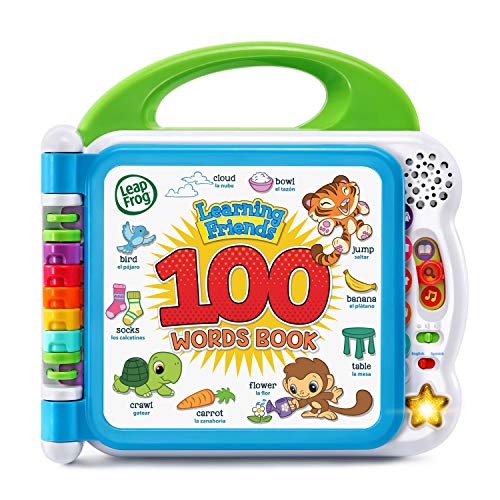
The LeapFrog Learning Friends 100 Words Book introduces more than 100 age-appropriate words curated by learning experts. Word categories cover pets, animals, food, mealtime, colors, activities, opposites, and outdoor topics. Turning pages with touch-sensitive words plays pronunciation, sound effects, and fun facts to reinforce recognition and memory. A light-up star button lets children hear the Learning Friends theme song and a favorite word, supporting engagement and recall in a playful way.
Designed for toddlers, this book blends tactile exploration with language exposure. The interactive format encourages picture-to-word connections, supporting early literacy and vocabulary growth. The compact, colorful design fits easily into a child’s hands, making it a suitable travel or home activity. For parents, the device emphasizes repeatable, low-frustration learning with immediate feedback and kid-friendly sounds.
Montessori Toys for 1-3 Year Old: Wooden Learning Color Sorting Toys

This wooden sorting activity emphasizes fine motor skills, color sorting, and hand-eye coordination. Toddlers insert sticks into slots, encouraging problem-solving and spatial awareness. The bright rainbow colors attract attention, while the beechwood construction promises durability and a sturdy feel. With smooth edges and careful craftsmanship, the toy is designed to be safe for little hands and long-lasting in active play sessions.
Designed for repeated use, the toy supports extended engagement as children learn to differentiate colors and sizes. It also serves as a gentle introduction to classification and early math concepts. Parents can guide exploration or allow independent play, making it suitable for classroom-like early learning or at-home activities. The compact design makes it easy to store between sessions.
Toddlers Montessori Wooden Educational Toys: Shape Sorting

With 12 fruit blocks, 8 carrots, 10 worms, and a five-sided cart, this wooden set offers diverse shapes and structures. The large, polished pieces and non-toxic water-based paint ensure safety for toddlers. The toy promotes color and shape recognition, hand-eye coordination, and problem-solving while delivering a robust, long-lasting play experience.
Parents can use guided activities to build early counting and categorization skills. The variety of pieces allows multiple game modes, keeping toddlers engaged during learning sessions. The natural wood aesthetic also fits well with modern play spaces, reducing visual clutter and offering a tactile sensory experience.
PEBIRA Montessori Toys: Wooden Sorting & Stacking

This wooden sorting and stacking puzzle includes 20 pieces across five colors and five geometric shapes. It helps children build early shape, color, and size differentiation as they match blocks to targets or create combinations. The design supports spatial reasoning, fine motor precision, and color recognition in a compact, toddler-friendly package.
Shape and color sorting activities encourage deliberate practice of hand-eye coordination, while the travel-friendly format makes it a versatile option for car rides or preschool readiness. The smooth finish and simple shapes reduce frustration, supporting steady skill development as children explore patterns and combinations.
Learning Toy for Toddlers: Sorting, Counting & Sorting Farm Train

This Montessori farm-themed toy combines sorting with counting features. It includes 9 farm animals and a farmer, plus 10 numbered barns and four wagon carriages pulled by a locomotive. Children can practice loading, unloading, stacking, and sorting as part of an interactive storytelling setting. The bright colors and familiar farm imagery support motif-based language development.
Educational value lies in color recognition, number familiarity, and early math concepts delivered through play. Open-ended design allows children to experiment with sequencing and organization, supporting cognitive development while maintaining engaging, age-appropriate fun.
LeapFrog 2-in-1 LeapTop Touch, Green

This 2-in-1 laptop toy transitions from a keyboard-style learning device to a touch tablet, encouraging pretend play and early tech literacy. The keyboard features letters A-Z and numbers 1-10, while the tablet mode enables interactive exploration. Children can role-play with a caregiver or imitate adult tasks, which supports language development and early numeracy in a playful context.
Educational outcomes include letter recognition, basic spelling, and number familiarity. The convertible design caters to evolving skills as kids grow, providing prolonged relevance. Parents can customize activities to align with a child’s interests, increasing engagement and learning continuity.
Buying Guide: Key Purchase Considerations For 2-Year-Olds
- Age appropriateness: Look for toys with simple cause-and-effect interactions and safe, smooth edges designed for toddlers. Avoid small parts that could be choking hazards.
- Developmental targets: Choose items that support language, fine motor skills, color and shape recognition, and early counting concepts without overwhelming complexity.
- Material and safety: Prioritize non-toxic finishes, sturdy construction (preferably wood or durable plastics), and certifications when available. A low-weight design helps portability with supervision.
- Engagement and adaptability: Toys should invite repeated play without frustration. Open-ended options and adjustable difficulty help sustain interest as a child grows.
- Maintenance and care: Easy-to-clean surfaces and durability matter for frequent use. Check for removable parts and safe storage options to reduce clutter.
- Educational balance: Effective toys blend learning with fun—colors, shapes, letters, and numbers should appear in a way that feels like play rather than a drill.
- Brand trust and reviews: Reputable brands with clear safety standards and favorable parent reviews can simplify selection and expectations.
These selections emphasize safe materials, engaging mechanics, and age-appropriate challenges to support early development. Parents can mix and match from the list to create a balanced play routine that targets vocabulary, motor skills, and foundational math concepts through everyday play.