Finding engaging toys that promote early learning while keeping toddlers happy can be a challenge. The following selections focus on hands-on play, color and shape recognition, language development, and fine motor skills—perfect for 2-year-olds. Each item comes from reputable brands and emphasizes safety, age-appropriate challenges, and enduring appeal for growing minds.
| Product | Brand | Key Features |
|---|---|---|
| Toddlers Montessori Wooden Educational Toys | KMTJT | 12 fruit blocks, 8 carrots, 10 worms; shape sorting; non-toxic water-based paint; large, safe pieces |
| LeapFrog Learning Friends 100 Words Book | LeapFrog | 100+ words; themes like pets, colors, foods; sound effects; light-up star button; interactive pages |
| Airbition Talking Flash Cards | Airbition | 224 illustrations and sounds; vocabulary growth; helps with speech therapy and autism play; adjustable volume |
| VTech Chomp and Count Dino | VTech | Eight food pieces; colors, counting, shapes; interactive questions; 130+ songs and phrases |
| PEBIRA Montessori Sorting & Stacking Toys | PEBIRA | 20 pieces; color, shape, and number recognition; durable wood; smooth edges; great for travel |
Below are five products chosen for their educational value, age appropriateness, and variety in learning approaches—from pretend play and language to fine motor skills and problem solving. Each section includes a brief overview, key features, and how it supports development in busy 2-year-olds.
KMTJT Montessori Wooden Sorting Toy Set

The KMTJT set provides a comprehensive early-learning experience through tactile activities. It includes 12 fruit blocks, 8 carrots, 10 colorful worms, and a five-sided cart with varied shapes. The wooden construction uses large particles, polished edges, and non-toxic water-based paint, addressing safety and durability for toddlers who explore with hands and mouths. Activities such as shape sorting, color recognition, and fruit identification promote cognitive development and fine motor skills, while the different play methods keep toddlers engaged for longer sessions.
With multiple games in one, caregivers can rotate activities to maintain interest and extend learning time. The Montessori-inspired design emphasizes self-directed play and open-ended exploration, helping young children learn through experimentation. This toy set can serve as a foundational tool for early math concepts like sorting by shape and color, as well as hand-eye coordination during loop-and-sort activities.
LeapFrog Learning Friends 100 Words Book
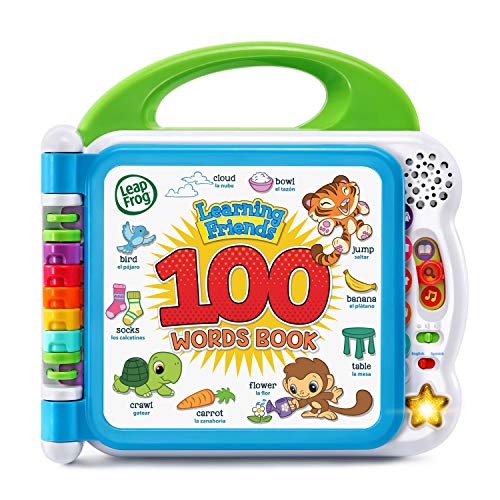
The LeapFrog Learning Friends 100 Words Book introduces a broad vocabulary through interactive pages featuring Turtle, Tiger, and Monkey. With more than 100 age-appropriate words across categories such as pets, animals, food, colors, activities, and opposites, this book encourages word recognition and language development. Children can touch words to hear them spoken aloud, alongside sound effects and a theme song, which reinforces memory through audio-visual cues. The device blends storytelling with practical word learning in a portable format.
This toy supports early literacy by exposing children to categories and naming conventions. Repetition of key terms helps solidify word retrieval, and the interactive play encourages attention to detail, listening skills, and a foundational sense of sentence structure as kids anticipate word cues. It’s particularly useful for households seeking screen-free ways to build language readiness for preschool experiences.
Airbition Talking Flash Cards

The Airbition Talking Flash Cards combine visual cues with audio to create an engaging Montessori-style learning tool. With 224 colorful illustrations covering animals, vehicles, foods, fruits, and vegetables, children can expand vocabulary while practicing recognition and memory. The device supports speech therapy goals by providing a consistent sound-image pairing that aids language development and social interaction. A repeat button and a five-level volume control make it adaptable for different environments and learner needs.
Easy setup and classroom-like structure at home allow parents and caregivers to guide focused practice sessions. The mix of imagery and spoken words helps with rapid word retrieval, while the multi-category content broadens exposure to everyday concepts. This toy is well-suited for toddlers who benefit from targeted vocabulary expansion and multisensory learning experiences.
VTech Chomp and Count Dino
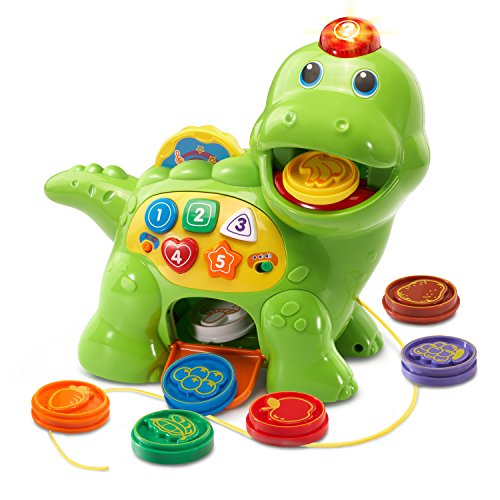
The VTech Chomp and Count Dino presents a playful dinosaur-themed learning experience focused on colors, counting, and shapes. It recognizes eight colored food pieces as kids feed Dino, offering interactive responses and various learning modes. The device includes more than 130 songs, melodies, sounds, and phrases, creating an engaging audio-rich environment that fosters memory, rhythm, and auditory discrimination. Dino’s questions promote active participation, encouraging toddlers to think about quantities, color matching, and basic shape recognition.
Designed for early learners, this toy blends pretend-play with foundational math concepts in an approachable way. The combination of tactile feeding actions and responsive feedback supports fine motor skills and early counting practices, making it a versatile option for toddlers who enjoy interactive storytelling and role-play.
PEBIRA Montessori Sorting & Stacking Toys

The PEBIRA wooden sorting and stacking set offers a color and shape-based puzzle activity with 20 pieces, including blocks in five colors and five geometric shapes. It promotes early color recognition, shape differentiation, and basic counting as children fit pieces into corresponding holes. The toy is sized for toddler hands, with smooth edges to ensure safe handling during busy play sessions. The wooden construction provides a durable, eco-friendly alternative to plastic toys and supports long-term use as a toddler’s problem-solving abilities grow.
Practicing rotation of shapes and colors helps children develop spatial awareness and hand-eye coordination. By combining sorting with stacking, kids engage in multi-step tasks that reinforce cognitive flexibility, pattern recognition, and early mathematical thinking. This toy makes an excellent gift for toddlers beginning to explore categorization and logical sequencing.
Buying Guide: Key Purchase Considerations For Educational Toys
- Age appropriateness: Ensure the toy is labeled for 2-year-olds or a close age range and supports gradual skill development as children grow.
- Safety and materials: Look for pieces with smooth edges, non-toxic finishes, and sturdy construction. Wooden toys and BPA-free plastics are common safe options for toddlers.
- Learning objectives: Consider whether you want language development, early math, color/shape recognition, fine motor skills, or a mix of these. Multimodal toys can provide broader benefits.
- Durability and value: Durable toys withstand rough handling and offer long-term engagement. Open-ended play often yields higher value than highly prescriptive toys.
- Maintenance and cleaning: Select toys easy to clean, especially for little ones who might mouth objects. Check care instructions for wood finishes and fabrics.
- Portability and storage: Compact, travel-friendly options are useful for trips and visits. Toys with simple sorting mechanisms can double as storage organizers.
- Parental involvement: Some toys encourage guided play, while others promote independent exploration. Balance both styles to support learning.
- Marketing claims vs. evidence: Favor toys with clear developmental benefits and avoid overhyped promises. Look for behavior-based outcomes like improved color recognition or fine motor precision.
In sum, the five products highlighted provide a array of approaches—from tactile sorting and storytelling to music, language, and pretend play. When selecting educational toys for a 2-year-old, prioritize safety, cognitive growth potential, and the child’s interest to foster consistent, enjoyable learning experiences.