Educational toys spark curiosity, encourage hands-on problem solving, and build foundational STEM skills. This guide highlights five engaging options that are well-suited for American households and classrooms alike. Each pick combines safety, clear instruction, and real-world relevance to help kids explore electronics, drawing, puzzles, and language development.
The selections below cover a range of ages and interests, from beginner engineering kits to language-friendly electronic games. Whether you’re shopping for a birthday, holiday gift, or classroom prize, these toys offer lasting educational value and screen-free play opportunities.
| Product | Brand | Age Range | Key Focus |
|---|---|---|---|
| Snap Circuits Jr. SC-100 | Snap Circuits | 8+ | STEM electronics |
| Kikidex Magnetic Drawing Board | Kikidex | 1-3 | Art, fine motor, early learning |
| Teriph LCD Writing Tablet | Teriph | 3-8 | Draw, write, creativity |
| Educational Insights Kanoodle | Educational Insights | 7+ | Spatial reasoning, logic |
| 3Doodler Start+ Essentials | 3Doodler | 6+ | Creative STEM, 3D drawing |
Each product section includes a brief overview, key features, and how it supports skill development. The goal is to present objective factors such as problem solving, creativity, and age-appropriate learning without sales language. All sections reference the listed features to keep the content factual and useful for informed choices.
Snap Circuits Jr. SC-100 Electronics Kit

Snap Circuits Jr. introduces basic electrical engineering concepts through hands-on building. The set includes 28 parts and a full-color project manual with 100+ project ideas, making it a practical classroom or family learning tool. Its safe, snap-together design encourages trial-and-error experimentation while reinforcing circuitry basics, sequence, and cause-and-effect thinking. Ideal for ages 8 and up, the kit supports iterative learning as kids discover how switches, LEDs, and motors interact in real-time. The included projects range from functional gadgets to playful devices, sustaining engagement over multiple sessions.
Educational value centers on practical skills such as following schematics, planning steps, and testing hypotheses. The modular parts are designed for quick assembly and disassembly, promoting persistence and concentration. The versatility of the kit allows for creative reinterpretations of the projects, which can extend the learning beyond the manual. For caregivers, the kit provides a structured yet flexible framework for STEM exploration at home or in after-school programs.
Kikidex Magnetic Drawing Board

The Kikidex magnetic drawing board is designed for toddlers and preschoolers to explore early literacy and visual recognition. It emphasizes durable construction, a wobble-free table setup, and adjustable height. The product claims to support fine motor development, color recognition, and early numeracy, while offering a mess-free drawing experience. This makes it a practical option for developing hand-eye coordination and creative expression in the 1-3 age range, with a simple erase mechanism and engaging magnetic drawing surface.
From a safety and usability perspective, the board’s no-screen approach supports eye health and reduces screen time. Its straightforward design allows caregivers to guide practice with minimal setup. The toy also serves as a confidence builder, as small children successfully complete drawing tasks and see immediate results. Parents can integrate this toy into daily routines or travel activities to reinforce early learning habits.
Teriph LCD Writing Tablet

The Teriph LCD Writing Tablet offers a reusable, screen-free canvas for young learners. It features a pressure-sensitive LCD screen, a color-rich drawing surface, and a simple erase function. The device is designed to reduce mess and provide a quick way to practice writing, drawing, spelling, math, and note-taking. The device is described as eye-friendly due to its non-backlit display, which helps protect young eyes during extended drawing sessions.
Key considerations include portability, battery life, and the ease of sharing drafts with family members or teachers. The product targets 3- to 8-year-olds, supporting early literacy and numeracy through repeated practice. Parental involvement can enhance learning by pairing the tablet with short, structured activities, turning doodling into systematic skill-building.
Educational Insights Kanoodle

Kanoodle is a compact, self-contained brain teaser that challenges spatial reasoning with 2D and 3D puzzles. The original version delivers hundreds of puzzles, spanning beginner to advanced levels. This portability makes it ideal for travel, restaurants, and on-the-go learning. Users arrange colorful pieces to fit specific shapes and configurations, strengthening planning, visualization, and problem-solving skills.
From a cognitive development standpoint, Kanoodle supports sequential thinking, pattern recognition, and mental rotation. The handheld format allows solo play or collaboration with peers, which can foster communication and strategy sharing. While it’s a single-player game, adults can participate as a guide to introduce new puzzle sets and track progress, enhancing motivation and goal-setting.
3Doodler Start+ Essentials 3D Pen Set
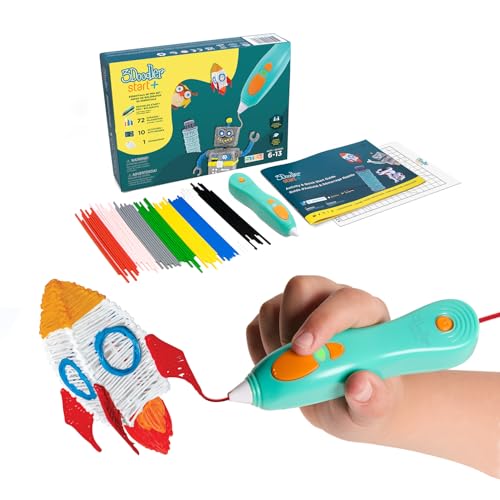
The 3Doodler Start+ Essentials kit introduces safe, kid-friendly 3D drawing. It features a nozzle designed to minimize burns and uses child-safe filaments. The Start+ version offers more plastic options, updated stencils, and faster setup, creating a hands-on bridge between art and engineering. This kit encourages experimentation with three-dimensional thinking, spatial awareness, and practical design skills.
Educational merit includes the connection of drawing with real-world STEM concepts. Kids can plan, sketch, and realize three-dimensional ideas, which reinforces geometry and hand-eye coordination. The enhanced safety features and user-friendly design support beginner to intermediate makers, making it a strong choice for family projects and after-school programs alike.
Buying Guide: Key Purchase Considerations
When choosing educational toys for kids, consider the following perspectives to ensure a well-rounded purchase:
- Age appropriateness: Match the toy’s complexity with the child’s developmental level to maintain engagement without frustration.
- Learning goals: Identify whether the focus is on science, technology, engineering, art, or language, and select toys that align with those aims.
- Safety and durability: Look for non-toxic materials, sturdy construction, and age-appropriate safety features, especially for younger children.
- Screen-free options: For screen-time balance, prioritize interactive, hands-on toys that encourage physical manipulation and problem solving.
- Expandable value: Consider whether the toy supports additional projects or kits, enabling longer-term learning and upgrades.
- Portability and storage: Compact kits and organized components help sustain use across different environments, such as home, school, or travel.
- Instruction clarity: Clear manuals, visual guides, and straightforward setup reduce friction and promote independent exploration.
- Social and collaborative potential: Some toys work well for group activities, fostering teamwork and communication skills.
In evaluating these five picks, the selection emphasizes a range of cognitive skills, from procedural knowledge in electronics to spatial reasoning and expressive drawing. The common thread is experiential learning—kids gain a deeper understanding by building, testing, and reflecting on outcomes. Consider your child’s interests, space, and routine when integrating these tools into learning, play, and after-school activities.