Emotion charts for toddlers and young children are valuable tools for teachers, caregivers, and parents. They help kids name feelings, build emotional vocabulary, and develop calming strategies. This article highlights five effective emotion chart products designed for classrooms, therapy spaces, and homes. Each option features colorful visuals, durable materials, and kid-friendly design to support early emotional literacy.
| Product | Brand | Format | Key Use |
|---|---|---|---|
| Hadley Designs Feelings Chart For Kids | Hadley Designs | 4 laminated 11×17 posters | Classroom calming corners, SEL posters |
| Feelings Chart, Emotions Learning Posters | DOI-LANEE | Set of 2 posters, 12×16 inches | Mental health decor and dialogue prompts |
| FLYAB Feelings Chart For Kids | FLYAB | 11.2×16.5 inches poster, with glue points | Classroom decorations, back-to-school |
| Feelings Chart For Kids – Coping Skills | HAMIEW | Two 11×17″ laminated posters | Calm-down corners, school or home use |
| Thought-Spot I Know What to Do Flipbook | Thought-Spot | Flipbook with durable pages | Autism-friendly feelings guidance and choices |
Across these options, the emphasis is on clear emotion labels, friendly illustrations, and durable formats that withstand daily use in busy environments. Whether for a therapist’s office or a classroom, these charts aim to make emotions approachable for toddlers and young kids.
Hadley Designs Feelings Chart For Kids
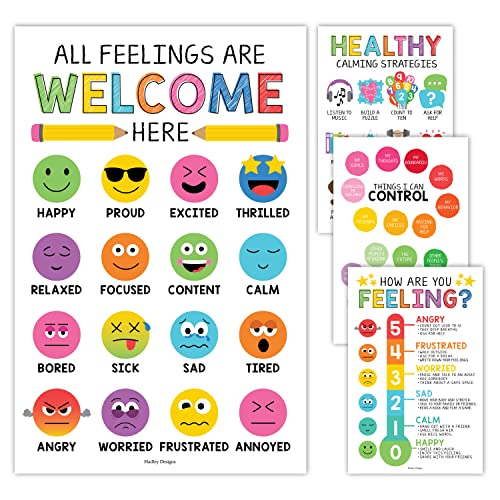
These four laminated 11×17″ posters are designed to help children express how they’re feeling. The set aims to reduce guesswork in recognizing emotions by offering a colorful, kid-friendly reference for classroom walls or calming corners. The posters are USA designed and laminated for durability, making them suitable for frequent use in busy environments. They support emotional regulation by giving children clear cues and language to describe their mood, which can be especially helpful for toddlers and early elementary students.
Feelings Chart, Emotions Learning Posters

This set includes two 12×16 inch posters with a sturdy frame impression, designed for therapy offices, school counselor rooms, or classroom walls. The posters emphasize emotional exploration and self-discovery in a supportive environment. Broad utility is highlighted by their potential as both decor and conversation starters for discussing feelings, coping strategies, and personal growth. While color accuracy may vary slightly due to display differences, the visual messaging remains clear and approachable for young learners.
FLYAB Feelings Chart For Kids

FLYAB’s chart uses bright colors and 16 distinct emotions with the message All Feelings Are Welcome Here. This makes it an engaging tool for classrooms or home learning spaces, supporting emotional intelligence and self-awareness. The set includes a posting poster (11.2″ x 16.5″) and glue points for simple installation. Its relatable characters help capture young learners’ attention and encourage ongoing discussions about feelings and coping strategies.
HAMIEW Feelings Chart For Kids

Two 11×17″ laminated posters offer a sturdy, double-sided presentation suitable for classrooms, counseling rooms, or home learning areas. The emphasis is on emotional self-awareness and understanding others’ emotions to foster positive communication. The product highlights durability and high-resolution visuals, ensuring the charts stand up to frequent handling and display for extended periods. This makes it a versatile option for educators and caregivers focusing on social-emotional development.
Thought-Spot I Know What to Do Flipbook

This flipbook is designed as a visual guide to understanding feelings, with a focus on autism-friendly communication. It helps children identify emotions, communicate needs, and make positive choices. The durable pages are suitable for frequent use in homes, classrooms, or calm-down corners. The format supports varied learning styles and can complement larger wall charts or stand-alone use as a portable emotional regulation tool.
Buying Guide: Key Purchase Considerations
- Target setting: For classrooms and counseling spaces, consider multiples of the same design to create a cohesive SEL area; for homes, a single poster set may suffice for focused daily use.
- Durability: Look for laminated or thick poster materials that resist wear from daily handling and cleaning in busy environments.
- Age appropriateness: Select visuals and wording appropriate for toddlers through early elementary, ensuring the language matches the child’s developmental level.
- Versatility: Choose products that can double as decor and teaching tools—decodable emotion labels, coping prompts, and discussion starters help maximize value.
- Inclusion and accessibility: Favor charts with diverse characters and clear, large typography to support readability for learners with varied needs.
- Placement: Plan for calming corners or utility areas where kids can reference the charts during transitions, meltdowns, or social interactions.
- Complementary resources: Consider flipbooks or frames that provide additional guidance for self-regulation and positive decision-making.
- Installation: Check whether items include mounting aids (glue points, frames, or frames-included options) to simplify setup.
When evaluating options, weigh how each chart supports explicit language development, accessible visual cues, and practical coping strategies. A well-chosen set can align with existing SEL curricula and foster ongoing conversations about emotions in everyday contexts.