Engineering kits designed for early teens offer a practical path into physics, electronics, robotics, and problem solving. The following selections are especially well-suited for curious 13-year-olds who want to design, build, and experiment without heavy abstract theory. Each kit emphasizes hands-on learning, clear instructions, and engaging outcomes that fit around school schedules and weekend projects.
| Product | Brand | Key Focus | Age Range |
|---|---|---|---|
| Hydrobot Arm Kit | TEACH TECH | Hydraulics, Robotic Arm, Mechanical Levers | 12+ |
| Structural Engineering: Bridges & Skyscrapers | Thames & Kosmos | Structural Engineering, Forces, Models | 8+ |
| ELEGOO UNO R3 Smart Robot Car Kit V4 | ELEGOO | Arduino Robotics, Programming, Sensors | 8-16 |
| Smartivity Mechanical Hand | Smartivity | Mechanics, Build-and-Play, Assembly | 8-14 |
| Lucky Doug Solar Power Kits | Lucky Doug | Solar Power, Renewable Energy, 12-in-1 Projects | 8-13 |
Below is a deeper look at each kit, highlighting what makes it a strong fit for 13-year-olds who want to explore engineering concepts with tangible results.
Hydrobot Arm Kit: Hydraulic Robotics

The Hydrobot Arm Kit introduces hydraulic principles through a functional robotic arm. It guides learners through building real, working robots and emphasizes a hands-on understanding of hydraulics without the need for batteries. The arm features six axes of motion and can rotate up to 270 degrees, offering a strong bridge between theory and practical application. Students use levers to control the gripper, which can open, close, or be swapped with suction components to pick up objects. This kit blends mechanical engineering with fluid dynamics, helping teens visualize force transmission and motion control in a concrete, memorable way.
Key aspects for 13-year-olds include: exploring leverage, multi-axis articulation, and the relationship between input motion and output force. The lack of batteries simplifies setup and maintenance, allowing a focus on core concepts like hydraulic pressure, valve control, and end effector selection. As a single project, it also provides a satisfying, repeatable play cycle: adjust control levers, observe arm response, and iterate on the build to improve precision.
Bluetooth Speaker & FM Radio STEM Kit

This multi-project kit blends electronics assembly with basic programming concepts. Teens build a Bluetooth speaker and an FM radio, then learn how audio signals are converted, transmitted, and received. The radio component includes an automatic frequency search across the 88-108 MHz band, enabling practical exploration of radio principles in a real-world context. The kit comes with clear assembly instructions and requires only simple tools, which makes it accessible for independent work or guided family projects. It’s well-suited for 13-year-olds who want to see immediate, audible results from their efforts.
Highlights include: modular projects that can stand alone or be connected into a larger electronics exploration, hands-on wiring and solder-free assembly, and an emphasis on curiosity-driven learning. This kit helps students translate theoretical science into tangible devices, reinforcing critical thinking as they troubleshoot and optimize performance.
ELEGOO UNO R3 Smart Robot Car Kit V4

Designed for beginners and growing programmers, the ELEGOO UNO R3 kit centers on Arduino-based robotics. It provides a comprehensive package with 24 different module parts, including obstacle avoidance, line tracing, infrared remote control, and compatibility with mobile devices. The modular setup enables experimentation with coding, sensor integration, and hardware-software interaction, which is ideal for teens who want to learn practical electronics and programming. The interface is standardized (XH2.54), reducing assembly errors and enabling smoother progress for learners who may be transitioning from basic circuits to more complex projects.
Key learning outcomes include: understanding microcontroller programming, integrating sensors to respond to environmental stimuli, and applying basic control theory to real-world tasks. The car can be controlled via smartphone or tablet, fostering literacy in modern IoT-style projects while maintaining a hands-on engineering focus.
Smartivity Mechanical Hand

The Smartivity Mechanical Hand is a compact, action-packed project that emphasizes mechanics and assembly. The step-by-step manual guides a teen to construct a fully functional mechanical hand, blending practical engineering with engaging play. The kit targets a broad age range (8–14 years), but its depth and thoughtful instructions make it an excellent choice for a 13-year-old who wants a challenging, screen-free project. The design fosters problem-solving, spatial reasoning, and perseverance as students translate a set of wooden pieces and gears into a working gripper mechanism.
What makes this kit appealing for older teens is its balance of complexity and accessibility. Students can push the limits by refining grip strength, adjusting linkage geometry, and experimenting with different loads. The kit also helps develop patience and precision, valuable traits for more advanced engineering pursuits in high school or early college coursework.
Lucky Doug Solar Power Kit
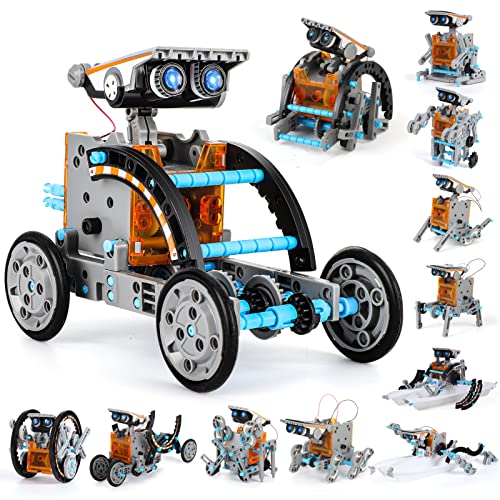
This solar-powered robotics kit demonstrates renewable energy in action. The 12-in-1 design allows teens to build a variety of robots powered by sunlight, including crawlers, rollers, and aquatic models. The emphasis on solar power provides an accessible introduction to sustainable engineering and energy conversion. Clear assembly instructions help students progress from simple models to more complex configurations, reinforcing the relationship between solar input, mechanical output, and efficiency. The solar approach also highlights environmental awareness, a relevant context for modern engineering challenges.
For a 13-year-old, the kit offers hands-on experimentation with renewable energy concepts, a chance to observe how environmental conditions affect performance, and the opportunity to iterate on designs to maximize movement under sun exposure. The modular nature supports ongoing project work beyond a single session.
Buying Guide: What to Consider When Choosing an Engineering Kit for a Teen
- Project scope and complexity: Match the kit’s depth to the learner’s current skills and long-term interests. Some kits emphasize straightforward assembly, while others introduce coding, sensors, and energy conversion.
- Educational objectives: Look for kits that connect to core topics like hydraulics, mechanics, electronics, robotics, and renewable energy. Clear learning outcomes help track progress and justify time spent on a project.
- Instructions and support: Step-by-step manuals, photos, or videos reduce frustration and support independent learning. Some kits offer problem-solving prompts and troubleshooting tips.
- Tool requirements: Note any required tools beyond what’s included. Budget for basic screwdrivers, pliers, or batteries if needed, though battery-free or rechargeable options are advantageous for ongoing use.
- Expandability: Consider kits that scale with interest, offering expansion sets or multiple projects within a single package. This is helpful for sustained engagement over weeks or months.
- Hands-on vs. screen time: Balance screen-free experiences with opportunities to learn programming or app control for a modern STEM skillset.
- Age and safety: Ensure the kit’s age range aligns with the teen’s maturity and skill level. Check for small parts and provide supervision as needed for younger teens.
Combination packages, like those featuring robotics, circuitry, and renewable energy, provide broad exposure to engineering disciplines, which is especially valuable for learners exploring future STEM careers. When selecting a kit, consider the teen’s interests, whether they enjoy mechanical building, coding, or creative problem-solving, and how much time they’re prepared to devote to a project. A mix of projects over a learning season can sustain motivation and broaden understanding across traditional engineering domains.