Engineering kits for teens offer hands-on learning that blends science, technology, engineering, and math into engaging projects. This guide highlights five highly capable kits that foster critical thinking, problem solving, and practical mechanics. Each option provides a hands-on path to understanding robotics, circuitry, engineering principles, and computer fundamentals. Read on to compare features, learning goals, and what makes each kit a strong choice for teens exploring STEM at home or in classrooms.
Summary of selected products:
| Product | Brand | Key Focus | Age Range |
|---|---|---|---|
| Hydrobot Arm Kit | TEACH TECH | Hydraulics, Robotic Arm | 12+ |
| ELEGOO UNO R3 Smart Robot Car Kit | ELEGOO | Arduino, Robotics, Coding | 8-16 |
| Bridges & Skyscrapers | Thames & Kosmos | Structural Engineering, Forces | 8-14 |
| Snap Circuits Jr. SC-100 | Snap Circuits | Electronic Circuits, Projects | 8+ |
| Solar Robot Kit | Sillbird | Solar Power, Robotics | 8-13 |
Hydrobot Arm Kit: Hydraulic Robotic Arm

The Hydrobot Arm Kit introduces hydraulic control to a working robot arm, designed for learners aged 12 and up. Students build a real, functional arm with six axes and up to 270-degree rotation. The system uses water power to operate the gripper, eliminating batteries for this task. The kit emphasizes fluid dynamics and mechanical control as learners manipulate levers to open and close the gripper or swap in suction components for picking up objects. The setup supports practical understanding of hydraulic systems and robotic articulation.
Mech-5 Mechanical Coding Robot
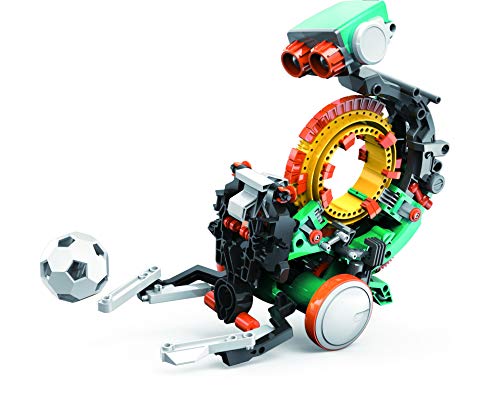
Mech-5 combines mechanical engineering with coding basics in a mission-based format. This entry-level robot inspires young engineers to explore core concepts in mechanics and programming. It can perform actions such as throwing, lifting, kicking, and drawing by snapping coding buttons onto a coding wheel. The design supports guided experimentation with sequences, timing, and control logic, helping teens see how software and hardware interact in real systems.
Bridges & Skyscrapers Structural Kit

This kit provides a hands-on look at structural engineering with 20 buildable models illustrating forces like compression and tension. With more than 285 building pieces and a 36-page illustrated manual, learners explore how different structures respond to loads. It emphasizes critical thinking, measurement, and iterative design, giving students a tangible feel for civil and structural engineering principles while promoting experimentation and problem solving.
ELEGOO UNO R3 Smart Robot Car Kit

The ELEGOO UNO R3 kit is a versatile Arduino-based robotics package suitable for beginners and advanced users. It introduces programming, electronics assembly, and basic robotics concepts through a complete package of 24 module parts, including obstacle avoidance and line tracing modules. The kit supports control via Android and iOS devices, requiring basic setup. Clear modular interfaces (XH2.54) reduce assembly errors, making it a strong platform for applied coding projects and hardware-software integration.
Playz V8 Combustion Engine Model Kit

The Playz V8 engine model kit offers a hands-on look at internal combustion through a running miniature V8 engine. Teens and adults alike can observe pistons, belts, and exhaust interactions with realistic motion and lighting cues. The kit includes interactive cables and a realistic motor fan, simulating engine operation. It provides hours of tinkering, making it a compelling crossover project for fans of automotive engineering and mechanical systems. Batteries are required for operation (not included).
Snap Circuits Jr. SC-100 Electronics Kit

Snap Circuits Jr. introduces electronics concepts through hands-on projects with safe, snap-together components. With over 100 projects and 29 parts, the kit helps teens explore circuits, switches, and sensors in a structured, colorful manual. The modular design encourages iterative learning and creative experimentation, making it a dependable introduction to electrical engineering and prototyping with immediate, visible results.
Sillbird Solar Robot Kit

The 12-in-1 Solar Robot Kit demonstrates renewable energy concepts by powering a rover and other builds with solar energy. Outdoor use is emphasized, with the option to operate under artificial light indoors. The kit fosters problem solving and design thinking as teens adapt solar power to drive robotics, making it a practical exploration of sustainability and engineering principles in real-world contexts.
Buying Guide: Key Purchase Considerations
When selecting an engineering kit for a teen, consider the learner’s interests, safety and complexity, and how the kit supports gradual skill development. Look for clear manuals, scalability, and opportunities to integrate coding practice with hardware builds. The following points help frame comparisons:
- Skill Level and Growth: Choose kits that start with fundamentals but offer advanced options or add-ons to accommodate progress over time.
- Hands-On Learning: Prioritize kits that demonstrate clear cause-and-effect relationships, with visible outcomes and repeatable experiments.
- Programming vs. Pure Hardware: If coding is important, prefer kits with programmable microcontrollers, sensors, and a library of projects or open-ended activities.
- Educational Focus: Some kits emphasize physics concepts (levers, hydraulics, forces), others focus on robotics, circuits, or solar energy. Align with the teen’s curiosity.
- Durability and Safety: Look for sturdy components, non-toxic materials, and age-appropriate assembly that minimizes risk for younger users within the target range.
- Expansion Potential: Consider compatibility with other modules or platforms, enabling cross-project reuse and extended challenges.
- Cost and Availability: Balance budget against features, and ensure parts are readily available for replacement or upgrade.
What To Expect Across Kits
Across these options, teens gain practical experience that complements classroom learning. Hydraulics, mechanical actuation, and coding fundamentals form a core of applied understanding. Structured models like the Bridges & Skyscrapers kit introduce engineering principles in a tangible way, while Snap Circuits and similar kits offer quick wins that boost confidence. Solar-powered projects demonstrate energy conversion dynamics, and Arduino-based kits provide a gateway to more complex programming and electronics.
For educators, these kits support project-based learning with measurable outcomes, such as improved problem-solving, design iteration, and collaboration. For parents, the selection balances engagement, safety, and long-term learning value. Each kit provides a distinct path to explore engineering concepts, letting teens pursue personal interests while building foundational STEM literacy.