Finding effective tools to help toddlers understand and express their emotions can transform classroom dynamics and home routines. This article reviews five top-rated feelings charts and calming posters designed for young children, with a focus on accessibility, durability, and classroom-ready design. Each option supports social-emotional learning (SEL) and can help caregivers guide kids through emotions with clarity and empathy.
| Product | Brand | Format | |
|---|---|---|---|
| Hadley Designs Feelings Chart For Kids | Hadley Designs | 4 laminated 11×17″ posters | Regulation posters for calming corners |
| BIZIBAFF Feelings Chart Poster | BIZIBAFF | 11.8″x16.5″ laminated poster | 16 emotions for easy identification |
| 9 Calming Corner Posters | Distasio | 9 posters, 8×10″ each | Complete calm-down station kit |
| FLYAB Feelings Chart | FLYAB | 11.2″ x 16.5″ poster + glue points | Bright classroom decoration with 16 feelings |
| Thought-Spot I Know What to Do Flipbook | Thought-Spot | Emotions flipbook for guidance | Visual tool for identification and choices |
These resources target the core needs of early learners: recognizing emotions, naming feelings, and applying coping strategies. They vary in format—from wall posters to interactive flipbooks—allowing teachers and families to tailor SEL activities to their environment. When selecting a chart, consider layout readability, durability (lamination or robust pages), and whether the visuals align with your cultural and linguistic context. The following sections detail five top options to help you choose the right fit for your toddler-focused setting.
Hadley Designs Feelings Chart For Toddlers
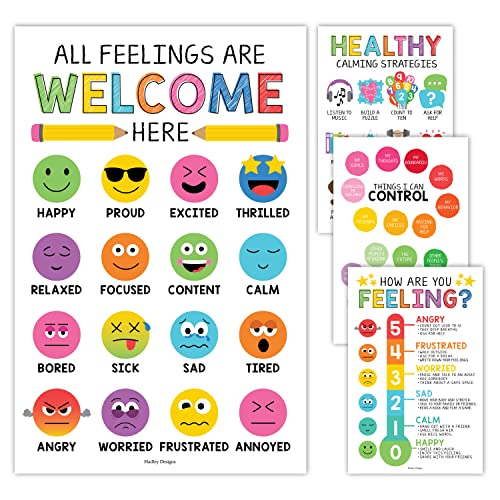
Designed for young learners, this set includes four laminated 11×17″ posters intended for classroom walls and calming corners. The posters help children interpret a range of emotions and express themselves with confidence. The laminated finish ensures durability in busy environments and makes cleaning simple after spills or fingerprints. The design emphasizes making children feel understood, which supports caregivers in reducing anxiety during emotional episodes. Use these charts to guide kids through emotional regulation strategies when a meltdown seems likely, or as a daily check-in during circle time.
Key features include a colorful, kid-friendly layout and a focus on decoding emotions beyond basic happy/sad dichotomies. The posters work well for counselors, teachers, and parents aiming to create predictable routines that foster emotional literacy. They are especially suited for elementary setups that also welcome early-years learners who are developing self-regulation skills. Pair the charts with guided activities like “points of feeling” or “zones of regulation” to maximize learning outcomes.
BIZIBAFF Feelings Chart Poster

This poster highlights 16 common emotions in a bright, engaging style. Its 11.8″ x 16.5″ size makes it ideal for classrooms, daycare centers, or home learning spaces. The thick laminated material resists tears and spills, ensuring longevity in high-traffic areas. The visuals are designed to capture preschoolers’ attention, supporting quick emotion recognition during circle time or calm-down activities. Teachers and parents can use it as a shared reference during conversations about feelings, helping kids articulate their inner states with clearer language.
Beyond recognition, this chart supports communication skills by encouraging conversations about what each emotion looks like and what might help when a specific feeling arises. It’s well-suited for counselors and special education settings, where structured supports for emotional development are central. The poster’s durable design makes it a good long-term investment for classrooms that rotate students or for family spaces that need a reliable learning tool.
9 Calming Corner Posters
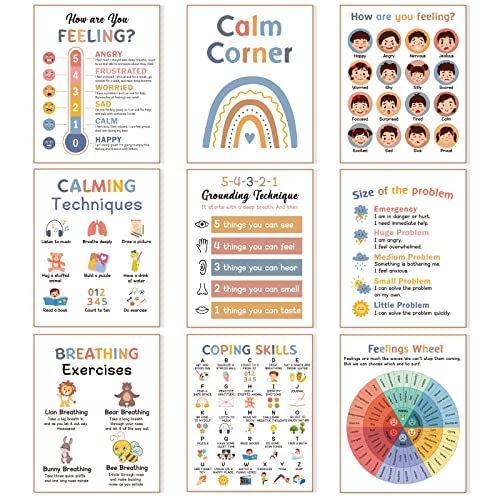
This kit provides a complete calm-down corner setup with nine 8×10″ posters. Included are a calming corner title, a feelings chart, coping strategies, breathing exercises, and a feelings wheel. The set is designed to decorate classrooms, homes, or therapy spaces, with frames recommended but not included. The materials are approachable for toddlers and early elementary students, helping them recognize emotions and apply self-regulation techniques during moments of stress. The visuals mix bright colors with simple icons, making the information accessible even for nonverbal learners with strong needs.
As a bundled kit, these posters support consistent practice—perfect for teachers who want a ready-to-go corner dedicated to emotional literacy. The combination of a feelings chart with practical coping reminders provides a structured path for kids to transition from feeling an emotion to choosing a calm action. The design aims to foster a safe environment where kids feel supported as they navigate emotions daily.
FLYAB Feelings Chart for Kids

FLYAB presents a 16-emotion chart with a bold, welcoming title—All Feelings Are Welcome Here—designed to help toddlers name and understand their emotions. The poster uses relatable characters to capture attention, making it suitable for classrooms and home learning corners. The kit includes an 11.2″ x 16.5″ poster and ten glue points for easy mounting. This option is ideal for back-to-school decor, providing a visually stimulating resource that supports language development and emotional literacy.
The design emphasizes inclusivity, encouraging all feelings as valid and worthy of discussion. It pairs well with classroom routines such as morning check-ins or closing reflections, giving children a structured moment to express how they feel and to practice coping strategies. The visual layout supports quick references, reducing the cognitive load on young learners who are just beginning to articulate internal states.
Thought-Spot I Know What to Do Flipbook

The Thought-Spot flipbook offers a portable, visual guide to identifying feelings and making positive choices. This tool is particularly helpful for children with autism or ADHD who benefit from clear, concrete steps for emotion management. The pages are durable and designed for frequent use at home or school, including calm-down corners. The flipbook format makes it easy to rotate through different emotions and coping strategies during short, focused sessions, reinforcing emotional vocabulary and self-regulation skills over time.
As a complementary resource, the flipbook can be used alongside wall charts to provide a multi-modal SEL experience. It supports nonverbal learners by offering pictorial cues and simple prompts to guide social interactions. Educators can adopt a structured routine where children refer to the flipbook during transitions or moments of frustration, helping them practice choosing appropriate calming strategies and communicating their needs effectively.
Buying Guide: Key Purchase Considerations
- Age suitability: Choose charts designed for toddlers or early preschoolers to ensure the visuals and language match developmental level.
- Durability and format: Laminated posters resist wear in busy spaces; consider frames for wall posters or a binder for flipbooks in small spaces.
- Emotional scope: Look for charts that cover a broad range of emotions (not just basic happy/sad) to foster nuanced emotional literacy.
- Classroom vs. home use: Classroom kits may include multiple posters and a calm-down corner focus, while home options can be more compact for limited spaces.
- Supplementary tools: Consider pairing posters with activity guides, circle-time prompts, or calming strategies to maximize impact.
- Visual clarity: Choose bold colors, clear icons, and readable fonts to ensure quick recognition during transitions or stress moments.
- Accessibility: Look for inclusive imagery and language that many families and caregivers can relate to, supporting diverse learners.
- Maintenance: Laminated surfaces are easier to wipe clean, while cloth or canvas art may require gentler handling and framing.
In selecting a feelings chart for toddlers, balance visual appeal with instructional value. A mixed approach—combining wall charts for quick reference with a portable flipbook for individual use—often yields the best results for both classroom and home environments. Consider your space, the typical routines, and the emotional needs of your child or students to determine the right combination of tools for consistent SEL engagement.