The following selections focus on creativity, fine motor development, language growth, and sensory exploration for toddlers around age two. Each option is designed to be safe, durable, and age-appropriate to help little hands learn through play. Below is a quick snapshot of the featured items to help you compare at a glance.
| Product | Brand | Key Benefit | Age Range |
|---|---|---|---|
| Montessori Kids Tool Set, Wooden Toddler Tool Bench Educational Toys | Lehoo Castle | Fine motor skills, problem solving | 2-4 |
| Around the Farm 30-Button Animal Sound Book | PI Kids | Language development, animal sounds | 3+ |
| Airbition Talking Flash Cards | Airbition | Vocabulary, memory, speech practice | 1-4 |
| VTech KidiBeats Drum Set | VTech | Auditory development, rhythm, following cues | 2-5 |
| LeapFrog Learning Friends 100 Words Book | LeapFrog | Word exposure, interactive learning | 2-4 |
Choosing the right toys for 2-year-olds involves balancing safety, educational value, and interest. The items below are organized to help you compare features, assess suitability for your child, and understand how each toy supports early learning goals—from motor skills to language and cognitive development.
Montessori Tool Set For Toddlers

The Lehoo Castle Montessori wooden tool set offers a practical pretend-play experience designed to support fine motor development and hand-eye coordination. The set includes a wooden tool box with a handle, a hammer, wrench, screwdriver, nails, gears, wheels, and boards. Children can screw, hammer, and rotate gears, which helps build problem-solving skills while encouraging imaginative play. The dual-purpose tool bench doubles as a portable storage box, fostering organization habits and responsibility in toddlers. This kit emphasizes realistic tools for safe, constructive play and fosters early STEM interests in a tangible, age-appropriate way.
Key features include a spacious container for easy transport, deeper storage than similar models, and multi-piece components that promote grasping, pinching, and precise movements. Parents should supervise to ensure small parts remain secure, and to guide proper use of the tools during guided play sessions. The wooden construction provides a sturdy feel suitable for young children exploring cause-and-effect actions. Overall, this set supports motor precision, basic engineering concepts, and confident early construction play.
Around The Farm Animal Sound Book
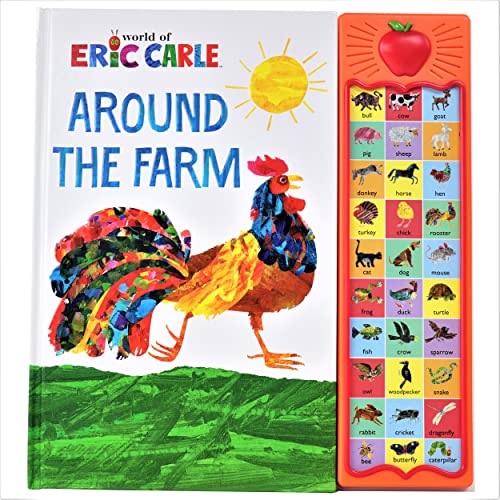
The World of Eric Carle Around the Farm book combines picture-book delight with interactive sound buttons. With 30 animal sounds, children can press each button to hear the corresponding animal name and sound. The format supports early vocabulary development, listening skills, and memory association as kids connect words with sounds. It’s designed for younger toddlers and preschoolers who are expanding their word banks and learning to imitate animal noises. The book’s cheerful illustrations and engaging auditory feedback make it a favorite for language-rich playtime and group reading sessions.
Educational value centers on auditory discrimination, phonemic awareness, and memory recall. The tactile act of pressing buttons reinforces cause-and-effect understanding, while the varied animal names offer exposure to new vocabulary and categorization (pets, farm animals, colors, and actions). Parental involvement can deepen learning through guided repetition, naming, and singing along to the theme or read-aloud routines. This toy supports beginner literacy and social learning through shared reading experiences.
Airbition Talking Flash Cards

The Airbition talking flash cards deliver a portable, Montessori-inspired language-learning experience with 224 illustrations and sounds. The set emphasizes vocabulary across categories such as animals, vehicles, foods, fruits, and everyday objects. By hearing words spoken in a standard American accent and seeing corresponding images, children can broaden their lexicon and improve cognitive connections between visuals and words. The device includes a repeat function and five-volume controls to adjust learning intensity, making it adaptable for various developmental stages.
From a therapeutic perspective, these cards can support speech development and autism-focused learning strategies. The multisensory approach—sight, sound, and repetition—helps with memory retention and language fluency. Easy-to-use mechanics mean caregivers can introduce new words during short daily sessions, reducing fatigue for both child and adult. Overall, the Airbition device provides a compact, classroom-like learning tool that complements verbal interaction, storytelling, and language-rich play in everyday environments.
KidiBeats Drum Set
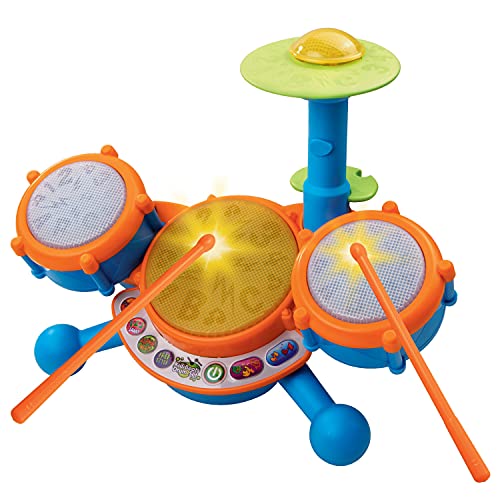
The VTech KidiBeats Drum Set introduces rhythm and music in a kid-friendly format. The set includes three drum pads and a cymbal that produce distinct sounds, encouraging sensory exploration and auditory development. With nine built-in melodies and educational tunes, children can learn letters, numbers, and musical patterns while engaging in creative play. The LED indicators on each drum provide visual feedback, reinforcing action-result learning and helping children associate symbols with sounds.
Play options include multiple modes: free play, letters, numbers, and follow-along activities. This variety supports motor coordination, sequencing, and memory. The toy’s kid-safe design and soft, accessible surfaces make it suitable for toddler experimentation with rhythm and tempo. For parents, the drum set offers a structured yet playful way to integrate music into daily routines, potentially boosting focus and coordination during short, interactive sessions.
LeapFrog Learning Friends 100 Words Book
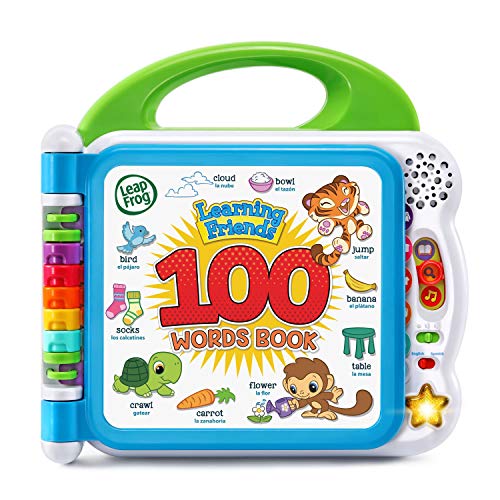
The LeapFrog Learning Friends 100 Words Book introduces more than 100 age-appropriate words with interactive pages featuring Turtle, Tiger, and Monkey. Each page invites children to touch words and hear corresponding sounds and actions, enhancing word recognition and comprehension. The inclusion of themes such as pets, animals, colors, and activities broadens vocabulary across everyday contexts. A light-up star button plays the Learning Friends theme song and highlights a favorite word, adding a memorable cue for recall and engagement.
Educational value centers on early literacy, phonological awareness, and interactive storytelling. The device encourages curiosity, helps with categorization, and supports independent exploration, while also providing opportunities for caregiver-guided reading and word games. This book is well-suited for quiet reading corners, car rides, or classroom-style activities at home, making vocabulary development accessible in short, focused sessions.
Buying Guide: Key Purchase Considerations
When selecting toys for a 2-year-old, consider safety as the top priority: age-appropriate small parts, non-toxic finishes, and sturdy construction. Look for toys that promote a balance of motor skills, language, cognitive development, and imaginative play. Options with multiple play modes or adjustable difficulty can grow with your child, extending the toy’s usefulness beyond the 24-month window.
Consider the child’s interests: do they gravitate toward building and tools, books and sounds, or music and rhythm? For educators and caregivers, these devices provide structured opportunities to practice turn-taking, sharing, and guided participation, which support social development. Durability matters for toddler toys that will be chewed, dropped, or thrown; wooden pieces and robust plastics typically withstand heavy use better than delicate materials.
Versatility and portability are practical buying considerations. Boxable tool sets, compact flash-card devices, and book-based products travel well for families on the go. Parental involvement enhances learning outcomes; consider toys that invite collaborative activities, storytelling, and parent-guided questions. Finally, monitor educational objectives—language-rich interaction, number sense, and color recognition—so you can track progress and adjust play accordingly.