Kids love pretend play, and a kid-friendly grocery cart can turn a simple shopping game into a full sensory experience. This article highlights five engaging grocery cart sets that blend realistic detail with safe, durable design. Each entry includes key features to help you choose the right one for this stage of play, whether your child is just learning about groceries or developing role-playing and social skills.
| Product | Brand | Key Features |
|---|---|---|
| Jovow 102pcs Kids Shopping Cart Trolley Play Set | Jovow | 60+ fruit/veg, 16 fast-food toys, cart and bag, assembly required |
| Little Tikes Shopping Cart – Pink | Little Tikes | Toddler-sized, deep basket, fold-down seat |
| Let’s Go Shopping Pretend Scan & Sort Shopping Cart | Acorn Avenue | 8 grocery items, realistic role play, sized for little hands |
| Lissi Shopping Cart with 16″ Baby Doll | Lissi | Metal frame, plastic basket, includes baby doll |
| Milliard Toy Metal Shopping Cart | Milliard | Realistic metal cart, fold-open seat, 360° wheels |
Below you’ll find a curated look at five highly relevant options. Each section covers what the product offers, how it supports learning and play, and who it’s best suited for — from toddlers to kids who love detailed pretend play.
Jovow 102pcs Kids Shopping Cart Set

The Jovow set offers a deluxe pretend-play experience with a complete shopping cart, a bag, and a large assortment of food pieces. With 60 fruit and vegetable items plus 16 fast-food toys, this kit encourages vocabulary growth as children name and sort different food items. The included cart assembly adds a small building task that can boost fine motor skills and problem-solving during setup. Suitable for ages 3 and up, it supports independent play and cooperative activities with siblings or peers.
Little Tikes Shopping Cart – Pink

This toddler-sized cart from Little Tikes emphasizes simple, stable design with sturdy walls to help keep items inside and encourage distributed play. Its deep basket is ideal for transporting pretend foods, toys, or even stuffed animals. The fold-down child seat offers an additional option for a favorite toy or doll, making the cart a versatile choice for early imaginative play and social interaction during “store trips.”
Let’s Go Shopping Pretend Scan & Sort Cart

Acorn Avenue’s cart is sized for little hands and ships with eight grocery items, giving kids a ready-to-play scenario. The cart emphasizes realistic role play as children push it through their own simulated market aisles. The compact dimensions and complete accessories help maintain engagement without requiring extra space, making it an appealing option for small playrooms or classrooms.
Lissi Shopping Cart With 16″ Baby Doll
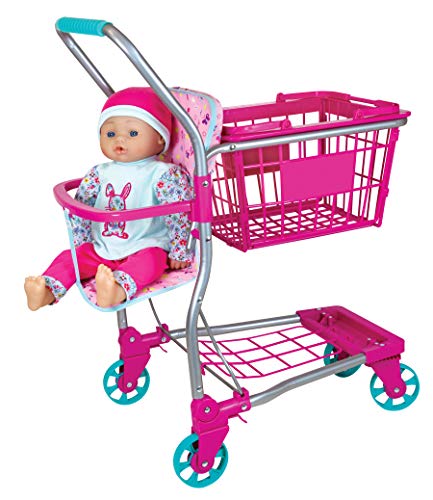
The Lissi cart combines a metal frame with a plastic basket and includes a 16″ baby doll, enriching role-play scenarios that mirror real-life shopping experiences. The metal construction adds durability, while the doll and cart pairing expands storytelling possibilities, from feeding the doll to stocking a pretend kitchen. This option suits children who enjoy longer, more elaborate play sessions and can support collaborative play with siblings or friends.
Milliard Toy Metal Shopping Cart

The Milliard metal shopping cart is designed for durability and realism. It features an easy-grip handle, a fold-open seat for dolls or stuffed animals, 360° pivoting wheels, and corner bumpers for protection. The full-metal frame promises longevity and a premium feel, making it a stable choice for ongoing pretend-play sessions and repeated role-playing scenarios in homes or classrooms that emphasize durability and a more “store-like” experience.
Buying Guide: Key Purchase Considerations
Selecting the right grocery cart for kids involves balancing safety, durability, and imaginative potential. Consider the following perspectives to guide your choice:
- Age appropriateness: Some carts are ideal for toddlers with simple features, while others are better for older preschoolers who can manage more complex play sets.
- Durability and materials: Plastic carts are lightweight and easy to move; metal carts offer longevity and a more realistic feel but may be heavier.
- Size and storage: Ensure the cart fits the child’s height and your available space. Foldable or compact designs can help with storage in small rooms.
- Accessories and realism: Look for carts that include pretend food, baskets, or dolls to extend storytelling and learning opportunities.
- Educational value: Some sets emphasize vocabulary development, counting, or color recognition, while others focus on social skills and cooperative play.
- Safety features: Round edges, non-toxic paint, and sturdy wheels reduce the risk of injury during active play.
- Assembly requirements: Some kits require simple assembly; consider whether you want a plug-and-play option or a project that adds a motor or problem-solving task.
- Maintenance: Plastic components are generally easier to clean, while metal parts may need occasional checks for rust or loosening hardware.
In choosing among these options, think about your child’s current play preferences: Do they enjoy sorting and organizing supplies, or do they prefer interactive scenarios with dolls and food? Families with limited space may prioritize compact designs, whereas those seeking long-term durability might opt for metal frames and more extensive accessory sets. All five highlighted products offer safe, engaging ways to support imaginative play, language development, and social interaction.