Finding the right guitar-themed toy for a preschooler can spark creativity while building motor skills and musical curiosity. The following selections are designed for young learners, emphasizing safety, durability, and kid-friendly features. Each option offers hands-on play that can evolve into basic rhythm and melody understanding as children grow.
| Product | Brand |
|---|---|
| KidKraft Lil’ Symphony Wooden Play Guitar | KidKraft |
| Ashthorpe 30-inch Beginner Acoustic Guitar Package | Ashthorpe |
| 30″ Wood Classical Guitar With Case (Pink) | Master Play |
| Best Choice Products 30in Kids Acoustic Guitar | Best Choice Products |
| M SANMERSEN Kids Guitar | M SANMERSEN |
| Hape 26 Inch Kids Guitar | Hape |
KidKraft Lil’ Symphony Wooden Play Guitar

The KidKraft Lil’ Symphony is a wooden toy guitar designed for ages 3 and up. It uses durable, child-safe paints and premium materials to encourage long-lasting play. The instrument’s strings can be strummed to produce real musical sounds, offering a tangible first step into guitar basics. An adjustable tension feature adds realism by letting caregivers tweak string feel as a child grows. This toy emphasizes safe, hands-on exploration of rhythm and melody, without overwhelming complexity for a 4-year-old.
Ashthorpe 30-Inch Beginner Acoustic Guitar Package

This Ashthorpe 30-inch acoustic guitar is built as a complete starter kit, including a gig bag, strap, picks, tuner, extra strings, and an instructional sheet. Its right-handed design, 18 frets, and 6 steel strings aim to provide a realistic feel while remaining accessible for a 4-year-old with gentle instruction and caregiver supervision. The laminated basswood body and high-gloss finish contribute to a warm, approachable sound profile suitable for early exploratory play.
30″ Wood Classical Guitar With Case (Pink)
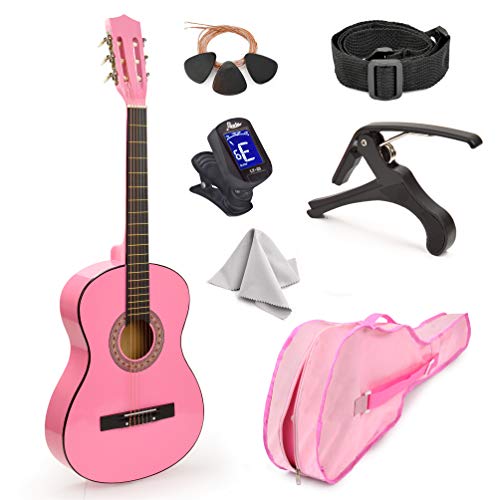
The Master Play 30-inch classical guitar offers a beginner-friendly size with a beginner-focused kit that includes a case, strap, extra strings, picks, tuner, and a carrying bag. The guitar’s Linden wood construction provides durability while keeping weight manageable for small hands. The strings are described as a combination of half steel and half nylon, designed to balance ease of finger pressing with a fuller tone. It is well-suited for introductory practice under adult supervision.
Best Choice Products 30in Kids Acoustic Guitar

This all-in-one starter guitar by Best Choice Products is designed with kids in mind, featuring a durable hardwood body with a lacquered finish. It mirrors the look and feel of a full-sized instrument, which can help children transition to more advanced guitars later. The package typically includes a carrying case, strap, extra strings, and a selection of learning aids. It’s particularly suitable for beginners who want a robust, stationary instrument for frequent practice and playtime.
M SANMERSEN Kids Guitar

The M SANMERSEN kid guitar features adjustable plastic strings with a head-button tension control to produce different sounds. An infrared sensor lights up in response to finger rhythm, which can capture a child’s attention and help them learn basic scales through responsive feedback. With eight built-in tones or melodies and a focus on hand-eye coordination and motor skills, this toy aims to support early music education in a playful, engaging way for 3- to 5-year-olds under supervision.
Hape 26 Inch Kids Guitar

The Hape 26-inch kid guitar is crafted as a beginner-friendly instrument with four tunable strings. Hape emphasizes safety and durability, presenting a sturdy wooden frame and a design best suited for younger learners who are still exploring finger placement and strumming patterns. While the guitar is simple, it provides enough structure to support early musical exploration, making it a practical option for 4-year-olds in a supervised setting.
Buying Guide: Key Purchase Considerations
- Safety and materials: Look for toys made from non-toxic paints, smooth edges, and durable woods or plastics designed for children’s use. Avoid sharp hardware or small detachable parts.
- Size and weight: For a 4-year-old, a guitar around 28–32 inches scaled to a child’s reach is ideal. Lightweight designs reduce fatigue during practice.
- String type and tension: Softer, lighter strings or plastic strings reduce finger discomfort. Adjustable tension helps tailor the feel as the child grows.
- Included accessories: Kits with tuners, straps, cases, and extra strings provide a complete learning environment and reduce the need for additional purchases.
- Durability vs. realism: Realistic-feel instruments can help with progression, but ensure the build can withstand enthusiastic play and occasional falls.
- Learning support: Some products offer built-in melodies, rhythm features, or accompanying apps that can guide early practice without frustration.
- Supervised use: For 4-year-olds, parental or caregiver involvement remains crucial to set goals, demonstrate technique, and ensure safety during playtime.
Product Diversity and Education Perspectives
The listed options cover a range from wooden, kid-friendly designs to plastic, interactive toys. Wooden guitars often offer superior durability and a more authentic feel, which can help children transfer to real instruments later. Interactive models with lights or built-in melodies can spark immediate interest but may require more guidance to avoid dependence on automated features. A well-rounded approach blends simple hands-on play with guided mini-lessons in rhythm, tempo, and basic chord shapes to foster ongoing musical curiosity in a safe, age-appropriate way.
Usage Scenarios and Skill Progression
For a 4-year-old, start with short practice sessions of 5–10 minutes, focusing on sensory engagement—sound, touch, and visual cues. Progress gradually to longer sessions as interest remains high. Encourage imitation of simple rhythms, introduce listening activities, and celebrate small achievements to build confidence. As coordination develops, gradually introduce basic fret positions or strum patterns. Choosing a versatile starter guitar that can scale with the child’s growing abilities helps maintain enthusiasm and reduces the need for early replacements.