Discover engaging learning cards designed for toddlers that support early language, memory, and cognitive development. This guide highlights five top toddler flash card sets, featuring vibrant visuals, durable materials, and kid-friendly designs. From Montessori-inspired talking cards to double-sided alphabet and number sets, these choices emphasize interactive play, parent-child bonding, and autism-friendly options. Read on to compare key features, learning aims, and practical use cases to choose the best fit for your child’s learning journey.
| Product | Brand | Focus |
|---|---|---|
| Airbition Talking Flash Cards | Airbition | Speech therapy, autism-friendly sounds |
| 50 PCS Kid First Cognitive Flashcards | SpriteGru | Alphabet, numbers, foods, animals |
| Merka Toddler Flash Cards | merka | Alphabet, colors, shapes, numbers |
| Torlam Toddler Flash Cards | Torlam | Alphabet, numbers, shapes, animals |
| School Zone Alphabet Flash Cards | School Zone | ABC, phonics, colors |
These selections balance educational breadth with durability and accessibility, offering options for home use, preschool curricula, and therapy-supported learning. Each set brings unique strengths, whether it’s engaging visuals, double-sided content, or multisensory features that pair sound with imagery. Consider your child’s age, attention span, and any therapy goals to choose a set that will keep learning enjoyable and consistent.
Airbition Talking Flash Cards For Toddlers

Airbition’s 224-card set blends colorful illustrations with sounds to create an engaging language-learning tool. Suited for ages 1–4, the cards span animals, vehicles, foods, fruits, and vegetables, offering a broad vocabulary for toddlers. The device provides a Montessori-style interaction with real animal sounds, and a repeat function supports repetitive practice. A five-level volume control makes it adaptable to different environments, while the American-accent narration keeps pronunciation consistent. This kit also aims to support autism-friendly learning through sight-sound pairing and structured play.
SpriteGru 50 PCS Kid First Cognitive Flashcards

SpriteGru offers 50 double-sided cards covering 110 words across letters, animals, numbers, foods, shapes, colors, first words, and body parts. The thick, PET-coated cards resist wear and tear, while non-toxic vegetable ink ensures safety for little learners. The set’s bright visuals and approachable formats are designed to engage preschoolers and support memory and vocabulary development. The double-sided layout enables more content without extra bulk, making it a practical choice for at-home practice or classroom use.
Merka Toddler Flash Cards Set

Merka’s 58-card set introduces alphabet, numbers, colors, shapes, and foundational concepts with double-sided design and cheerful artwork. The mix supports interactive learning and vocabulary growth, helping toddlers begin to associate letters and sounds with familiar objects. This kit is suitable for parents and educators seeking a compact, versatile tool that can anchor short daily sessions, storytelling prompts, and early literacy activities.
Torlam Toddler Flash Cards
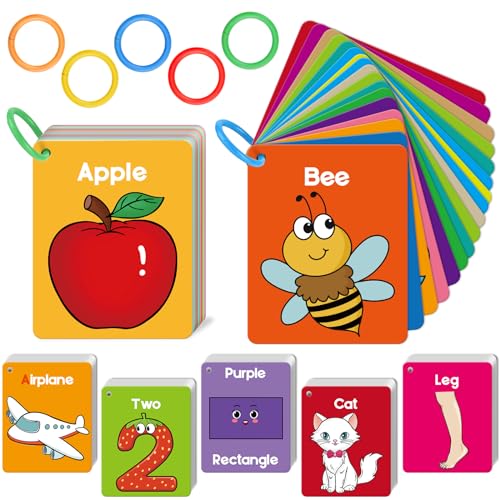
Torlam’s bundle includes 60 double-sided cards plus five rings to facilitate organized learning. Content spans alphabet, counting 1–10, shapes, colors, animals, first words, body parts, and foods. The vivid illustrations and legible fonts support early literacy and recognition skills. The rings enable easy sorting and portability, making this set a convenient option for on-the-go learning and structured classroom-style activities alike.
School Zone Alphabet Flash Cards

School Zone’s Alphabet Flash Cards feature 56 cards focused on letters, phonics, and color visuals. The package provides bold uppercase and lowercase letters with color-rich illustrations, aiming to build phonemic awareness and early reading skills. Thick, glossy cardstock adds durability for daily toddler use. This set emphasizes the connection between sounds and letters through practical, recognizable examples, supporting a foundational literacy pathway.
Buying Guide: Key Purchase Considerations And Comparisons
Learning cards for toddlers should balance engagement, safety, and educational value. Consider the following factors when choosing a set:
- Age and development stage: Younger toddlers benefit from larger, simpler cards with sound-enabled features; older preschoolers may enjoy more complex content with numbers, letters, and basic words.
- Content scope: Decide whether you want alphabet-first, vocabulary-rich, or numeracy-focused cards. Mix-and-match sets can cover a broader spectrum.
- Durability: Look for thick cardstock, protective coatings (PET), and chew-safe materials for teething phases. Double-sided cards maximize content per card.
- Interactivity: Flash cards with audio or interactive readers can enhance engagement, especially for language development and autism-supportive learning.
- Safety and materials: Ensure non-toxic inks, BPA-free plastics, and rounded corners for toddler use.
- Portability and organization: Rings, binders, or storage cases help maintain order and enable learning on the go.
- Parental involvement: Sets that include suggested activities or guided prompts support structured learning sessions.
- Therapy alignment: For children receiving speech or autism therapies, prefer kits that pair visuals with sound and offer calm, consistent cues.
When comparing options, assess how each set aligns with daily routines, whether you seek durable, long-term use or a quick-start learning tool, and how content breadth supports progression from counting and letters to simple words and concepts. For families with multiple children, consider scalable sets or plural packs to minimize clutter while expanding content coverage. Finally, consider trial usage to gauge engagement before settling on a long-term purchase.