Preschoolers build foundational math skills through play, exploration, and tangible manipulatives. The following selection highlights high-quality math manipulatives that support counting, number sense, patterning, color and shape recognition, and fine motor development. Each product offers different approaches—from snap-together cubes to wooden counting boards—to engage young learners at home or in the classroom.
A quick overview of the chosen products:
| Product | Brand | Key Focus | Typical Use |
|---|---|---|---|
| Learning Resources MathLink Cubes | Learning Resources | Counting, addition, subtraction, place value basics | Group activities, independent practice, small-group math centers |
| MOTREE Preschool Learning Toys | MOTREE | Number recognition, counting within 10, simple addition/subtraction | Individual or small-group math exploration |
| JoyCat Ice Cream Preschool Learning Activities | JoyCat | Counting, color sorting, fine motor skills | Classroom centers, rainy-day activities, home learning |
| Counting Dinosaurs Montessori Toys | Tsomtto | Color sorting, counting, logical thinking | Montessori-inspired activities, guided practice |
| Gserin Wooden Counting Numbers Peg Board | Gserin | Counting, sorting, patterning | Daily practice, travel-friendly learning |
Each of these options brings a unique angle to early math learning. The article below breaks down five strong choices, with product sections offering practical details and potential classroom or home applications. This approach helps caregivers pick tools that align with their educational goals and the child’s interests.
Learning Resources MathLink Cubes
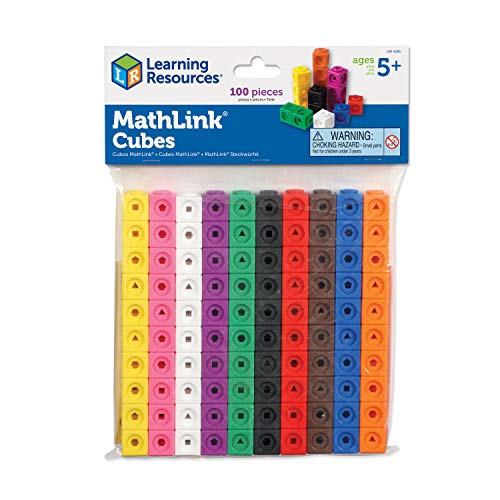
The MathLink Cubes come in a set of 100, offering a versatile base for counting to 100, one-to-one correspondence, skip counting, and basic addition and subtraction. They also support nonstandard measurements, grouping, graphing, and patterning. The cubes snap together on all sides, enabling young learners to build simple structures and patterns. Color and shape identification are naturally woven into activities, promoting early math vocabulary and number sense. The included activities encourage school readiness and homeschool use alike, making them a staple for math centers and individual practice.
Key features include compatibility with various math tasks and a sturdy plastic design that is easy to clean. Teachers can use them for place value explorations and early geometry through connecting shapes. The set also supports fine motor development and eye-hand coordination as children manipulate the small, lightweight cubes. Within a classroom, these cubes serve as a universal tool for rapid assessment of counting and basic arithmetic skills.
MOTREE Preschool Learning Toys

These math manipulatives include a wooden finger board, 13 colorful number blocks, 8 flash cards, and a holder. The design emphasizes counting, addition, and subtraction within 10, presented through visually engaging blocks and cards. The Montessori-inspired approach supports hands-on learning, helping children visualize number relationships and develop a deeper understanding of numerical concepts. Early learners build confidence as they match fingers to numbers, perform simple sums, and discover how quantities relate to symbols on the cards.
The set uses natural materials and a bright, kid-friendly aesthetic to attract attention and sustain interest. The blocks are sized for small hands and designed for durability to withstand daily classroom or home use. This product works well for guided teacher-led sessions, independent play, and small-group activities that target foundational math readiness and cognitive development.
JoyCat Ice Cream Preschool Learning Set

This counting and color sorting set uses ice cream-themed pieces to develop early math skills. With 20 scoops and 10 cones labeled with numbers 1–10, children practice counting, color recognition, and basic sorting. The bright colors and tactile textures encourage engagement, while the accompanying storage tub helps with organization and containment after activities. The set emphasizes hand-eye coordination through sorting and stacking, which is vital for fine motor development and future writing readiness.
Educational value comes from guided counting exercises and color-pattern activities. The toy’s durable, food-safe plastic construction protects little ones during enthusiastic play, including stacking and pretend play scenarios. Caregivers can structure activities around number identification, sequence, and simple one-to-one counting, enabling progressive challenges as kids gain fluency with numbers.
Counting Dinosaurs Montessori Toys
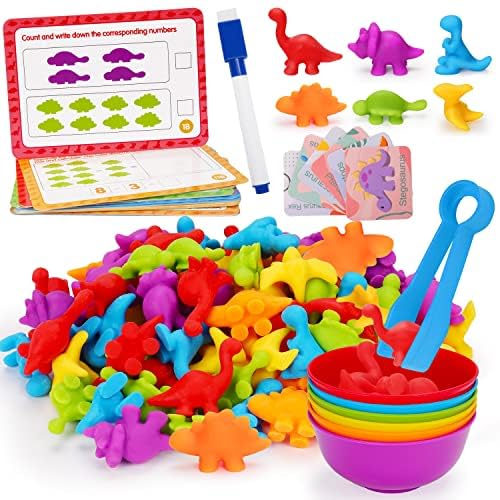
The Tsomtto counting dinosaurs set includes 72 color dinosaurs, 15 learning game cards, 1 answer card, 6 bowls, 6 small cards, 1 tweezer, and a pen for recording answers. It supports color sorting, counting, and basic comparing and logical thinking. The included cards offer varying difficulty, enabling differentiation for preschoolers and kindergarten students. This Montessori-inspired setup encourages hands-on exploration and independent problem-solving as children categorize dinosaurs by color, count items, and verify answers with the included writing tool.
Fine motor skills are developed through tasks like sorting into bowls, transferring pieces with tweezers, and arranging dinosaurs on the cards. The durable components are designed for daily classroom use and home experimentation. Teachers and caregivers can guide children through progressive challenges—from simple color matching to more complex counting problems—fostering autonomy and mathematical curiosity.
Gserin Wooden Counting Numbers Peg Board

The Gserin peg board provides a sturdy wooden counting tool with 55 pegs and a storage bag for portability. It’s ideal for teaching basic counting, sorting, and simple patterning. The natural beech wood construction offers a smooth surface with minimal splinters, supporting safe play for toddlers and preschoolers. Visual prompts featuring animals or fruits can help with quick recognition, while the tactile pegs invite hands-on exploration of numeric sequences and one-to-one correspondence.
With a classroom-friendly design, this peg board supports small-group activities and independent practice. It also travels well for on-the-go learning. The durable wood and compact size make it suitable for parents who want a low-tech, tactile math experience that complements digital learning tools.
Buying Guide: Key Purchase Considerations For Preschool Math Manipulatives
When selecting math manipulatives for preschoolers, consider these factors to align with developmental needs and learning goals.
- Educational Focus: Identify whether the primary goal is counting, number recognition, patterning, addition/subtraction, or fine motor development. Different tools address different stages of readiness.
- Durability And Safety: Look for sturdy construction and child-safe materials. Wooden pieces and BPA-free plastics typically endure daily use and are easier to clean.
- Age Appropriateness: Choose sets designed for ages 3–5, ensuring pieces are not too small to pose choking hazards but are challenging enough to promote growth.
- Hands-On Engagement: Favor manipulatives that invite manipulation, sorting, and counting rather than passive activities. Versatility across activities adds value for educators and households.
- Storage And Portability: Compact or modular designs with storage options help sustain organization in classrooms and homes, enabling easy rotation among centers.
- Differentiation: Consider sets with varying levels of difficulty or components that support guided instruction, independent practice, and small-group work.
- Care And Cleaning: Materials should be easy to wipe down or sanitize between uses, especially in shared settings like preschools.
- Compatibility: If possible, select manipulatives that complement existing curricula or other classroom tools for cohesive activities and assessment.
Practical implementation ideas include creating a math center with a mix of counting cubes, peg boards, and patterning cards; using color sorting as a quick whole-class warm-up; and incorporating timed challenges to promote focus and persistence. Rotating different manipulatives weekly keeps activities fresh while reinforcing core math concepts. For caregivers, pairing manipulatives with story-based prompts or pretend play can deepen engagement and reinforce numerical understanding in a meaningful context.