Discover a curated selection of math toys designed to engage 8-year-olds with hands-on number sense, speed, and problem-solving. These games blend fast-paced play with foundational math skills like addition, subtraction, multiplication, and division, helping kids build confidence while having fun. The following picks come from trusted brands and are suitable for home, classroom, or travel use. Each product highlights interactive elements, difficulty levels, and ways to tailor play to different skill levels.
| Product | Brand | Key Focus |
|---|---|---|
| Math Blast! Cool Math Games for Kids 8-12 | Gartana Games | Multiplication, Division, Addition, Subtraction |
| alilo Math Games for Kids Ages 5-12 | alilo | Addition, Subtraction, Multiplication, Division |
| Math Games for Kids – Flash Cards with Pop It | COOVA | Multiplication, Division, Addition, Subtraction |
| Math Slam | Educational Insights | Addition, Subtraction, Basic Algebra |
| Math for Love Prime Climb | Math for Love | Strategic math play for 2-4 players |
Math Blast! Cool Math Games for Kids

The Math Blast! game from Gartana Games centers on fast-paced mental math with 50 Challenge Cards and 75 equation cards covering addition, subtraction, multiplication, and division. A 30-second sand timer and multiple play modes—Solo, Battle, Partner, and 1 vs 1—keep sessions engaging for 8-year-olds and up to 6 players. Players draw a Challenge Card, solve the equation before time runs out, and accumulate points to win. This setup supports quick mental calculations and strategic decision-making in a classroom or home setting.
Designed to boost mental math fluency, this game targets core operations—multiplication and division, as well as addition and subtraction. Math Blast! is appropriate for group activities, tutoring sessions, or family game night, offering scalable difficulty through the varied challenge cards. The components emphasize quick thinking, numerical reasoning, and competitive or cooperative play, making it a versatile addition to math practice.
alilo Math Games for Kids Ages 5-12

The alilo math toy provides 19 interactive games that build logic and math skills for ages 5-12. It includes four logic activities—number memory, size comparison, pattern recognition, and number guessing—plus 10 addition, subtraction, multiplication, and division games. With a timed challenge mode offering 5- or 10-second limits, children can practice rapid calculation and accuracy while staying motivated through rewards. The toy also automatically checks mistakes and offers instant correction, reinforcing learning with immediate feedback.
Key features include instant voice encouragement and star rewards for task completion to sustain engagement. The machine-friendly feedback helps kids understand errors, revisit incorrect answers, and loop back to strengthening weak areas. This blend of gamified practice and auto-correction supports independent practice as well as guided play in small groups or classroom centers.
Math Games for Kids – Pop It Practice

COOVA’s Math Games pair interactive Pop It fidget play with flash cards covering addition, subtraction, multiplication, and division. Suited for ages 4-8 and expanding to 8-12, this tool supports foundational math practice and skill-building with a tactile, hands-on approach. The product positions math learning as an accessible activity that can fit into daily routines, car trips, or classroom rotations, transforming rote drills into an engaging problem-solving routine.
Educational value comes from blending visual-spatial engagement with arithmetic drills. The flash cards can be used with varied difficulty levels and combined with the Pop It for a multisensory experience. This makes it a practical option for teachers seeking quick warm-ups or parents aiming to supplement classroom math with a fun, bite-sized activity.
Math Slam

Educational Insights Math Slam is an electronic handheld set of math games designed to reinforce basic algebra and arithmetic. It features five modes—Slam it Up, Sum Slam, Subtraction Slam, Triple Slam, and Mystery Number—creating varied practice scenarios for fast calculation. Built-in sounds, lights, and a timer keep children engaged, while a mute option allows quiet practice in classroom settings. The device supports self-paced learning and friendly competition, making it ideal for math centers or travel-friendly practice.
The compact design makes it portable for on-the-go learning, and the multi-game format ensures continued relevance as kids grow more confident with number facts. The self-teaching aspect helps learners progress without constant direct instruction, which can be useful in diverse classroom environments or homeschool setups.
Math for Love Prime Climb
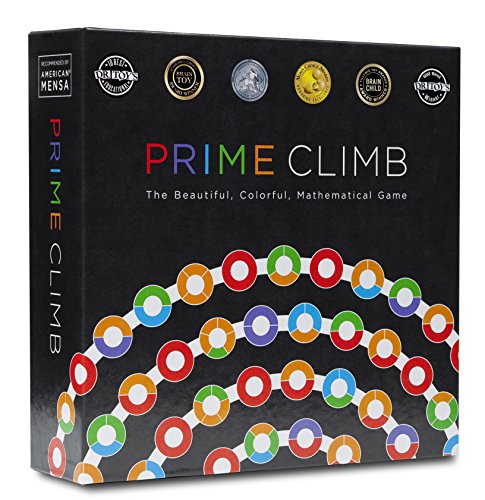
Prime Climb from Math for Love introduces number-based strategy with a math twist. Best suited for 2-4 players, it blends accessible rules with deeper strategic depth. The game encourages players to think about factors, primes, and arithmetic relationships while pursuing tactics that affect the color-coded climb to victory. It’s easy to learn but offers substantial replayability as players explore different routes to win, making it a strong option for family game nights or classroom clubs where collaborative learning and friendly competition occur.
The game’s design emphasizes logic, planning, and numerical reasoning alongside social interaction. Prime Climb can scale with players’ growing math abilities, encouraging discussion about numbers, prime properties, and probability during play sessions.
Buying Guide: Key Considerations For Choosing 8-Year-Old Math Toys
- Skill coverage: Look for toys that reinforce core arithmetic (addition, subtraction, multiplication, and division) along with number sense and mental math speed. Some options emphasize strategy and logical reasoning to complement rote calculations.
- Difficulty progression: Favor games with adjustable difficulty or multiple modes so the toy remains challenging as a child grows. This helps extend the product’s lifespan within a learning routine.
- Engagement factors: Elements like timers, rewards, cooperative or competitive modes, and tactile components (Pop It, dice, cards) can boost motivation and adherence to regular practice.
- Portability and setup: Consider whether the toy travels well or fits into a classroom station. Lightweight options with simple setup support quick transitions between activities.
- Educational value vs. play value: Distinguish between strictly drill-based tools and those that encourage strategic thinking and problem-solving, to support well-rounded math development.
- Age appropriateness: Ensure the product explicitly supports kids around 8 years old and offers scalable content to accommodate varying skill levels within that age range.
- Durability and safety: Check build quality for frequent play, particularly for younger children who may handle components roughly or with curiosity.
- Teacher and parent resources: Some toys include teacher guides, activity ideas, or progression tips that help structure effective practice sessions.
In selecting the right math toy, consider your child’s current strengths, preferred play style (competitive, cooperative, or solo), and how the toy fits into a balanced learning routine. A mix of fast-paced games and deeper strategy challenges can provide comprehensive skill development while keeping math enjoyable.