Montessori busy boards offer screen-free activities that build fine motor skills, self-help abilities, and cognitive growth for toddlers. This guide highlights five well-made wooden options designed for chances to explore latches, zippers, buttons, gears, and more—perfect for travel, quiet play, and early life-skill development. Each selection focuses on safe materials, age-appropriate challenges, and portability, so parents can choose a board that suits their child’s curiosity and daily routine.
Summary of highlighted products
- ABERLLS Montessori Busy Board for Toddlers — Wooden sensory learning with multiple daily-life activities.
- Esjay Toddler Busy Board — 8-page portable sensory board with level-adjustable challenges.
- Soupost Montessori Busy Board — 8-in-1 sensory hub designed for travel and skill-building.
- deMoca Montessori Busy Board — 10 educational activities for fine motor skills and independence.
- Vanplay Montessori Busy Board — Car-dash-inspired design aiding practical and cognitive skills.
ABERLLS Montessori Busy Board for Toddlers
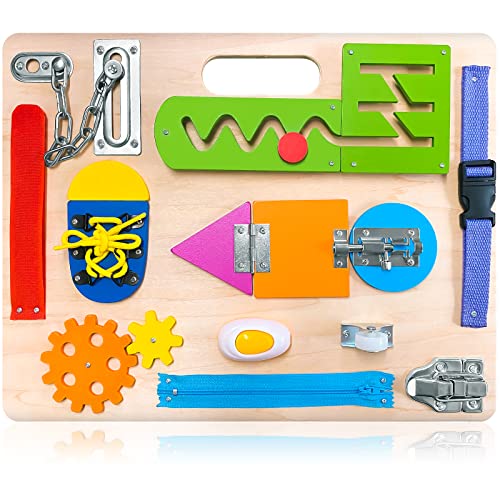
The ABERLLS wooden busy board is designed for ages 12–36 months and includes a range of daily-life activities such as latches, Velcro, switches, gears, key locks, zippers, and buttons. The board encourages tactile exploration, color recognition, and problem-solving through varied, sensory-rich elements. The design promotes cognitive attention and early learning in a compact, travel-friendly form. Its smooth wooden construction minimizes sharp edges and focuses on safe, hands-on play that reflects real-world tasks.
Key features include durable construction, non-detachable pieces to reduce small-part hazards, and a focus on fine motor development through purposeful play. Parents can use this toy to introduce basic practical skills—dressing, fastening, and manipulating common objects—while supporting concentration and hand-eye coordination. The board is suitable for toddlers who are curious about how everyday items work and want a sturdy, engaging activity during car trips or quiet time at home.
Esjay Toddler Busy Board

Esjay’s busy board features eight pages of activities with multiple difficulty levels designed to keep toddlers engaged for long sessions. The board focuses on fine motor development through zippering, shoelacing, buckles, buttons, a clock, a calendar, shape matching, threading numbers and letters, and a jigsaw puzzle. The varied pages enable progressive skill-building and cognitive growth as children master more complex tasks. Soft fabrics and no sharp corners emphasize safety during travel or at home.
Two notable benefits are improved hand-eye coordination and early literacy exposure through letter-based activities. While the design supports independent exploration, it also offers opportunities for guided play, helping caregivers introduce basic concepts like time, seasons, and number recognition in a playful context. A traveling-friendly handle and compact size make it a practical option for car rides, flights, or quiet lounge activities.
Soupost Montessori Busy Board

The Soupost busy board presents an 8-in-1 learning hub that emphasizes fine motor skills and problem-solving. Activities range from zipping and buttoning to shape matching, telling time, and spelling with hook-and-loop letters. The board is designed by educators to support early math, literacy, hand-eye coordination, and emotional recognition, providing a well-rounded foundation for preschool learning. Its soft felt construction minimizes rough edges while remaining durable for daily use and travel.
Travel and mess-free play are priorities, with a compact, silent design suitable for airplanes, restaurants, or long car journeys. Parents can leverage the expression cards to assist in emotional regulation during transitions, making this an appealing option for families seeking educational, low-disruption activities on the go. The board’s versatility helps children practice real-world skills in a safe, engaging setting.
deMoca Montessori Busy Board

The deMoca busy board offers 10 educational activities focused on fine motor skills and independent use. Highlights include zipping, tying, buckling, and other everyday tasks that promote practical life skills. The board’s lightweight, travel-friendly design supports screen-free play both at home and on trips, helping children develop concentration and problem-solving abilities through hands-on challenges. The durable wooden construction emphasizes safety and longevity for active toddlers.
With a design that targets both cognitive development and dexterity, this board helps children practice daily routines in a structured, kid-friendly way. The variety of activities aims to maintain interest as children grow, while the absence of batteries keeps play simple and accessible in any setting.
Vanplay Montessori Busy Board
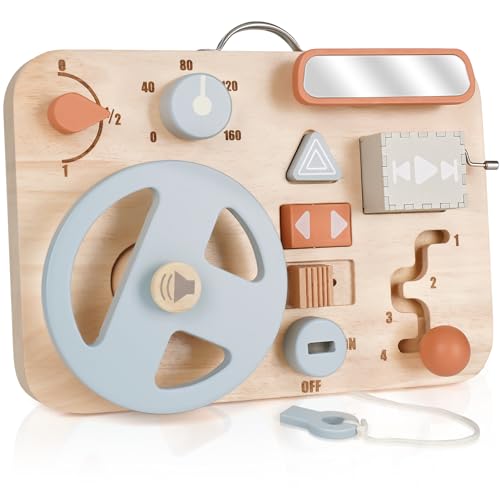
Vanplay’s busy board imitates a car dashboard, encouraging practical play and logical thinking. The board includes a key start, gear shift, steering wheel, horn, adjustable mirror, and a multimedia music box, providing a cohesive exploration of cause and effect, sequence, and pretend play. Its wooden construction with a portable handle makes it suitable for car trips, plane travel, or visits to friends and family. The design supports both fine and gross motor development, as well as early cognitive skills related to vehicle operation and everyday tasks.
For families seeking a travel-friendly, visually appealing option, this board blends aesthetics with functional learning. It supports independent exploration while giving caregivers a familiar, relatable context that resonates with toddlers who enjoy pretend driving and interactive controls.
Buying Guide: Key Considerations For Choosing A Montessori Busy Board
When selecting a Montessori busy board, consider safety, materials, age appropriateness, and portability. Look for smooth, rounded edges and natural wood or non-toxic finishes. Check that components are securely attached and not easily removable to prevent choking hazards. Age guidance matters, as some boards emphasize beginner tasks while others offer more complex challenges for older toddlers.
Activity variety is important: a well-rounded board includes fastening tasks (zippers, buttons, buckles), fine motor challenges (laces, gears, switches), and cognitive elements (clockwork, shapes, alphabet or numbers). Portability features such as a carrying handle or lightweight construction support travel and quiet time outside the home. Finally, assess durability for active play, including how pieces hold up to chewing, drooling, and rough handling common with toddlers.
Durability vs. portability is a common trade-off. Heavier boards may provide more stability but reduce travel ease, while ultra-light boards are easier to carry but can wear faster. Material choices—wood vs. fabric vs. mixed materials—affect tactile experience, safety, and cleaning needs. Consider whether you prefer a board that mirrors real-life tasks or one with more playful, story-driven elements to align with your child’s interests.
Usage context also matters. For frequent travelers, a compact, soft-lined board with minimal hard edges offers the best experience. If your child thrives on visual prompts, you may prioritize a board with bright colors and clearly labeled components. Finally, budget and brand reputation can guide your decision; reputable wooden busy boards from established brands tend to balance quality and safety across age ranges.
Additional Considerations: How To Use A Busy Board Effectively
Introduce one or two activities at a time to avoid overwhelm, gradually layering more tasks as your child builds confidence. Use short, guided sessions initially, followed by longer independent play as the child grows accustomed to the board. Maintain a safe play environment, especially when small parts are involved. Supervise children under three to ensure safe handling of all elements.
Incorporate busy boards into daily routines—naptime, car rides, or restaurant visits—so your child associates them with calm, focused activity. Rotate sections to maintain interest and prevent boredom. Finally, observe your child’s preferences, noting which activities promote problem-solving and which provide comfort or attention to sensory details. This helps tailor ongoing learning experiences tailored to your toddler’s development stage.