Parents and educators increasingly use pretend play to boost creativity, fine motor skills, and early nutrition literacy. This guide highlights five top play food sets that spark imagination, offer safe materials, and store neatly for quick cleanup. Each option provides realistic textures, color, and variety to encourage kids to plan meals, role-play grocery runs, and practice sharing in a kitchen play space.
| Product | Brand | Key Benefit | Pieces |
|---|---|---|---|
| Shimfun Play Food Sets | Shimfun | Large, safe assortment with storage bag; BPA-free | 143 |
| LAUGIGLE Pretend Play Food | LAUGIGLE | Cutting toy with sensory features; exclusive pizza design | 78 |
| Kidsciety 85Pc Pretend Play | Kidsciety | Two baskets for smart storage; realistic textures | 85 |
| MOEAWS Cutting Play Food Toys | MOEAWS | Chopping board and knife included; durable | 28 |
| Melissa & Doug Food Groups | Melissa & Doug | Wooden, colorful, teaches nutrition groups | 21 |
The selections above balance value, safety, and educational value for diverse play environments—from at-home kitchens to daycare centers. Each item supports creative storytelling, early numeracy, and social interaction through shared pretend meals and grocery experiences. The following sections present each product in detail, with practical insights on how to maximize learning and playtime.
Shimfun 143Pcs Play Food Sets
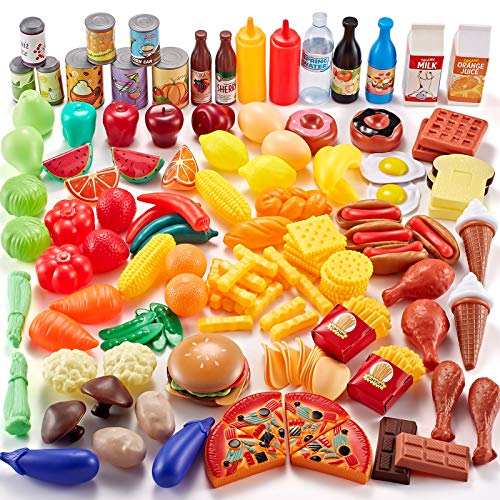
Shimfun offers a comprehensive 143-piece play food collection designed to mimic real groceries and kitchen items. The set includes a variety of vegetables, fruits, meats, dairy, desserts, and more, plus a durable storage bag for neat organization. Bright colors and realistic shapes help children recognize common foods while labeling groups for early nutrition learning. The materials are BPA-free and crafted from sturdy ABS plastic, minimizing breakage during active play. The wide assortment supports multiple pretend play scenarios, from grocery shopping to restaurant role-play, fostering social interaction and cooperative storytelling.
Educational angles include velocity of pretend cooking, color recognition, and pattern matching as kids group foods by category. The included utensils and knives are designed with safe, rounded edges to reduce risk during cutting pretend-play, while the hook-and-loop features encourage kids to simulate cutting, peeling, and assembling meals. Parents can guide conversations about where foods come from, helping to layer cognitive and language development into everyday playtime.
LAUGIGLE 78Pc Pretend Play Food Kit
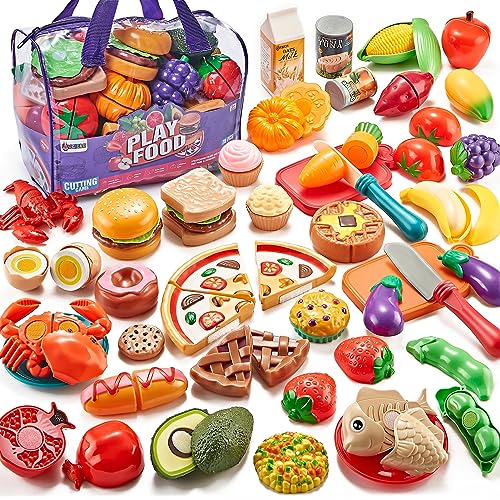
LAUGIGLE’s 78-piece set focuses on a complete cooking experience with a cutting toy to enhance fine motor skills and sensory exploration. The package includes vegetables, fruits, a pretend pizza, and other common kitchen foods, plus a dedicated storage bag for easy cleanup. The pizza design adds a fun, exclusive element that can inspire interactive play with peers or caregivers. The cutting activity with safe, looped pieces allows children to practice coordination and hand-eye control in a low-risk setting. This kit pairs well with a child’s existing play kitchen for a realistic culinary adventure.
From a cognitive standpoint, kids learn sequencing as they “prepare” meals, and color variety boosts recognition skills. Socially, the set invites collaborative role-play—one child “cuts” while another “plates” the food, nurturing cooperative play and communicative planning. The durable plastic is designed for daily use in busy playrooms, classrooms, or outdoor setups, making it a versatile option for varied environments.
Kidsciety 85Pc Pretend Play Set

Kidsciety’s deluxe kit emphasizes realistic textures and practical storage with two baskets, enabling neat organization after play. The 85-piece lineup covers a broad range of foods, including pizza, fruits, vegetables, seafood, meats, and desserts, plus sturdy utensils and knives for a satisfying pretend kitchen experience. Special design features include hook-and-loop attachments that simulate cutting and peeling, supporting safe, hands-on practice with fine motor skills and imaginative scenarios. The product is positioned as an ideal gift for birthdays, holidays, or classroom activities, where kids can plan menus and serve pretend meals to family or friends.
Educational value extends to early math and language as children count pieces, sort by food group (produce, dairy, grains, proteins), and describe flavors or meal ideas. The two baskets enable social play, encouraging turn-taking and collaborative storytelling during grocery shopping or restaurant play. The durable construction makes it suitable for daily use and for both indoor playrooms and outdoor setups.
MOEAWS Cutting Play Food Toys

MOEAWS presents a 28-piece cutting play set that includes a chopping board and a pretend knife, featuring colorful, durable foods designed for learning through play. Each piece is crafted from high-quality ABS plastic with rounded edges to maximize safety. The assortment simulates realistic foods to help children recognize textures and appearances while engaging in pretend grocery shopping or cooking. The set’s compact size makes it easy to store and transport, supporting play at home or on the go.
Mentally, the kit supports problem-solving and planning as kids decide which foods to cut and in what order. The tactile engagement of slicing and assembling fosters fine motor precision and hand strength. Some caregivers use the set to teach routines—washing hands, setting the table, and cleaning up after meals—integrating social and practical life skills into playtime. The included storage basket keeps pieces organized between sessions.
Melissa & Doug Food Groups

Melissa & Doug Food Groups brings wooden, hand-painted pieces that represent the five major food categories: produce, grains, dairy, proteins, and sweets. The four crates help children sort foods into meaningful groups, supporting early nutrition education and organization skills. The wooden construction provides a different tactile experience from plastic sets, appealing to children who respond to a sturdier, weightier toy. These pieces are durable enough for long-term use and can be integrated into early literacy activities by labeling crates or creating menus based on nutritional guidelines.
The wooden pieces encourage traditional pretend play and can be easily combined with other kitchen props to create elaborate meals. Sorting and pairing activities help with categorization and memory, while conversations about healthy choices foster foundational nutrition literacy. The compact design and included crates ensure that storage is straightforward, promoting independence in cleanup routines for kids and caregivers alike.
Buying Guide: Key Purchase Considerations
When selecting play food sets for kids, consider safety, durability, and learning potential. Look for non-toxic materials, rounded edges, and BPA-free plastics, especially for younger children who explore with hands and mouths. Durable construction matters for frequent use and mix-and-match play with other kitchen toys.
Consider the size and number of pieces: larger sets offer more variety, while smaller sets can be easier to manage and store. Storage solutions, such as baskets or bags, help maintain organization and encourage responsible cleanup. Realistic textures, colors, and packaging labels add educational value by teaching recognition, categorization, and nutrition basics.
Versatility is also important. Sets that include pretend utensils, knives, boards, and cutting features enable multi-step role-play—from grocery shopping to cooking and serving meals. For classrooms or daycare, consider sets with multiple baskets or crates to support parallel play and independent storage between sessions. Finally, compatibility with existing play kitchens enhances immersion and encourages longer, more engaged play sessions.
Perspectives to Consider
- Educational focus: Do you want to emphasize nutrition knowledge, counting, or color recognition?
- Safety and age range: Are the pieces large enough to avoid choking hazards for toddlers?
- Storage and portability: Will you use these sets at home, in a classroom, or for travel?
- Durability and material: Would a wooden set or a plastic set better suit your child’s play style?
- Open-ended play: Do the items encourage imaginative scenarios beyond cooking, such as grocery shopping or restaurant service?
In summary, the five featured play food sets provide varied approaches to pretend play—from extensive 143-piece assortments to compact wooden groups. Parents can balance realism, safety, and educational value to fit their child’s interests and play environment. The right mix supports imaginative exploration, fine motor growth, and social interaction, all through engaging kitchen-themed adventures.