Finding a play kitchen that suits older kids means balancing realism, durability, and enough features to fuel cooperative pretend play. The selections below focus on wooden and plastic sets with interactive lights, sounds, and storage that appeal to children aged 3 and up. Each option supports imaginative cooking, organization skills, and social play, helping kids develop narrative thinking while keeping cleanup simple.
| Product | Brand | Notes |
|---|---|---|
| Step2 Best Chefs Kitchen Playset | Step2 | Interactive oven, fridge, lights, sounds; 25 accessories |
| Tiny Land Play Kitchen for Kids (Wood) | Tiny Land | Modern design, extensive storage, realistic stove and sink |
| Kids Pretend Toy Kitchen Set with Lights | touch us | Wooden with lights; multiple doors; storage |
| Tiny Land Play Kitchen with Real Lights & Sounds | Tiny Land | Wood, 18 accessories; interactive features |
| KidKraft Ultimate Corner Wooden Play Kitchen | KidKraft | Corner layout, lights and sounds, durable wood |
Below are five product-focused sections that highlight how each set supports older kids through realistic design, ample play space, and practical storage. Each section includes a direct Amazon link, an image, and a concise feature summary to help compare quickly.
Step2 Best Chefs Kitchen Playset
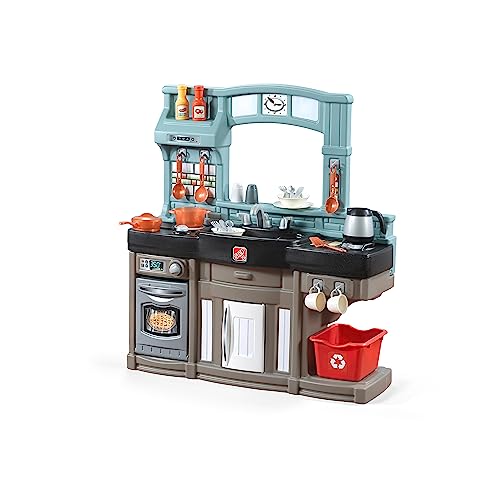
The Step2 Best Chefs Kitchen Playset features an open, modern design suited for both indoor and outdoor play. Its 35.8” H x 34.4” W x 11.5” D footprint supports multiple children at once, encouraging social cooking scenarios. Interactive elements include a working oven and refrigerator doors, a pass-through window, a stove with lights and sounds, and a recycling bin area for organized storage of the 25 included accessories. The durable plastic construction stands up to active play while easy-access storage helps keep play areas tidy.
Tiny Land Play Kitchen for Kids (Wood)

This modern wooden play kitchen blends with contemporary home décor while promoting organization skills through distinct storage options. Designed for children ages 3 and up, it includes high and low cabinets, transparent acrylic doors, and four felt storage boxes to reinforce sorting and classification. Realistic features—stove, sink, faucet, cupboards, hooks, pots, and utensils—offer endless pretend play possibilities and help develop hand-eye coordination.
Kids Pretend Toy Kitchen Set With Lights

Designed for ages 3–8, this wooden play kitchen includes a lighted oven, doors for the cabinet, freezer, refrigerator, and microwave. A wide array of utensils and kitchenware supports immersive role play and language development as children narrate recipes. The storage space helps cultivate tidy habits, and the set’s solid wooden construction provides durability for repeat play sessions and shared use among siblings or friends.
Tiny Land Play Kitchen with Real Lights & Sounds

This wooden kitchen emphasizes a realistic cooking environment with a range of interactive features. Real lights and sounds on the stove, oven, and fridge simulate authentic kitchen activity. The set includes 18 toy food and cookware accessories to extend play value. Its space-efficient 31″ wide design fits smaller playrooms while still offering multiple functional areas for kids to explore and coordinate with peers.
KidKraft Ultimate Corner Wooden Play Kitchen
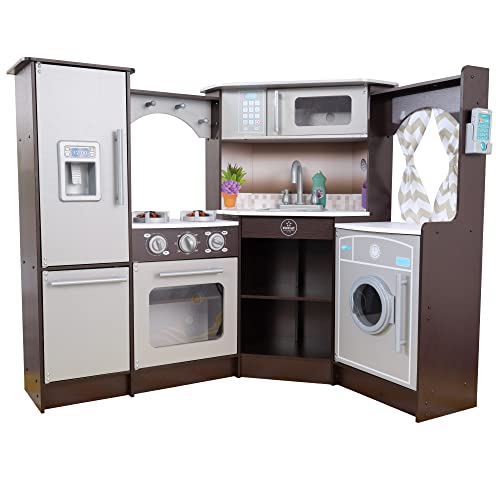
The KidKraft Ultimate Corner Kitchen maximizes play space with a corner design that fits neatly into rooms while creating a spacious kitchen area for pretend play. It includes lights, sounds, a pretend phone, and curtains to enhance realism. Constructed from durable wood, it is designed for frequent use by multiple children and pairs well with a wide range of play accessories for extended role-play scenarios.
Buying Guide
- Age and compatibility: Look for sets labeled for ages 3–8 or older for more mature pretend play and storytelling capabilities. Consider whether the kitchen supports multiple children playing at once.
- Materials and durability: Wood play kitchens tend to be sturdier and longer-lasting, while high-quality plastics can offer lighter weight and easier cleanup. Check for safe finishes and non-toxic materials.
- Realism vs. space: Realistic features such as lights, sounds, doors, and working burners add immersion, but take note of footprint size to ensure it fits your play area.
- Storage and organization: Built-in shelves, hooks, and cabinets help teach responsibility and tidy-up habits. A model with clear storage zones can boost this learning.
- Storage of accessories: Many sets include 10–25 accessories. Confirm compatibility with your existing pretend-play items and the ability to add more accessories over time.
- Assembly: Some sets require assembly that can take several hours with two people. Check for included tools and clear instructions; look for kits designed for easy setup.
- Maintenance: Smooth surfaces and rounded edges reduce wear and tear and make cleaning easier, especially for younger kids who are still learning proper handling.
When selecting a kitchen for older kids, prioritize designs that encourage collaborative play, such as open layouts, seating areas nearby, and grow-with-you features (doors that open, drawers, and interactive elements). These attributes support longer engagement, social skills development, and imaginative storytelling while keeping cleanup manageable for caregivers.