Pop up toys that teach cause-and-effect are a staple in early learning. They entertain while helping toddlers develop fine motor skills, hand-eye coordination, and early problem-solving. Below are five selected pop-up options that emphasize bright colors, engaging actions, and safe, kid-friendly designs. Each product features interactive elements like buttons, levers, and switches that trigger popping animals, lights, or sounds—perfect for 12 months and up.
| Product | Brand | Key Benefit |
|---|---|---|
| Battat – Cause And Effect Toy With Buttons & Colors – Pop Up Pals | Battat | Cause-and-effect exploration with color sorting animals |
| Fisher-Price Busy Buddies Pop-Up | Fisher-Price | Classic cause-and-effect play with animal pop-ups |
| Hieoby Interactive Pop Up Animals | Hieoby | Musical, light-up modes that support fine motor and problem solving |
| Playskool Poppin’ Pals | Playskool | Colorful, hands-on popping says animals and shapes |
| BACCOW Music Light Pop Up Toys | BACCOW | Easy-to-use controls with lights and sounds for early learners |
These picks prioritize safety, age-appropriate challenges, and durable construction. They’re suitable for playtime at home, daycare activities, or as classroom learning aids. Whether a parent, caregiver, or educator, you’ll find options that focus on cause and effect, color recognition, and motor development through interactive popping, flashing lights, and friendly animal characters.
Battat Pop Up Pals: Cause And Effect Fun
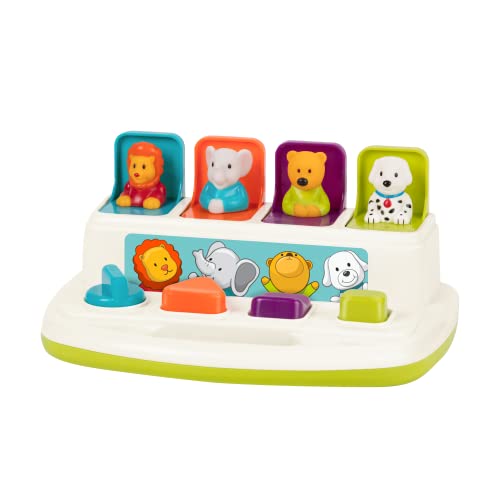
Battat’s Cause And Effect Toy invites toddlers to press a button and watch a friendly animal pop up. The design uses multiple button types—turn, press, flip, and slide—so little hands get varied practice in fine motor control. Educational benefits include learning the cause-and-effect concept, discovering different animals, and recognizing colors and shapes. The toy’s bright colors and tactile elements hold a child’s attention while offering repetitive play that reinforces learning patterns. It’s well-suited for supervised play during early development milestones.
Fisher-Price Busy Buddies Pop-Up

Fisher-Price’s Busy Buddies Pop-Up introduces your baby to cause-and-effect through activations that reveal giraffes, lions, crocodiles, and elephants. The set includes tactile elements like squeaks, chimes, and clicks to provide sensory feedback. While highlighting cause-and-effect mechanics, this toy also helps with hand-eye coordination, object permanence, and early language recall through animal names and sounds. It’s a trusted option for toddlers nearing their first birthday and beyond, offering reliable durability and engaging play.
Hieoby Musical Pop Up Animals

Hieoby’s Interactive Pop Up Animals combine five adorable characters with five colorful buttons. Triggering a button causes an animal to pop up, supporting fine motor skills, color recognition, and problem-solving. The toy offers three modes: Quiet (no batteries required), Learning (animal sounds match each pop), and Game (music and light). This multi-mode design supports varied development stages and keeps toddlers engaged as they grow. It’s particularly strong for Montessori-inspired play and sensory exploration.
Playskool Poppin’ Pals

Playskool’s Poppin’ Pals offers classic, hands-on popping play with a giraffe, elephant, panda, lion, and monkey. The lever, beeper, key, and switches are sized for little fingers, promoting fine motor practice as animals pop up and lids snap shut for repeat play. The toy teaches basic colors and shapes, while reinforcing cause-and-effect understanding through repeated interactions. Its straightforward design makes it suitable for younger toddlers who are just starting to explore interactive toys.
BACCOW Music Light Pop Up Toys

BACCOW’s model emphasizes user-friendly controls with AA batteries (not included) and an emphasis on music and lights that accompany the popping action. The toy helps toddlers learn numbers, colors, shapes, and animal sounds as the animals pop up and close. It’s especially useful for developing motor skills through push, press, spin, and close motions. The design supports early sensory development and offers adjustable features to accommodate different attention spans and play styles.
Buying Guide: Key Purchase Considerations and Comparisons
Age and safety
Choose toys designed for the child’s current age range, ensuring small parts are securely attached, and that materials are BPA-free and non-toxic. Look for rounded edges and certifications that indicate safe construction for infants and toddlers.
Learning goals
Consider which skills you want to support: fine motor development, hand-eye coordination, color and shape recognition, or early vocabulary. Toys with multiple modes (quiet, learning, game) provide adaptable challenges as a child grows.
Mechanics and variety
Pop-up mechanics can include buttons, levers, dials, and switches. A mix of actions encourages broader motor practice and keeps play interesting. Some toys incorporate lights and music to enhance sensory feedback, but ensure there is a quiet mode for restful play.
Durability and maintenance
Durable plastics, smooth finishes, and simple disassembly for cleaning support long-term use. Check that any electronic components are protected against rough handling and that batteries are easy to replace when needed.
Engagement and learning pace
Multi-month use comes from toys that offer escalating challenges, varied play modes, and recognizable characters. Toys with familiar animals or themes can aid memory and language development as children imitate sounds and names.
Budget and versatility
Compare the core features, number of play modes, and included characters across options to identify the best value. A single toy with multiple play modes may offer more long-term value than a simpler single-action design.
Caregiver involvement
Some toys encourage independent exploration, while others benefit from guided play with a caregiver. Consider which type of interaction best fits your routine and child’s temperament, as shared play often enhances language development and social bonding.
In selecting pop up toys for toddlers, prioritize safety, developmental benefits, and durability. The five options featured here provide varied approaches to cause-and-effect learning, from simple single-button interactions to multi-mode experiences that combine music and lights with engaging animal characters. Each choice supports early development while offering engaging play opportunities for both toddlers and caregivers.