Finding engaging reading-focused toys for 5-year-olds helps build foundational reading skills while keeping kids excited about learning. The following selections blend phonics, word recognition, storytelling, and hands-on activities to support early literacy development. Each pick comes from trusted brands and offers interactive features that suit curious 5-year-olds.
Summary of Selected Products
| Product | Brand | Key Focus | Use Case |
|---|---|---|---|
| Mr. Pencil’s Scribble Write and Read | LeapFrog | Letter tracing, writing names, animated transformations | Fine motor practice and handwriting readiness |
| LeapReader System Learn-to-Read Mega Pack | LeapFrog | Phonics, reading aloud, interactive stories | Self-guided reading with multimedia support |
| Montessori Reading Blocks | ShyLizard | Vowel blocks, sight words, wooden tray | Hands-on word building and vocabulary |
| Little Genius Kit | Doctor Jupiter | Science-language integration, experiments | Cross-curricular literacy through activities |
| Let’s Go! Matching Letter Game | LIWIN LET’S GO! | Letter recognition, memory, spelling | Collaborative literacy practice |
| Speak & Spell | Basic Fun | Spelling, phonics, retro handheld | Independent spelling practice and challenge |
LeapFrog Mr Pencil’s Scribble Write And Read, Green

LeapFrog’s Mr Pencil introduces early writing and reading through step-by-step letter formation. The toy shows uppercase and lowercase letters, then animates them into animals and objects to reinforce recall. Children can trace numbers with dotted lines and watch numbers transform into countable items, combining handwriting practice with basic math concepts. A customizable feature lets caregivers enter a child’s full name for personalized writing practice, supporting literacy development and name recognition.
LeapFrog LeapReader System Learn-To-Read 10 Book Mega Pack, Pink

This LeapReader set blends touch pages with audio guidance to teach reading through interactive storytelling. The pen sounds out letters and words as children explore each page, featuring three modes to support independent reading. The pack includes ten early reading books emphasizing short vowels, sight words, and simple words, making it suitable for 5-year-olds transitioning from basic phonics to more complex text. The multi-modal approach reinforces phonemic awareness while fostering a love of reading.
ShyLizard Montessori Reading Blocks Toys

This wooden reading set centers on letter recognition and basic word-building through a tactile Montessori approach. The elephant-shaped wooden tray houses vowel rotating blocks and 40 sight-word flash cards with visuals on one side and word-picture pairs on the other. Blocks are sized for small hands, and the set emphasizes safe, durable pine wood with smooth edges. Preschoolers turn blocks to spell prompt words, linking letters to images and reinforcing vocabulary in a hands-on learning activity.
Doctor Jupiter Little Genius Kit

The Little Genius Kit offers a multi-subject approach to early literacy with science and language-oriented activities for ages 4 to 6. Alongside books and language games, the kit includes 15 science experiments and a small animal encyclopedia with real-world imagery. The kit uses food-grade materials and child-safe equipment to empower curiosity while developing reading and comprehension through experiments, descriptions, and results documentation.
LIWIN LET’S GO! Learning Games For Kids
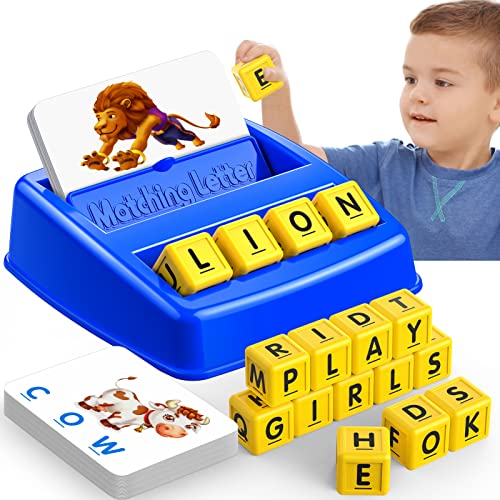
This set centers on matching letters and building early word recognition. It supports children ages 3-8 and emphasizes memory skills, spelling, word recognition, and strategic thinking. The game format fosters parent-child interaction, encouraging turns, sharing, and collaborative problem-solving. While primarily a matching-literal game, it also strengthens foundational literacy through repeated exposure to letters and common word patterns in a playful context.
Speak & Spell Electronic Game

The Speak & Spell offers a nostalgic yet educational experience focusing on spelling and phonics. With five play modes—Spell, Mystery, Say It, Secret Code, and Letter—the device provides varied challenges suitable for different literacy levels. It supports autonomous play and progression through multiple challenge levels, helping children practice letter sounds, word construction, and spelling in a compact handheld format.
Buying Guide: Key Purchase Considerations
When selecting reading toys for five-year-olds, consider how each option supports core skills: phonemic awareness, letter recognition, decoding, and reading fluency. Look for age-appropriate difficulty, durability, and safety. Multi-sensory features—sound, touch, visuals—boost engagement and retention. Personalization capabilities can reinforce name recognition and handwriting practice, while a mix of screen-free and tech-assisted options ensures a balanced approach.
Factors to compare:
– Learning modality: hands-on, auditory, or interactive digital experiences.
– Skill focus: phonics, sight words, handwriting, or a combination.
– Durability and safety: child-safe materials and rounded edges for toddlers.
– Adaptability: adjustable difficulty or multiple modes to grow with the child.
– Parent involvement: activities that encourage joint play, discussion, and feedback.
– Content breadth: whether the set covers reading, writing, and basic comprehension or focuses on single aspects.
Product variety matters because different children respond to different learning styles. For example, writing-focused tools like Mr Pencil’s Scribble Write support handwriting and letter formation, while reading-focused kits like LeapReader emphasize sounding out letters in context. Wooden Montessori blocks promote tactile word building, whereas a retro Speak & Spell leans into independent spelling practice. A balanced selection across these styles often yields the best literacy outcomes for five-year-olds.
Considerating practicality, check assembly requirements, battery or charging needs, and whether the toys align with your child’s current literacy level. For households with multiple children, durability and shared play value are beneficial features. Always review age recommendations and safety guidelines to ensure a secure learning environment.