Parents and educators looking to spark curiosity in young learners will find science kits ideal for hands-on exploration. This guide highlights five top science kits that blend STEM learning with engaging activities, from magic-inspired experiments to electronics projects. Each option supports critical thinking, problem solving, and basic science concepts in a kid-friendly format. Discover kits designed to captivate 8-year-olds while encouraging safe, age-appropriate experimentation at home or in the classroom.
Summary of chosen products:
| Product | Brand | Focus | Key Appeal |
|---|---|---|---|
| NATIONAL GEOGRAPHIC Science Magic Kit | Blue Marble | Magic-inspired science | 100+ experiments, tricks, wand and gloves |
| National Geographic Magic Chemistry Set | Blue Marble | Chemistry with magic tricks | 10 experiments, kid-friendly guide |
| National Geographic Gross Science Kit | Blue Marble | Gross-out science fun | 45 gross experiments + 30 more ideas |
| Snap Circuits Jr. SC-100 | Snap Circuits | Electronics and circuits | 100+ projects, safe electrical basics |
| UNGLINGA 150 Experiments Science Kits | UNGLINGA | Broad STEM experiments | 150 experiments, varied topics |
National Geographic Science Magic Kit

The National Geographic Science Magic Kit blends science with magic to create engaging demonstrations. With 100+ experiments, children can bend metal with water, make a vanish, and float a coin, transforming learning into a performance. This kit emphasizes curiosity and hands-on discovery, encouraging kids to observe, predict, and test outcomes while enjoying magic-style presentations.
Included materials support 20 magic-style science tricks. A wand and white gloves help children present experiments as magic shows. The kit emphasizes physics and chemistry concepts behind each feat, offering a vivid way to explore scientific ideas through entertaining demonstrations.
National Geographic Magic Chemistry Set
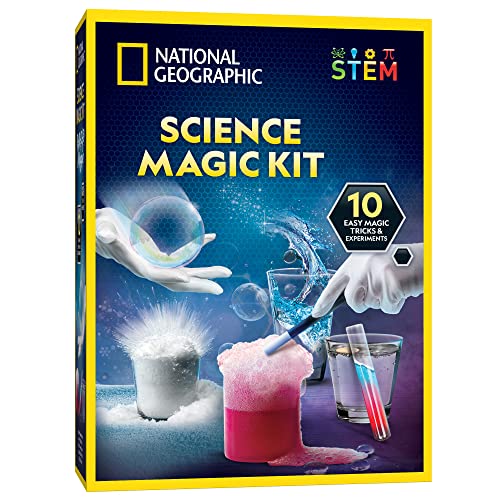
This chemistry-focused kit brings magic into science with 10 captivating experiments that wow and educate. Children can float a coin, change water color, and see snowfall appear, all while learning the science behind these tricks. The included wand and gloves add a performative element that makes science feel like a show, while an illustrated guide helps young scientists understand the ideas behind each effect.
National Geographic Gross Science Kit

Gross-out science can be a powerful motivator for kids. This kit includes 45 gross experiments with entertaining, kid-friendly instructions that explain the science behind the reactions. A bonus booklet adds 30 more easy experiments using common household items, making this kit a flexible option for exploring biology, chemistry, and physics through playful, memorable activities.
Snap Circuits Jr. SC-100

The Snap Circuits Jr. kit provides an approachable electronics education. With 100+ projects, kids build safe, colorful devices using a clear, color-coded project manual. This kit helps young learners grasp circuits, electrical safety, and engineering fundamentals through hands-on experimentation and guided challenges.
UNGLINGA 150 Experiments Science Kits

This expansive kit covers earth science, chemistry, physics, and more. With 150 experiments, it provides a broad spectrum of activities, from volcano eruptions to circuits and crystal growing. The manual is well-illustrated, offering step-by-step instructions and explanations designed to foster critical thinking and scientific reasoning.
Buying Guide: Key Purchase Considerations
- Age suitability and safety: Check recommended ages, included safety gear, and non-toxic materials for an 8-year-old learner.
- Curriculum alignment: Look for kits that reinforce core STEM concepts (science process skills, measurement, variables) and words like hypothesis and observation.
- Hands-on vs. guided learning: Decide whether to favor fully open-ended experiments or guided projects with structured instructions.
- Variety and scope: Consider how many topics are covered (chemistry, electronics, physics, biology) and whether the kit supports long-term exploration.
- Quality of manuals and visuals: Clear, illustrated instructions help early readers follow steps and understand concepts.
- Expansion potential: Some kits include extra experiments or offer compatibility with other kits to extend learning.
- Value for money: Compare number of experiments, included materials, and durability of components to ensure lasting use.
- Safety with electronics: For electronic kits, ensure age-appropriate power basics and safe handling practices.
When selecting a kit, weigh preference for magic-inspired demonstrations, gross-out science, or electronics projects. Each option can build curiosity, improve procedural thinking, and cultivate a habit of exploring scientific ideas through play. Balancing novelty with educational depth helps sustain interest while developing foundational STEM skills for future learning.