Exploring science through hands-on kits can boost curiosity, critical thinking, and problem-solving in preteens. This guide highlights five top choices that align well with curious 11-year-olds, combining engaging experiments with clear instructions and safe materials. Each kit invites young scientists to observe, hypothesize, and test ideas while building confidence in STEM skills.
| Product | Type | What It Teaches |
|---|---|---|
| National Geographic Gross Science Kit | Gross science experiments | Biology basics, observation, scientific reasoning |
| NATIONAL GEOGRAPHIC Science Magic Kit | Science magic tricks | Physics and chemistry concepts through tricks |
| Thames & Kosmos Mega Cyborg Hand | Hydraulic/mechanics | Air pressure, pneumatics, engineering design |
| Playz Edible Candy Making Kit | Food science and chemistry | States of matter, mixtures, chemical reactions |
| National Geographic Magic Chemistry Set | Magic-inspired chemistry | Chemical reactions, observation, experimentation |
National Geographic Gross Science Kit

The National Geographic Gross Science Kit delivers a wide selection of high-impact, hands-on activities designed to engage younger scientists with playful yet educational gross-out experiments. With 15 core activities and an additional 30 ideas using common household items, this kit supports curiosity and hypothesis testing in biology and chemistry contexts. Kid-friendly, illustrated instructions guide each step, helping learners follow procedures and interpret outcomes. The broad scope makes it suitable for independent exploration or guided classroom-style projects that emphasize observation and scientific reasoning.
NATIONAL GEOGRAPHIC Science Magic Kit

This kit blends science with magic, offering more than 100 experiments and magic tricks. Young scientists can bend metal with water, make objects float, and reveal hidden reactions—all while performing tricks that demonstrate core physics and chemistry ideas. The included wand and gloves help kids perform confidently, turning demonstrations into engaging storytelling moments. Materials for 20 magic-inspired experiments are included, providing a comprehensive hands-on experience that reinforces scientific concepts through entertaining demonstrations and repeated practice.
Thames & Kosmos Mega Cyborg Hand

Build-your-own wearable hydraulic hand demonstrates pneumatic principles and mechanical design without motors or batteries. Hydraulic pistons enable finger movement, and adjustable joints allow customization for different hand sizes and tasks. This project emphasizes hands-on engineering and physics concepts, showing how air pressure and simple mechanisms can accomplish precise, lifelike motion. It’s a strong option for hands-on learners who enjoy constructing devices and testing how changes in design affect performance.
Playz Edible Candy Making Science Kit

This edible science kit combines chemistry with culinary creativity. Teachers and parents can guide children through candy-making experiments that illustrate states of matter, solutions, crystallization, and reaction science. The colorful, fact-filled lab guide presents information in a kid-friendly way and supports learning through visual demonstrations and easy-to-follow steps. The kit encourages experimentation, experimentation safety, and the exploration of how ingredients transform during sweet-making processes, making science memorable and delicious.
National Geographic Magic Chemistry Set
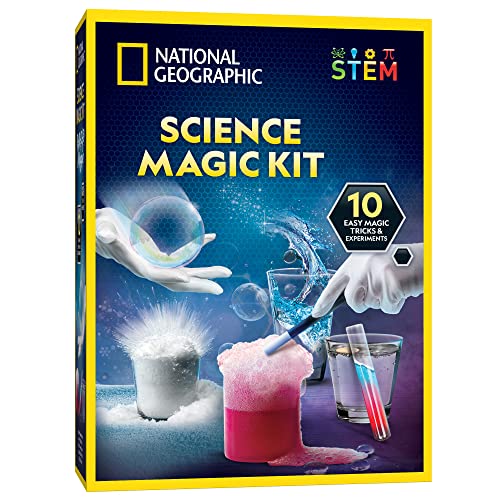
National Geographic’s Magic Chemistry Set blends stunning demonstrations with core chemistry experiments. Kids perform tricks that reveal chemical reactions, color changes, and state transitions, while the illustrated instructions explain the science behind each effect. The kit aims to balance entertainment with educational depth, helping learners connect observed phenomena to foundational chemistry concepts. With a focus on safe experimentation and repeatable results, it’s well-suited for curious 11-year-olds who enjoy both science and spectacle.
Buying Guide: Key Purchase Considerations for 11-Year-Olds
- Learning goals: Choose kits that align with biology, chemistry, physics, or engineering interests to reinforce critical thinking and practical skills.
- Hands-on complexity: Look for age-appropriate challenges that gradually increase in difficulty to maintain engagement without causing frustration.
- Materials and safety: Prefer kits with non-toxic, accessible components and clear safety guidelines, especially for activities involving heat, chemicals, or sharp tools.
- Instruction quality: Clear, illustrated guides help independent learning and reduce reliance on parental assistance for step-by-step procedures.
- Scope and value: Kits with a broad range of experiments or upgrade options (additional experiments using common household items) offer long-term learning value.
- Engagement features: Magic or storytelling elements can boost curiosity, but ensure the science remains accurate and insightful.
- Skill transfer: Consider whether the kit teaches transferable STEM concepts (observation, hypothesis testing, measurement, data interpretation) that apply beyond a single activity.
- Durability and reusability: Reusable components and protective storage help sustain interest and justify ongoing use.
- Parent/teacher guidance: Some kits include discussion prompts or activity sheets that support guided inquiry and collaborative learning.
- Budget considerations: Compare upfront cost with the number of experiments, long-term use, and potential for expanding with related kits.