Finding engaging science toys for a 12-year-old boy can spark curiosity, critical thinking, and problem-solving skills. The following selections emphasize hands-on construction, robotics, and experimentation that align with middle-school science topics like physics, engineering, and energy sources. Each pick offers clear instructions, durable parts, and age-appropriate challenges to keep a curious learner engaged. Use this guide to compare STEM kits that support independent play or collaborative projects with friends or family.
| Product | Brand | Type | Key Focus |
|---|---|---|---|
| Klutz Lego Gear Bots Science/STEM Activity Kit | Klutz | Kinetic/Mechanics Kit | Axles, cams, cranks; LEGO Technic |
| STEM 13-in-1 Education Solar Power Robots | Bottleboom | Solar Robotics Kit | Solar energy; 13 robot builds |
| National Geographic Gross Science Kit | Blue Marble | Gross Science Experiments | Slime, “gross” experiments |
| Smartivity DIY Robotic Mechanical Hand | Smartivity | Hands-on Robotics | Mechanical hand build; engineering concepts |
| COBFDHA STEM Projects for Kids | COBFDHA | Solar/Battery Robots | Robotics with sun or battery power |
Klutz Lego Gear Bots: Kinetic Creatures

The Klutz Lego Gear Bots kit combines LEGO Technic bricks with papercraft to build eight physics-driven kinetic creatures. The 64-page book provides STEM content about axles, cams, cranks, and everyday machine engineering, paired with step-by-step instructions. The set focuses on mechanical motion, gear ratios, and how simple machines work together to produce movement. Ideal for independent builds or guided discovery, it helps reinforce foundational engineering concepts while delivering creative, hands-on play.
What to note: This kit includes all necessary LEGO elements and integrates a narrative about engineering in real-world devices. It encourages problem solving as builders adjust gears and levers to optimize speed and balance. A strong choice for fans of LEGO who want a tangible link between play and science principles.
STEM 13-in-1 Solar Power Robots

This solar robotics set offers 13 different builds, each movable either on land or water. Builders split and reassemble parts such as gears, plates, tires, and shafts, following a step-by-step manual. The kit emphasizes solar energy use over traditional electrical power, providing a practical lesson in renewable energy. All components are designed for safe, long-lasting use with smooth edges and non-toxic materials. It’s suitable for guided projects or independent exploration for middle-grade students.
Considerations include the durability of solar panels and connectors, the clarity of assembly instructions, and the balance between simple vs. complex builds to match a 12-year-old’s growing skill level. It promotes teamwork if used as a family project, and it can spark deeper interest in robotics and energy science.
National Geographic Gross Science Kit

National Geographic’s Gross Science Kit focuses on 45 experiments with an emphasis on the playful, “gross” factor. Activities include making slime, dissection-like demonstrations, and other hands-on experiments designed to engage curiosity and observation. The kit includes illustrated, kid-friendly instructions, plus a bonus booklet with additional experiments using common household items. This option blends biology, chemistry, and sensory exploration to encourage scientific thinking in a memorable context.
Pros include broad appeal to varied interests and clear documentation of steps. A potential drawback is the emphasis on “gross” themes, which may not suit every learner. For some kids, the humor and surprise can be highly motivating, while others may prefer more traditional or technical experiments.
Smartivity DIY Robotic Mechanical Hand

The Smartivity mechanical hand provides an action-packed engineering project that guides kids through constructing a functional robotic hand. The kit emphasizes step-by-step instructions and offers a screen-free building experience designed to develop fine motor skills, spatial reasoning, and basic mechanics. Replacement parts are available, reducing downtime during play. The activity is well-suited for curious learners who enjoy hands-on, goal-oriented tasks and want to observe cause-and-effect as components move through articulated joints.
Strengths include clear documentation and long-term engagement with a mechanical system. Considerations include the complexity of assembly and whether the user prefers more open-ended builds versus a guided project with a specific end product.
COBFDHA STEM Projects: Solar & Battery Robots
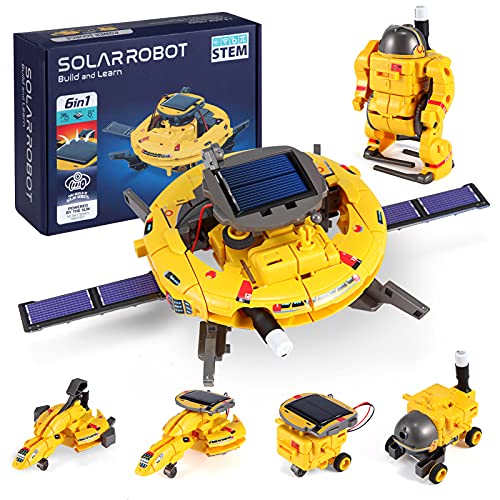
This COBFDHA kit presents six different robot builds powered by either solar energy or battery power. It encourages kids to switch between power sources, explore solar collection and energy conversion, and experiment with mechanical design. The kit is designed to boost imagination and confidence as learners tackle problems and iterate on their robot designs. It supports both indoor and outdoor play, enabling varied learning environments and experimentation with sun exposure or battery use.
Key considerations include ensuring adequate sun exposure for solar builds and testing the durability of solar panels in outdoor use. The kit’s flexibility to operate under different power modes makes it appealing for learners who enjoy testing hypotheses and comparing outcomes across configurations.
Buying Guide: What to Look For In Science Toys For 12-Year-Olds
- Skill progression: Choose kits that offer escalating challenges to match a child’s growing abilities in areas like circuitry, mechanics, and problem-solving.
- Educational depth: Look for clear explanations of concepts (physics, energy, engineering) paired with hands-on activities to reinforce learning.
- Durability and safety: Ensure components are sturdy and age-appropriate; check for non-toxic materials and secure connections during use.
- Versatility: Kits that allow multiple builds or modes (solar vs. battery, assembly vs. disassembly) extend play value and learning.
- Guided vs. open-ended play: Some learners prefer structured instructions; others thrive on open-ended exploration and experimentation.
- Collaboration potential: Consider sets that support teamwork for family projects or classroom activities.
- Source and support: Brands that provide replacement parts and thorough manuals reduce frustration and encourage continued learning.