Parents and caregivers can spark curiosity with age-appropriate science toys that encourage exploration, observation, and hands-on learning. Below are five top picks designed for three-year-olds, blending pretend play with real-world science concepts such as imaging, geology, and basic experiments. Each toy helps develop fine motor skills, color and shape recognition, and early problem-solving in a safe, engaging way.
| Product | Brand | Focus |
|---|---|---|
| Educational Insights GeoSafari Jr. Talking Microscope | Educational Insights | Early biology and observation |
| Educational Insights GeoSafari Jr. Kidnoculars | Educational Insights | Exploration and observation for nature |
| Learning Resources Primary Science Deluxe Lab Set | Learning Resources | Hands-on preschool science experiments |
| Learning Resources Fizzy Volcano | Learning Resources | Foam and fizz chemistry demonstrations |
| Educational Insights GeoSafari Jr. Rocknoculars | Educational Insights | Geology and magnification exploration |
Product selections emphasize safe, age-appropriate design, durable construction, and clear educational value to support early science literacy and confidence in young children.
GeoSafari Jr. Talking Microscope

SPARK MORE EXPLORATION! This kid-friendly microscope invites close-up viewing of animals and plants, paired with the voice of wildlife advocate Bindi Irwin to expand understanding of nature. It’s a talking microscope designed for preschoolers, making complex ideas accessible through clear images and friendly narration. The product emphasizes simple operation and engaging storytelling to foster early curiosity about the natural world. Note that color and design may vary due to product transitions.
GeoSafari Jr. Kidnoculars

THE ONLY BINOCULARS DESIGNED FOR KIDS: Kidnoculars are kid-sized, focus-free, and feature large, comfortable eyepieces for easy viewing. Built to last for years of play, these binoculars include kid-friendly goggles, 2x magnification, and a breakaway neck strap. They’re designed to foster early observational skills by enabling children to observe nature and the world around them without complicated adjustments.
Primary Science Deluxe Lab Set
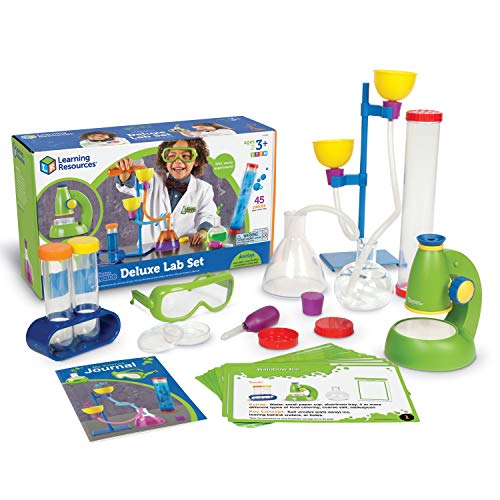
PRESCHOOL SCIENCE WITH GUIDED ACTIVITIES: This 45-piece kit supports hands-on science exploration with lab gear designed for little hands. Activity cards provide step-by-step instructions, helping children follow multi-step directions and document findings in a write-and-wipe journal. The set encourages observation, prediction, and early math concepts through playful experiments in a classroom or home setting.
Silly Science Fine Motor Sorting Set

SCIENCE-BASED SORTING FUN: This 55-piece set focuses on early sorting with colorful germs and related manipulatives, helping children build color, shape, and number skills. Fine motor tools, including a clamp and tweezers, support hand strengthening and precision—tying together early science with practical motor development in a playful format.
Rocknoculars

EXPLORE ROCKS AND MORE: Rocknoculars combine magnification with an easy-to-use carry handle and a storage canister for specimens. The accessory features support early geology exploration, encouraging kids to observe colors, shapes, and textures. An activity guide and bonus play ideas help structure hands-on learning and discovery during casual play or structured lessons.
Buying Guide
- Age appropriateness: Choose toys labeled for ages 3 and up to ensure safe, simple operation and developmentally suitable challenges.
- Learning focus: Decide whether you want observation tools (microscopes, monoculars), hands-on experiments (lab sets, fizzy volcano), or geology-related toys (rock kits) to align with your child’s interests.
- Durability and safety: Look for sturdy construction, rounded edges, and non-toxic materials. Washable components and simple disassembly for cleaning are beneficial for preschool use.
- Engagement and guidance: Toys with guided activities or kid-friendly narration help sustain interest and support early scientific reasoning.
- Skill development: Prioritize kits that promote fine motor skills, basic measurement, pattern recognition, and sequencing to build a foundation for later STEM learning.
- Portability and storage: Consider devices with easy-to-carry handles or included storage and organizers for clutter-free travel and home use.
- Expansion potential: Some sets offer scalable activities or compatibility with other kits to extend learning as the child grows.
Overview of selection criteria demonstrates a balance between exploratory tools and structured experiments, ensuring a broad approach to early science education. These options support a mix of imaginative play, observational practice, and hands-on experimentation to build foundational science literacy in three-year-olds across diverse interests.