Finding engaging science toys for 7-year-olds means balancing hands-on exploration with safe, imaginative play. The following selections are designed to spark curiosity, reinforce early STEM concepts, and keep kids excited about learning through play. Each pick features clear instructions, interactive elements, and opportunities to build confidence in scientific thinking.
| Product | Brand | Key Reason to Consider |
|---|---|---|
| National Geographic Magic Chemistry Set | Blue Marble | Magic tricks that teach core chemistry ideas |
| Klutz Lego Gear Bots | Klutz | Engineering with LEGO Technic and real-world mechanics |
| Dan&Darci Human Anatomy Squishy Body Model | Dan&Darci | Hands-on anatomy exploration with removable parts |
| Thames & Kosmos Mega Cyborg Hand | Thames & Kosmos | Pneumatic systems built from simple components |
| Creativity for Kids Grow ‘N Glow Terrarium Kit | Creativity for Kids | Biology, ecology, and glow-in-the-dark fun |
Below, five curated science toys are explored in detail. Each section includes a clickable link to Amazon for quick access, an image, and a concise breakdown of features that align with early elementary science learning.
Magic Chemistry Set With Real Tricks
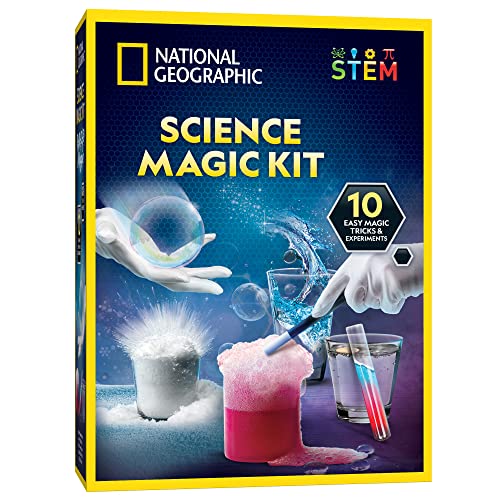
The National Geographic Magic Chemistry Set blends science and playful magic to captivate young learners. This kit features 10 experiments designed as magic tricks, allowing kids to perform charming demonstrations while discovering underlying chemistry principles. A kid-friendly guide explains the science behind each effect and includes insights from real scientists, making the learning process transparent and engaging. The included magic wand and gloves encourage imaginative play, which can reinforce observational skills and the ability to predict outcomes.
Klutz Lego Gear Bots Science Kit

Klutz Lego Gear Bots combines LEGO Technic bricks with a 64-page guide to teach basic engineering concepts. Kids can build eight kinetic, physics-driven creatures while learning about axles, cams, and cranks. The kit includes all necessary LEGO elements and step-by-step instructions, making it accessible for beginner builders. This set emphasizes problem-solving, measurement, and mechanical thinking—skills that are foundational to engineering and physical science.
Dan&Darci Anatomy Squishy Body Model

This human anatomy kit provides a tactile exploration of the body with 30 removable parts, including organs and bones. Kids can dissect, reassemble, and examine how different body systems connect. The accompanying guide offers explanations, interactive challenges, and activities like measuring breathing rates and exploring why we blink. The hands-on approach makes learning human biology concrete, encouraging curiosity about anatomy, physiology, and scientific observation.
BeAndge STEM Kits With Robotic Cars and More

BeAndge’s STEM kit bundle emphasizes hands-on robotics and automation. It includes multiple sets such as solar-powered and wind-powered vehicles, along with an obstacle avoidance robot and a glider. The kit promotes inquiry-based learning, encouraging children to experiment with energy concepts, motion, and control systems. It’s particularly suitable for family STEM activities or classroom-style projects, helping kids see how engineering decisions impact performance and outcomes.
Mega Cyborg Hand STEM Kit

The Thames & Kosmos Mega Cyborg Hand introduces pneumatic systems through a wearable mechanical hand built from simple parts. Without motors or batteries, the kit uses air pressure and the user’s fingers to operate the fingers, combining physics with biomechanics. Adjustable joints and hydraulic pistons allow precise movement control, providing a tangible way for kids to understand hydraulics, levers, and programmable-like motion through manual operation.
Buying Guide: Key Purchase Considerations
- Age appropriateness and safety: Check age recommendations and included safety guidelines to ensure suitability for a 7-year-old’s motor skills and curiosity level.
- Hands-on learning vs. guided instructions: Some kits offer open-ended exploration, while others provide structured activities. Parents should balance guided learning with opportunities for independent experimentation.
- Core science topics: Identify which sciences (chemistry, biology, physics, earth science) align with the child’s interests and school curriculum to reinforce classroom learning at home.
- Durability and components: Durable materials and well-designed components support repeated use, especially for younger builders who may handle parts roughly.
- Instruction clarity: Visual guides, step-by-step diagrams, and friendly explanations help sustain engagement and minimize frustration.
- Future-proofing: Kits that introduce foundational concepts (variables, cause and effect, measurement) prepare children for progressively complex STEM challenges.
- Expansion potential: Some products offer expansion sets or additional experiments, which can extend learning beyond the initial set.
- Play value and safety considerations: Ensure all items are age-appropriate and do not contain small parts that could pose choking risks for younger siblings.
- Cross-disciplinary benefits: Many kits blend science with art, storytelling, or creativity, supporting holistic development and keeping sessions fun.
The selected products offer a spectrum of science topics and methodologies to suit different interests, from magical chemistry and anatomy to robotics and ecosystems. Each choice supports hands-on exploration, critical thinking, and scientific literacy in a way that is accessible and engaging for a 7-year-old audience.