Exploring the solar system through a hands-on project helps students grasp celestial scales, orbital dynamics, and planetary features more effectively than text alone. This guide highlights five top solar system kit options ideal for classrooms or home learning, focusing on complete sets that include foam spheres, paints, sticks, and instructional materials. Each kit offers a different balance of components, difficulty level, and display potential to suit elementary through middle school projects. Below, you’ll find a concise comparison and in-depth product sections to help teachers and parents pick the best kit for their needs.
| Product | Pieces | Best For | Age Range |
|---|---|---|---|
| 64 PCS Solar System Project Kit (Wookidel) | 7.87″ foam discs, 12 spheres, 4 foam stars, 15 sticks, 12 paints | Beginner to mid-level model making | 3-5+ |
| Pllieay 63PCS Solar System Foam Ball Kit | 12 pigments, 26 foam spheres, 10 toothpick flags, 2 brushes | Colorful, layered planet crafting | 6-12 |
| 48PCS Solar System Model Foam Ball Kit (Ourtroness) | 12 foam balls, rings, 15 sticks, 8 pigments | Proportional planet sizes, quick setup | 6-12 |
| Innconee 36 Solar System Model Kit | 14 foam balls, 12 colors, 2 brushes, fishing line | Display-ready with hanging option | 8-12 |
| National Geographic Glow-in-The-Dark Solar System Model Kit | 6 paints, glow paints, movable arms | Glow-in-the-dark display and STEM learning | 8-12 |
64 PCS Solar System Project Kit by Wookidel

The Wookidel solar system kit provides a complete classroom-ready package designed for easy start-to-finish projects. Included are foam discs representing the sun and planets, multiple foam balls of varying shapes, and a thoughtful mix of flags, sticks, and brushes. The set emphasizes space enlightenment with an instructional guide that introduces planetary details, enabling students to build a tangible model while learning core astronomy concepts. The materials are described as durable, with a smooth surface suitable for painting and coloring, and the included acrylic paints are non-toxic and safe for kids. This kit supports hands-on learning and creative exploration in school projects or at home.
Pllieay 63PCS Solar System Foam Ball Kit

This Pllieay kit offers a comprehensive collection for solar system modeling, including 26 foam spheres of mixed sizes, 12 pigments, a palette, and 10 toothpick flags. The kit is designed to support school science projects with a focus on helping kids recognize the number of planets and their relative arrangement. The materials are lightweight and kid-safe, including natural bamboo sticks for construction and acrylic pigments. The range of ball sizes allows for more accurate representations of planetary proportions, and the included introductory guide helps teachers structure a structured lesson around the solar system.
48PCS Solar System Model Foam Ball Kit by Ourtroness

Ourtroness’ 48-piece kit focuses on ease of assembly with a complete set of foam balls, rings, bamboo sticks, toothpick flags, pigments, and a painting tray. It emphasizes accurate planetary sizing with 10 distinct ball sizes to reflect different planets, including Pluto when included in the design. The foam material is lightweight for classroom handling, and the natural bamboo sticks with non-toxic pigments are kid-friendly. This kit aims to simplify the crafting process while enabling a proportional, display-worthy solar system model that can be used for science demonstrations or classroom displays.
4M Solar System Planetarium
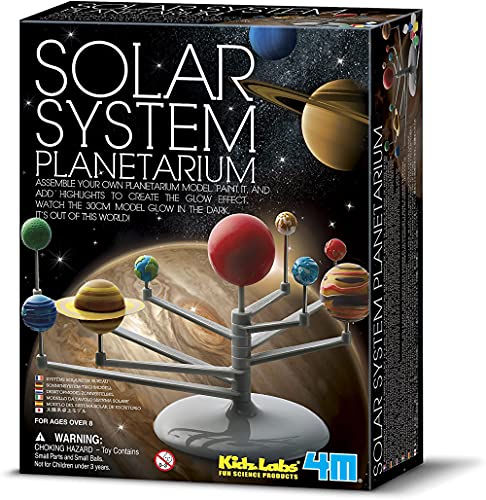
The 4M Solar System Planetarium provides an engaging stem toy that emphasizes glow-in-the-dark features. This kit includes planets, stencils, glow paint, rods, string, a wall chart, and a set of quiz questions to test understanding. It’s designed for simple assembly and color-coding, making it ideal for younger students or as a supplementary activity in middle school. The glow-in-the-dark aspect enhances classroom displays and can spark curiosity during daytime or after dark sessions, offering a dynamic, interactive learning experience.
Innconee 36 Solar System Model Kit

Innconee’s kit provides a balanced set of 14 foam balls, 12 pigment colors, two brushes, and fishing line for hanging the finished model. It includes a sun cardboard and a starry background, offering an end-to-end solution for creating a suspended solar system display. With ten different ball sizes designed to reflect planetary proportions and Pluto’s inclusion, the set encourages hands-on painting and assembly. The kit is positioned as easy to assemble and display-ready, suitable for classroom demonstrations and home science projects alike.
Pllieay Solar System Model Kit for School Science Projects

This Pllieay kit emphasizes a space-saving display approach by allowing completion of a wall-hanging solar system model. It includes a felt-backed backdrop plate, assorted foam balls, and acrylic paints, supporting a classroom-friendly, visually engaging model that can double as room decoration. The kit focuses on educational value through detailed instructions that guide learners through planetary positions and orbital relationships, while also developing fine motor skills and color recognition through painting and assembling the model.
Buying Guide: Key Considerations for Choosing a Solar System Kit
- Project scope and age appropriateness: Match kit complexity to the students’ grade level and learning objectives. Simpler kits suit elementary classes; more complex kits with multiple sizes and display options fit middle school projects.
- Component quality and safety: Look for durable foam or polystyrene spheres, non-toxic paints, and safe wooden or bamboo sticks. Check for odor-free paints if requiring classroom use.
- Planet sizing and accuracy: Some kits offer proportional planet sizes to help teach scale, while others prioritize color and ease of assembly for quick classroom results.
- Display options: Consider whether the kit is designed for hanging, wall display, or a tabletop model. Glow-in-the-dark features can enhance visibility in dim lighting.
- Instructional support: A clear activity guide or teacher-friendly lesson plan adds value, especially for first-time STEM projects and standardized curriculum alignment.
- Time and effort: Evaluate assembly time and the number of components. Some kits deliver a fast setup, while others provide extensive customization opportunities.
- Storage and reuse: If ongoing projects are expected, choose kits with organized packaging and reusable components for repeated classroom use.
Overall, the best solar system kit for a school project balances educational value, ease of use, and display potential. Whether you want a quick classroom activity, a vivid wall display, or a detailed, accurate planetary model, there is a kit to fit the learning goals and classroom logistics. Teachers should consider their lesson timeline, storage space, and whether a glow-in-the-dark option or a proportional sizing approach best supports their science standards and student engagement.