Exploring the solar system gets exciting when kids can color, build, and interact with models they create themselves. This guide highlights five top solar system kits designed for kids, combining hands-on crafting with science learning. Each option offers engaging activities, safe materials, and opportunities to discuss planets, orbits, and space phenomena while staying age-appropriate. Whether for classroom use, homeschooling, or a curious weekend project, these kits help young learners visualize the cosmos and develop scientific thinking.
| Product | Brand |
|---|---|
| 64 PCS Solar System Project Kit | wookidel |
| National Geographic Glow-in-The-Dark Solar System Model Kit | Blue Marble |
| Science Can Solar System for Kids | Science Can |
| 4M Solar System Planetarium | 4M |
| National Geographic Magnetic Solar System Painting Kit | Blue Marble |
style=”display:none;”>Introductory Summary
The selected kits cover a spectrum of approaches—from foam and paint projects to glow-in-the-dark displays and motorized orbiting systems. They emphasize hands-on construction, visual modeling, and interactive features like movable arms, glow paints, or rotating displays. All options aim to foster curiosity about planets, the sun, and space exploration while offering safe materials and kid-friendly instructions. The table above groups the five options by brand and helps readers compare core aspects at a glance.
64 PCS Solar System Project Kit

The 64 PCS Solar System Project Kit from wookidel provides a comprehensive set for building a tactile solar system model. Contents include seven-and-a-half-inch foam discs, a sun, 12 foam balls of various shapes, 4 foam stars, 15 bamboo sticks, 15 toothpick flags, 12 colors, 2 brushes, a palette, and an instruction sheet. This kit supports school projects and at-home learning, enabling kids to color and assemble their own planetary system. The foam materials offer durability and easy coloring, while the included paints keep the project engaging. The setup is designed to spark curiosity about planetary positions and scale in a tangible, visual format.
Features emphasize accessibility for ages 3-5, with safe, odorless materials and a focus on color-coded planets. Students can explore spatial relationships and basic astronomy concepts as they place each planet on its axis. While the parts are lightweight, the kit encourages fine motor practice through painting, assembling, and decorating the model. The instruction sheet helps caregivers guide the activity, making it suitable for classroom or independent study.
National Geographic Glow-in-The-Dark Solar System Model Kit

The National Geographic Glow-in-The-Dark Solar System Model Kit offers an all-inclusive experience to build a 3D solar system with glow-in-the-dark accents. This kit includes six paint colors, glow-in-the-dark paint, a brush, a palette, decals, and a poster with solar system facts. Kid-friendly instructions simplify assembly, and the model features movable arms for easy adjustment as imagination evolves. The glow feature adds an engaging nighttime display, making it ideal for bedrooms or classroom corners that aim to spark ongoing interest in space.
Educational value centers on customizing the eight planets and the Sun while reinforcing spatial awareness and basic planetary order. The included poster provides factual context to accompany the hands-on activity. The kit’s design supports independent work or guided group sessions, with a clear emphasis on safe materials and durable components.
Science Can Solar System for Kids

The Science Can Solar System kit emphasizes projection and interactivity. It allows kids to project the 8 planets orbiting the sun onto a surface, effectively transforming any room into a planetarium. The product features bilingual educational content and quick-access planet pattern interactions on the base to reveal interesting astronomy facts in English and Spanish. The set includes a total of 24 space-themed slides, including images of planets, spaceships, and astronauts, which can be projected for an immersive learning experience. The kit is suited for children aged 5-7, fostering curiosity and comprehension through multimedia engagement.
Key strengths include an engaging projection mechanism and a dual-language format that broadens accessibility. The included slides and disks offer a structured learning path while the projection capability adds a dynamic, memorable element to the study of planetary science. The toy is designed to be simple to operate, encouraging parent-child collaboration on discovery and discussion.
4M Solar System Planetarium
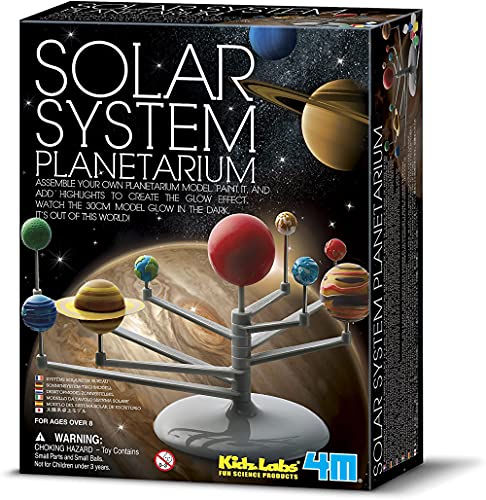
The 4M Solar System Planetarium provides a DIY glow-in-the-dark astronomy project ideal for curious kids and teens. The set includes planets, stencils, a glow paint pen, rods, string, a wall chart with facts, and a quiz component for engagement. Assembly instructions guide users through painting and constructing a planetary display, helping students visualize the order of the solar system while reinforcing memory through visual association. This kit suits slightly older children who enjoy more detailed crafting and educational quizzes as a complement to the build.
Educational benefits focus on hands-on design, color-coding, and the integration of informational content through worksheets and wall charts. The kit’s glow-in-the-dark feature adds a decorative and motivational aspect for continued study and creative display in a bedroom or classroom space.
National Geographic Magnetic Solar System Painting Kit

This magnetic solar system painting kit from National Geographic offers a magnetic 3D model with eight planets plus the Sun. The kit includes magnets, paints, brushes, and extra accessories such as constellation cards. Children can paint the planets and then magnetically assemble them on a display surface, creating a magnetic solar system that is easy to rearrange. The magnets provide a sturdy, reusable display suitable for desks, refrigerators, or science corners. This option suits learners who prefer a tactile magnetic assembly method combined with artistic painting activity.
Overall, the kit emphasizes creativity, magnetic utility, and ongoing display value. The materials are designed for safe handling by kids, with quality paints and durable magnets that encourage repeated use and experimentation in space-themed projects.
Buying Guide: Key Purchase Considerations For Solar System Kits For Kids
- Age appropriateness and safety: Check recommended age ranges and the safety of paints, glues, and foam materials. Look for kid-safe, odorless options that are easy to handle and assemble.
- Learning objectives: Decide whether you want a focus on color-and-build craft, projection, magnetic display, movably articulating parts, or a motorized orbit. Align with the child’s curiosity and the desired depth of science content.
- Durability and display value: Foam and plastic components vary in sturdiness. Consider whether the kit is designed for repeated use and easy display in a bedroom or classroom setting.
- Completeness: Some kits include all-in-one supplies (paints, brushes, posters, decals), while others require additional tools. Ensure the kit contains enough materials for multiple sessions or consider future expansion.
- Instructions and parent/teacher support: Clear, step-by-step guides and visual aids help sustain engagement. Bilingual or multilingual content can be a plus for accessibility.
- Additional educational content: Look for posters, fact cards, or included experiments that reinforce astronomy concepts and vocabulary.
- Storage and organization: Some kits include display boxes or organization trays. Consider how easy it is to keep parts sorted and accessible.
- Project duration and complexity: Short, quick projects work well for younger kids, while more intricate kits suit older children or group activities. Plan sessions according to attention spans and goals.
- Reusability and adaptability: Magnetic kits or modular components provide ongoing value as kids advance in skill and interest.
These considerations help compare kits beyond price, focusing on educational value, durability, and long-term engagement. By choosing a kit that aligns with a child’s interests—coloring planets, building a mechanical orbit, or creating a magnetic display—learners can develop astronomy literacy while enjoying creative exploration.