Parents seeking engaging ways to boost early language skills can turn to speech toys designed for toddlers. This guide highlights five select toys from Amazon that blend interactive play with vocabulary building, sounds, and Montessori-inspired learning. Each product below supports early speech, listening, and social interaction in age-appropriate ways, with features ranging from live animal sounds to multilingual content and tactile activities.
| Product | Brand | Key Benefit | Notable Feature |
|---|---|---|---|
| Airbition Talking Flash Cards | Airbition | Vocabulary expansion with 224 words | Montessori-style sound-image learning |
| LeapFrog 100 Words Book (Green) | LeapFrog | Introduces over 100 words through characters | Interactive with sounds and songs |
| Imitation Book: Interactive Talk Book | Twin Cities Speech Therapy Publishing | Early speaking practice | Therapist-written content |
| WELL BALANCED Speech Therapy Toys | WELL BALANCED | Early speech development with sounds | 62 sounds and simple words |
| Kuovei Talking Flash Cards | Kuovei | Wide vocabulary in a screen-free format | 248 sight words, bilingual options |
Airbition Talking Flash Cards For Toddlers

Airbition’s 224-card library blends colorful illustrations with audio to support vocabulary development. The set covers animals, vehicles, foods, fruits, vegetables, and more, making it suitable for toddlers exploring categories. The Montessori-inspired approach emphasizes independent interaction, which can support speech therapy goals and autism-friendly play. A standard American accent ensures clear pronunciation, and a five-level volume control helps tailor sessions to home environments. The reader also offers real animal sounds and a repeat function for practice.
LeapFrog Learning Friends 100 Words Book
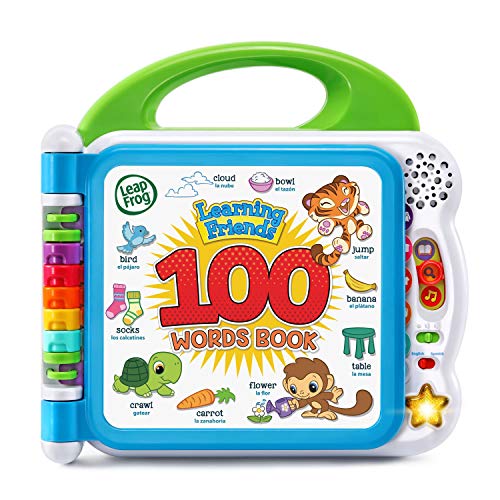
LeapFrog’s Learning Friends Book introduces more than 100 words through familiar characters Turtle, Tiger, and Monkey. Beyond word recognition, the book helps children connect categories like pets, colors, food, and activities. Interactive touch-activated pages deliver sounds, vocabulary, and light-up star-triggered songs. This format supports receptive language, word retrieval, and early phonemic awareness in a friendly, game-like context that resonates with toddlers.
Imitation Book: Interactive Talk Book

The Imitation Book is a speech-language therapy-informed resource designed for ages 0-4. It emphasizes learning to talk through guided imitation, offering practical content crafted by a speech therapist. Early exposure to modeled phrases supports toddlers with late-talkers by promoting echoing word choices, sentence formation, and social exchanges during interactive sessions. The book’s kid-friendly format encourages repeated practice and turn-taking in conversation-like play.
WELL BALANCED Speech Therapy Toys

This collection emphasizes early speech development for toddlers from 12 months to 4 years. It uses interactive Baby Flash Cards that deliver 62 sounds and simple words rooted in daily life. The design focuses on speech-mimicking play, encouraging children to say, repeat, and engage with the material. This approach supports auditory discrimination, vocabulary growth, and expressive language through hands-on prompts and immediate feedback.
Kuovei Talking Flash Cards

Kuovei’s talking flash cards offer a broad set of 240-248 sight words across categories such as animals, vehicles, foods, and daily needs. A screen-free design helps reduce screen time while maintaining high engagement. The device repeats card pronunciations with a standard American accent and includes a repeat function for practice. A volume control allows caregivers to tailor sessions to noise levels and attention spans, supporting multiple learning environments.
Buying Guide
Key purchase considerations help families choose the right speech toys for toddlers.
- Age appropriateness: Look for content aligned with toddler development stages (12-48 months). Choose tools that progress with your child’s speech milestones to avoid frustration.
- Language exposure: Decide between monolingual (English) or multilingual options. Trilingual features can support early bilingual skills but may require extra time for consistency.
- Mode of interaction: Prefer toys with hands-on cards, audio prompts, and imitation prompts. Hands-on play tends to reinforce retention and social communication.
- Non-screen design: Screen-free options can support visual attention and reduce screen time while still delivering rich language input.
- Sound quality and reliability: Clear pronunciation with adjustable volume helps children hear and imitate sounds accurately. Look for a device that offers repeat or chorus modes for practice.
- Ease of use: Simple on/off, intuitive card insertion, and quick start-up improve engagement. Toy durability and kid-friendly materials are important for daily use.
- Therapy alignment: For children receiving speech therapy, consider tools that therapists recommend or that align with common therapy goals, such as articulation, vocabulary breadth, and expressive language practice.
When selecting a speech toy for a toddler, consider combining products with complementary strengths: flash cards for vocabulary breadth, interactive books for pronunciation, and non-screen devices for consistent practice without screen exposure. Tracking progress over weeks can help determine which tools yield the most meaningful gains in expressive speech and listening comprehension.
By reviewing these five options, caregivers can identify a balanced mix of engaging, developmentally appropriate tools that support early language development, collaboration, and independent exploration.