Discover top STEM kits designed for five-year-olds that spark curiosity, foster problem-solving, and build foundational skills in science, technology, engineering, and math. This guide highlights five hands-on kits with simple instructions, colorful components, and age-appropriate challenges to support independent play and cooperative learning. Each product below emphasizes creativity, fine motor development, and early engineering concepts suitable for kids starting school or home exploration.
Summary Table
| Product | Brand | Key Focus | Pieces |
|---|---|---|---|
| 10 in 1 STEM Toys Set | Tsomtto | Engineering, teamwork, multiple models | 167 |
| Kids STEM Building Toys (125 Pcs) | Qirptey | Creativity, problem solving, model variety | 125 |
| Snap Circuits Beginner | Snap Circuits | Electrical circuits, hands-on experiments | 21 projects |
| Doctor Jupiter Science Kit | Doctor Jupiter | Science experiments, critical thinking | 100+ experiments |
| Learning Resources Magnet Explorers | Learning Resources | Magnetism, exploratory learning | 39 pieces |
10 In 1 STEM Toys For Ages 4-8

The Tsomtto 10-in-1 STEM set includes 167 pieces that can be assembled into ten different models, such as a tower crane, forklift, rocket car, plane, and robot. A step-by-step guide helps kids follow along, promoting independent and guided play. The kit emphasizes hands-on learning in science, technology, engineering, and math, fostering imagination and collaboration as families build together. This versatile set is suitable for curious players aged roughly 4 to 8, with a focus on fine motor skills and pattern recognition.
125-Piece Building Toys For Young Builders

Qirptey’s 125-piece kit provides colorful blocks and an idea booklet with clear instructions to assemble cars, robots, trucks, and dinosaurs. Designed for ages around 5 and up, it supports fine motor development, problem solving, and spatial thinking. The set encourages collaborative play, as kids read instructions and cooperate to build shared projects, while also inviting open-ended imagination for new models beyond the booklet.
Snap Circuits Beginner Electronics Kit

Snap Circuits Beginner introduces electrical engineering in a safe, approachable form. The child-friendly components snap together to create working circuits, with an instructional booklet guiding 21 projects. The kit emphasizes logical thinking, planning, and hands-on experimentation while ensuring age-appropriate safety features for young builders. It’s ideal for introducing circuit concepts to five-year-olds and older siblings or friends who want to join in.
Doctor Jupiter First Science Kit

Doctor Jupiter’s kit includes over 100 experiments designed to spark curiosity and problem-solving. Activities cover diverse science topics, encouraging kids to ask questions, observe, and explore the world. The kit is positioned as a screen-free, engaging way to cultivate scientific thinking and discovery, making it a solid choice for birthdays or classroom-style learning at home. It pairs well with other Doctor Jupiter science and electricity kits for expanded experiments.
Learning Resources Magnet Movers

Magnet Movers offers 39 pieces to explore magnetism and early physics concepts. The set includes a wand and magnetic accessories along with an activity guide, making it suitable for guided lessons or free play. It supports critical thinking, cause-and-effect reasoning, and spatial awareness as children experiment with attraction, repulsion, and magnetic field interactions.
58-Circuit Science Kit For Young Engineers

BigRank’s circuit-based science kit includes 58 parts and claims more than 480 possible projects. It’s designed to engage children in practical electronics and circuit understanding, with emphasis on safe, guided exploration for ages roughly 8 and under supervision. The kit’s portability and storage box support organized play, especially for at-home science stations or classroom demos.
199PCS Building Blocks Set

Basytodio’s 199-piece building set includes an electric drill and 28 model ideas such as elephant, robot, and helicopter. The kit emphasizes hands-on construction, imaginative play, and teamwork. It’s designed to develop spatial reasoning, fine motor skills, and collaborative problem solving, with a focus on sustained engagement through multiple build options and a portable storage box for on-the-go learning.
National Geographic Magic Chemistry Set
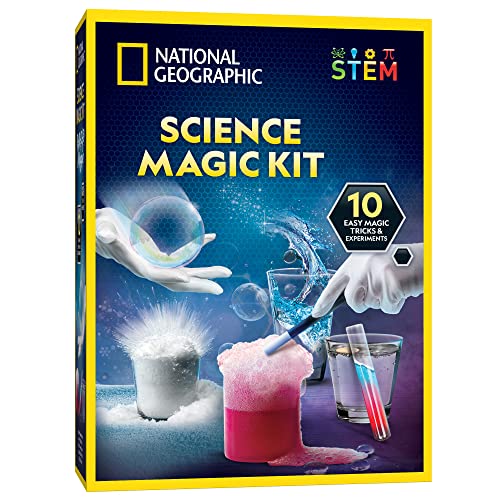
National Geographic’s Magic Chemistry Set blends science with performance, featuring 10 color-changing experiments that feel like magic tricks. Each trick is designed to teach a concept as the child performs, and the included wand and gloves invite role-play and presentation. The kit offers a memorable, hands-on way to explore chemistry concepts safely while encouraging curiosity and storytelling around scientific ideas.
Buying Guide: Key Purchase Considerations
- Age-appropriateness: Choose kits labeled for roughly ages 4–6 to ensure manageable complexity and safety features.
- Learning emphasis: Decide whether you want engineering, circuits, magnetism, or chemistry to align with your child’s interests and classroom goals.
- Instruction style: Look for kits with step-by-step guides for beginners and open-ended play potential for creativity.
- Durability and storage: Sturdy pieces and a storage box help sustain play over time and support clean-up habits.
- Social learning: Some sets promote teamwork; others are solo-friendly. Consider whether you want collaborative or independent exploration.
- Safety and supervision: Ensure small parts are appropriate for younger children and that adult oversight is available for certain activities.
- Portability: If you expect travel or mixed-use in classrooms, select kits with compact storage and easy portability.
Buying considerations also include comparing the variety of projects offered, the quality of the instructional content, and how well a kit translates complex concepts into accessible, age-appropriate activities. For families choosing multiple kits, look for complementary topics (e.g., magnets with circuits or chemistry tricks with building blocks) to provide a well-rounded early STEM experience.