Discover top-rated STEM kits that engage teens with robotics, circuitry, and engineering challenges. This guide highlights five hands-on kits designed to boost problem-solving, creativity, and technical confidence—perfect for screen-free learning and science exploration.
style=”display:none;”>Summary Table: Selected Products
| Product | Focus | Brand |
|---|---|---|
| Sillbird 12-in-1 Solar Robot Building Kit | Solar-powered robotics and problem solving | Sillbird |
| ELEGOO UNO R3 Smart Robot Car Kit | Arduino-based robotics and programming | ELEGOO |
| CYOEST Bluetooth Speaker Kit | Hands-on electronics and circuits | CYOEST |
| ANNISOKA Robotics Arm Kit | Mechanical engineering and electronics | ANNISOKA |
| Smartivity Pinball Machine Toy | Mechanics, build-and-play engineering | Smartivity |
Sillbird 12-in-1 Solar Robot Building Kit

The Sillbird 12-in-1 Solar Robot Kit is a versatile starter for teens exploring renewable energy, robotics, and engineering concepts. The kit emphasizes screen-free, hands-on building that grows with the learner, with 190 pieces to assemble a variety of solar-powered models. It engages students through tinkering and problem-solving as they convert solar energy into mechanical motion. The activity supports outdoor experimentation or indoor play with a strong artificial light source, reinforcing concepts in physics and energy efficiency.
Teach Tech Hydrobot Arm Kit

The Hydrobot Arm Kit introduces hydraulic engineering by letting teens build a working robot arm powered by water pressure. With six axes of motion and a 270-degree rotation range, the kit demonstrates core concepts in hydraulics, leverage, and control systems. It requires no batteries, emphasizing mechanical engineering principles and a hands-on approach to problem solving as learners manipulate levers to grip, move, and rotate components.
ELEGOO UNO R3 Smart Robot Car Kit V4

The ELEGOO UNO R3 Smart Robot Car Kit provides a comprehensive entry into Arduino-based robotics. It includes 24 module parts, advanced sensors, and control options compatible with Android and iOS devices. The kit’s modular design simplifies assembly, reducing errors and accelerating learning in programming, electronics, and robotics concepts, making it suitable for teens eager to understand how systems integrate to perform tasks.
STEM Projects for Kids & Adults Build Your Own Bluetooth Speaker
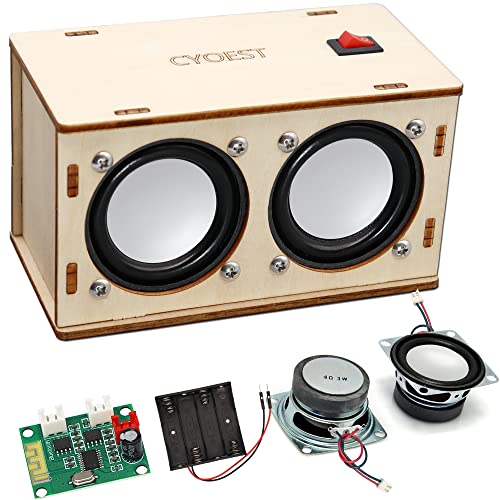
This project focuses on electronics and sound engineering, guiding teens through building a functional Bluetooth speaker. It emphasizes safe, hands-on circuit work and circuit theory while delivering a tangible product. The kit is designed to appeal to both younger learners and older teens, offering a practical application of electronics concepts and engineering principles in a compact, creative format.
ANNISOKA Robot Arm Kit

The ANNISOKA robot arm kit provides a robust entry into robotics for teens, combining wooden components with motors, PCB, and microcontroller boards. It enables learners to explore how electronic circuits drive mechanical movement, offering a hands-on pathway to physics, engineering, and problem solving. The project supports iterative building as students troubleshoot and refine their arm’s performance.
Smartivity DIY Pinball Machine

The Smartivity DIY Pinball Machine blends mechanical engineering with arcade-style fun. Teens assemble a functioning pinball machine, learning about motion, energy transfer, and mechanical design. The kit emphasizes creativity, problem-solving, and hands-on construction, making it a compelling choice for learners who enjoy seeing immediate, tangible outcomes from their work.
Buying Guide: Key Purchase Considerations
- Learning goals: Choose kits aligned with preferred skill areas—robotics, hydraulics, electronics, or mechanical design. Assess whether the kit builds foundational knowledge or targets advanced projects.
- Age and complexity: Match complexity to the teen’s experience. Some kits require basic soldering or programming; others are plug-and-play with guided steps.
- Curriculum and support: Look for kits with clear instructions, tutorials, and online communities. Real-time support or teacher resources can enhance learning outcomes.
- Hands-on vs. screen time: Balance projects that are entirely hands-on with those offering programming or app-based control to enrich multidisciplinary learning.
- Hardware quality and safety: Prioritize sturdy components, safe soldering practices, and non-toxic materials. Check for small parts that may require supervision for younger teens.
- Expandability: Consider kits that scale up—additional modules, sensors, or compatible accessories—to extend learning beyond the initial build.
- Project relevance: Some kits simulate real-world systems (robotics, renewable energy), while others teach core electronics concepts. Choose according to interest and long-term goals.
- Budget and durability: Invest in kits with reusable parts or robust construction to maximize long-term value and reduce waste.
Teens gain practical, transferable skills by engaging with these kits. Each option blends theory with experimentation, enabling learners to observe cause-and-effect, iterate designs, and develop confidence in engineering thinking. Whether pursuing robotics, electronics, or creative fabrication, these kits offer structured pathways to deeper STEM understanding.