Planets shine brightest when viewed through a quality telescope designed for astronomy. The following selections are chosen for American readers who want clear planetary detail, easy setup, and reliable optics. Each model balances aperture, focal length, and portability to help you spot Moon craters, planet belts, and distant worlds with confidence. Below is a quick overview table of the five options highlighted in this article.
| Brand | Model | Aperture | Focal Length | |
|---|---|---|---|---|
| MEEZAA | Telescope For Adults High Powered (90mm/800mm) | 90 mm | 800 mm | Beginner to intermediate planetary viewing |
| Dianfan | 90mm Aperture 800mm Telescopes | 90 mm | 800 mm | Easy setup, portable for families |
| Gskyer | 70mm Aperture 400mm AZ Mount | 70 mm | 400 mm | Kids and travel use |
| HETEKAN | 90mm Aperture 900mm Professional Refractor | 90 mm | 900 mm | Planetary detail with higher magnification |
| CELTICBIRD | 80mm Aperture 600mm Telescopes | 80 mm | 600 mm | Beginner-friendly, portable |
| HEXEUM | 80mm Aperture 600mm Refractor | 80 mm | 600 mm | Easy setup, mobile imaging |
MEEZAA Telescope For Adults High Powered

The MEEZAA telescope combines a 90mm aperture with an 800mm focal length, delivering brighter planetary views and sharper lunar details than entry-level refractors. Its fully multi-coated optical glass lenses maximize light transmission, helping observers discern surface texture on the Moon and major planetary features. The kit includes two eyepieces (10 mm and 25 mm) and a 3X Barlow lens, enabling magnification from 32X to 240X. A user-friendly AZ mount, sturdy tripod, phone adapter, and a carry bag support quick setup and on-the-go observation. This model suits adults and astronomy beginners seeking clear, detailed planetary observation without complexity.
Dianfan Telescope 90mm/800mm For Beginners

Dianfan offers a 90mm aperture with an 800mm focal length and fully coated optics, emphasizing bright, crisp planetary views. The kit emphasizes beginner-friendly use with quick assembly and a 45° zenith mirror for upright terrestrial viewing as well. The 32×–240× magnification is achieved through two eyepieces and a 3× Barlow lens, while a stainless tripod and a phone adapter support convenient image capture. This model is well-suited for families and newcomers who want a versatile instrument for night-sky exploration and planetary detail.
Gskyer 70mm Aperture 400mm AZ Mount

Gskyer’s 70mm aperture refractor offers a compact, travel-friendly option with a 400mm focal length. The fully coated optics maximize brightness and contrast while protecting eyesight during prolonged sessions. Included eyepieces (two) and a 3× Barlow lens provide a broad magnification range. A 5×24 finder scope assists object localization, and the package includes a wireless remote and smartphone adapter to capture celestial scenes directly from a connected device. This model is ideal for kids and beginner observers who need portability without sacrificing planetary clarity.
HETEKAN 90mm 900mm High Powered Refractor

HETEKAN presents a 90mm aperture with a generous 900mm focal length, focusing on planetary detail and lunar features. The kit includes three eyepieces (25 mm, 10 mm, 6 mm) plus a 3× Barlow lens, delivering 36×–450× magnification. A 5×24 finder scope, phone adapter, and stainless tripod are included for stable, easy targeting and imaging. The design emphasizes beginner-friendly use while providing higher magnification potential, making it a strong option for users prioritizing planetary resolution and stargazing versatility.
CELTICBIRD 80mm Aperture 600mm Telescopes

The Celticbird model uses an 80mm aperture and 600mm focal length to balance light-gathering capability with portability. Its multi-fully coated optics improve transmission and reduce reflective losses for clearer planetary images. The set includes an adjustable aluminum tripod, upgraded phone adapter, and a travel-friendly bag, making it convenient for on-the-go stargazing. The user-friendly assembly and included educational materials help beginners and families enjoy planet and Moon observations without tools or complex adjustments.
Gskyer 600x90mm AZ Astronomical Refractor

This Gskyer model features a 90mm aperture with a 600mm f/6.7 focal length and fully coated optics for bright planetary views. It provides three eyepieces (24X, 60X, 120X) plus a 3× Barlow lens to expand magnification. An adjustable aluminum tripod supports flexible viewing angles, and a 5×24 finder scope aids target acquisition. While designed for adults and beginners, the combination of easy setup and solid optics makes it apt for planetary observation and basic astrophotography opportunities.
MEEZAA 150EQ Reflector With Equatorial Mount

The 150mm aperture reflector from MEEZAA emphasizes deep-space visibility with a 650mm focal length, enabling brighter planetary and lunar images and deeper sky objects. It ships with two quality eyepieces (25 mm, 10 mm) and a 2× Barlow lens, delivering up to 130× magnification. A red dot finderscope speeds object location, while the moon filter reduces glare for comfortable viewing. The German equatorial mount with slow-motion cables supports smooth tracking, beneficial for planetary transits and extended lunar sessions.
HEXEUM 80mm Portable Refractor Telescope
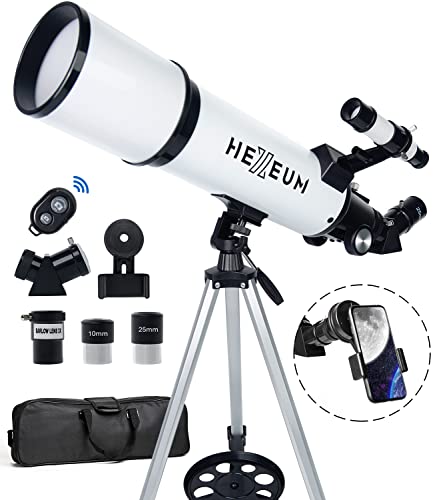
HEXEUM combines an 80mm aperture with a 600mm focal length to provide a compact, easy-to-use refractor. It includes two eyepieces (25 mm and 10 mm) for 24× and 60× magnification, plus a 3× Barlow lens to push magnification further. A 5×24 finder scope assists object locating, and a phone adapter plus wireless control enable convenient image capture. The setup is designed for quick assembly and portability, making it suitable for beginners and casual observers who want reliable performance without setup complexity.
Buying Guide: Key Purchase Considerations
- Aperture vs. focal length: A larger aperture gathers more light, improving planetary detail, while a longer focal length provides higher potential magnification. Balance based on how you plan to use the telescope.
- Optical design: Refractors are often easier to use and maintain, with sharp planetary views. Reflectors can offer larger apertures at lower cost but may require more alignment.
- Mount and stability: An equatorial or well-designed alt-az mount reduces field rotation and shaky images during tracking. A sturdy tripod improves image steadiness for planets and moons.
- Magnification and accessories: Bundles with multiple eyepieces and a Barlow lens expand viewing options. A finder scope helps locate planets faster, especially for beginners.
- Portability and setup time: If you travel or attend star parties, lighter weight and quick assembly matter. Tripods, carrying bags, and phone adapters add value for on-the-go use.
- Maintenance and durability: Fully multi-coated optics resist glare and improve contrast, while robust build prevents vibrations. Consider weather resistance and storage.
- Imaging potential: If you want to capture planetary images, ensure the kit includes a smartphone adapter or camera compatibility and a tracking mount for longer exposures.
When selecting a telescope for planetary viewing, consider your experience level, budget, and desired balance between portability and optical performance. The models above offer a mix of beginner-friendly setups and higher-mcope options to reveal Moon textures, planet bands, and stellar detail in our night sky. Always verify compatibility with your location’s typical weather and light conditions before making a purchase.