Kids learning through play benefits from toys that combine realistic engine functionality with safe, imaginative activities. This guide highlights five engaging toy engine kits that help children explore mechanics, problem solving, and engineering concepts through hands-on play. Each selection supports motor skills, reasoning, and pretend play, while providing interactive features such as lights, sounds, disassembly, and rebuild opportunities.
Summary of selected products:
| Product | Brand | Key Features | Age Range |
|---|---|---|---|
| Interactive Truck Engine Toy with Removable Parts | POFJOEQ | Removable parts, working drill, LED headlights, engine sound effects | 3+ |
| iPlay, iLearn Large Truck Engine Toy | iPlay, iLearn | 58 parts, repair tools, LED lights, sound effects, storage | 3-8 |
| Discovery Model Engine Building Kit | Discovery | 4-cylinder model, pistons, belts, LED lights, STEM focus | 8+ |
| Qaba Truck Engine Toy | Qaba | 61-piece set, lights, sounds, steering wheel, gear shifter | 3-8 |
| POFJOEQ Engine Building Kit (Blue) | POFJOEQ | 42 parts, drill, real sound and light effects, jet-like features | 3+ |
Interactive Truck Engine Toy With Removable Parts

The large truck kit features removable engine parts for an authentic repair experience. It includes a real working electric drill (batteries not included) to enhance immersive play and a pretend auto service station setup with open engine cover and dipstick checks. Realistic lights, engine sounds, and a car key with simulated lock and alarm functions add to the imitation of a working garage. Made from durable ABS, the toy supports a driving-like experience with hazard lights, an automatic shifter, and wheel motion. Storage space aids organization.
iPlay, iLearn Large Truck Engine Toy

This jumbo engine kit includes 58 parts and two repair tools, plus a RC car key with simulated lock, unlock, and engine sound effects. It features working LED headlights, a motorized engine with light and sound, and a dipstick to check virtual oil. The kit allows removal of engine parts for “repair” and includes storage for components. It emphasizes imaginative play and provides a realistic drive-like experience with a push-to-start function, hazard lights, and a functional steering wheel horn. All parts are designed for easy assembly and reassembly.
Discovery Model Engine Building Kit
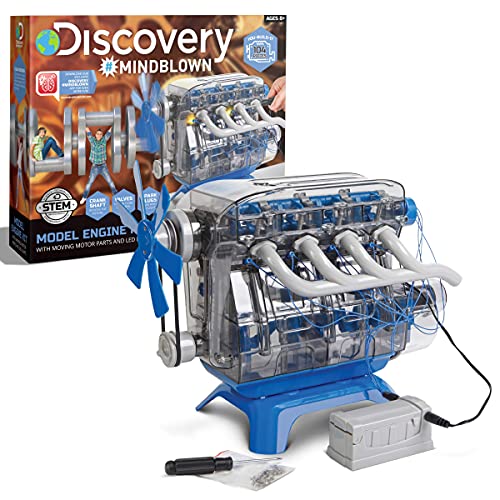
This STEM-focused kit helps children expand critical thinking by assembling a four-cylinder engine with pistons, belts, and valves. It includes tools and cables to connect to a battery pack and power the engine, encouraging logical reasoning and problem solving. The kit emphasizes hands-on learning as parts are manipulated to simulate real engine operation, providing insight into mechanical systems. It supports both solo and guided play, and is suitable for a range of ages depending on skill level and curiosity.
Qaba Truck Engine Toy

The Qaba set includes 61 pieces featuring bolts, nuts, a key fob, and a DIY sticker set to customize the toy engine. The cover opens to reveal engine parts, and the toy simulates a car service station with replaceable fluids and components. Realistic sounds come from a push-start engine and horn, and the kit includes hazard lights, four gear options (P, R, N, D), and a storage box for organization. It supports imaginative play and introduces basic mechanical concepts.
POFJOEQ Engine Building Kit (Blue)

This 42-piece engine model kit comes with a replaceable electric drill, a real action screwdriver, and a motorcycle model key for enhanced realism. Water in the exhaust pipe triggers light and sound effects along with a jet-like feature, creating an engaging starting sequence when the handle is turned multiple times. The kit is designed as a dismantling toy ideal for young learners who enjoy hands-on assembly, with safe, interactive elements to sustain interest.
Buying Guide
Key purchase considerations for toy engine kits include age appropriateness, safety, and durability. Look for non-toxic materials, sturdy construction, and rounded edges for younger children. Consider the level of realism versus simplicity: more intricate sets can teach troubleshooting and procedural thinking, while simpler kits are better for younger kids or shorter attention spans. Features such as lights, sounds, and detachable parts can enhance engagement but may require batteries; check battery type and replacement availability. Storage options are helpful for keeping pieces organized and preserving the learning environment.
Hands-on learning versus guided play offers different benefits. Some kits encourage independent exploration through disassembly and reassembly, promoting fine motor skills and spatial reasoning. Others emphasize guided scenarios—like pretend service stations—that support language development and cooperative play when kids work with peers or adults.
Compatibility with other toys and expansion potential are worth considering. A kit with modular parts or connectors can be integrated into broader STEM activities, while a kit with thematic branding (such as licensed or branded components) might appeal to kids with specific interests. Finally, balance cost with longevity: durable, washable components with simple replacements can provide extended value over time.