Finding the right toy piano for kids combines safety, fun, and early musical development. The following selections focus on 37-key or 25-key keyboards that offer educational features, built-in rhythms, and engaging sounds. Each option is suitable for ages 3 and up, designed to encourage finger dexterity, memory, and creativity without requiring advanced reading skills. Explore these five top picks to help a child begin a musical journey that’s entertaining and approachable.
| Product | Brand | Key Count | Highlights |
|---|---|---|---|
| BIGFUN Kid Keyboard Piano – Blue | BIGFUN | 37 | Multifunctional piano, dual speakers, 8 tones, 8 rhythms, USB power |
| B. toys – Wooden Toy Piano | B. toys | 25 | Color-coded keys, illustrated songbook, easy for toddlers |
| Toy Pianos for Kids Ages 3-7 – 37 Keys | GAYUPLO | 37 | Microphone, 8 tones, 8 rhythms, included demos |
| 37 Key Piano Keyboard Toy – Drmukie | Drmukie | 37 | Record & playback, two speakers, simple chords |
| Love&Mini Kids Keyboard – Pink | Love&Mini | 37 | Stool included, microphone, music stand, MP3 port |
The following product sections provide concise, objective overviews, focusing on key features, safety, and educational value. Each section includes a direct link to the product page for quick access to more details.
BIGFUN 37-Key Blue Keyboard Piano

The BIGFUN 37-key keyboard is a multifunction educational instrument designed for ages 3 to 8. It features a piano function, dual speakers, an ensemble mode, audio cable jack, keyboard drum, a record playback option, and automatic standby sleep. It offers 8 tones and 8 rhythms with 6 demo songs and 4 percussion sounds, providing a broad range of play and learning modes. The USB power option helps keep playtime distraction-free while complying with safety standards.
B. toys Wooden Toy Piano For Toddlers

The B. toys wooden piano is a bright, toddler-friendly option with 25 color-coded keys across two octaves. A built-in Music button plays classical compositions, and an illustrated songbook with six songs supports guided practice. The color-coding helps young learners identify notes (A to G) and encourages interactive play while developing early musical awareness and coordination.
GAYUPLO 37-Key Keyboard With Microphone

This 37-key model from Gayuplo is pitched as a beginner-friendly gift for children ages 3–7. It includes a microphone for singing along and a 37-key keyboard to explore melodies. The product emphasizes educational value by supporting musical exploration, creativity, and early musical skill development, with an emphasis on interactive, multi-sensory play.
Drmukie 37 Key Piano Keyboard Toy

The Drmukie toy features 37 keys with a wood-grain aesthetic, built-in record and playback functions, and two speakers for a more authentic feel. It supports learning through play with 19 demo tunes, 8 tones, 4 percussion/4 animal sounds, and 8 rhythms. The inclusion of a microphone supports interactive performance and voice-instrument coordination.
Love&Mini Pink 37-Key Kids Keyboard

The Love&Mini keyboard pack includes 37 keys, 22 demo songs, 4 rhythms, 4 instrument tones, a microphone, stool, and a music stand with an MP3 port. The integrated stool and stand facilitate seated play and score reading, while stereo speakers enhance sound. It is marketed as a complete, child-friendly musical setup ideal for young performers.
aPerfectLife 37-Key Portable Keyboard
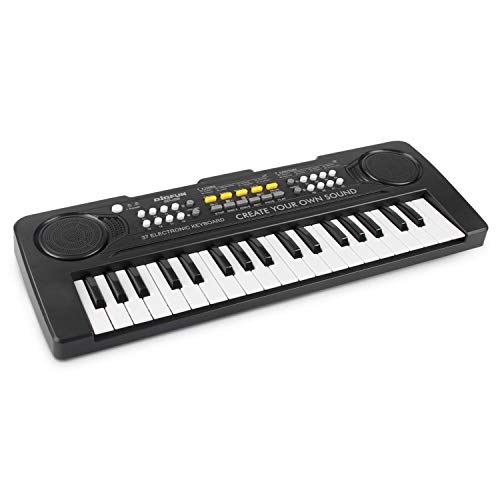
The aPerfectLife 37-key keyboard is a compact, portable option designed for ages 3–8. It features multifunctional piano modes, two speakers, 11 demos, 8 tones, 8 rhythms, and 4 percussion tracks. It uses a USB power option and adheres to CPC safety and RoHS standards, aiming to balance portability with a broad learning toolkit for early music education.
Buying Guide
Key purchase considerations for toy pianos include key count, age appropriateness, and the balance between play value and educational content. A 25-key model is usually suitable for younger toddlers, while 37-key keyboards provide a more expansive range for early learners. Look for features that support early music skills—record and playback, demo songs, built-in rhythms, and multiple tones—as these foster pattern recognition and creativity. Power options matter; USB-powered models can be convenient for classroom use or travel, but battery-powered options provide portability. Safety certifications (RoHS, CPC) offer assurances on materials and child safety. Consider whether a stool, microphone, or music stand is included, as these add to the overall learning setup and user experience.
From an instructional perspective, assess how intuitive the controls are for a 3-to-7-year-old. Color-coded keys or clearly labeled notes can accelerate familiarity with scales and musical concepts. For caregivers, the ability to connect external devices via MP3 ports or Bluetooth is a plus, enabling kids to accompany singing or play along with favorite tunes. Finally, evaluate durability and ease of cleaning; plastic-bodied toys should withstand daily use and occasional mishaps from enthusiastic play sessions.