For caregivers seeking developmentally appropriate toys, the 12- to 18-month window is a prime time for gross motor, fine motor, and sensory exploration. The following selections emphasize safe materials, simple cause-and-effect play, and engaging visuals to stimulate curiosity. Each option offers accessible, battery-free or low-tech play to support early learning and tactile development while keeping playtime fun and safe.
Summary of selected products
- iPlay, iLearn Press to Go Car Toys for Toddlers 1-3 — Press & Go, safe ABS construction
- TOHIBEE Baby Montessori Sensory Toys for 0-6 6-12 Months — Multisensory teether and manipulatives
- MINGKIDS Montessori Toys for 1 Year Old — 6-piece sensory shape blocks
- Learning Resources Spike The Fine Motor Hedgehog — Fine motor practice with quills
- Fisher-Price Laugh & Learn Light-Up Vacuum — Push-along with songs and learning phrases
iPlay, iLearn Press to Go Car Toys for Toddlers

Designed with safety in mind, this press-to-go vehicle features rounded edges and smooth surfaces, crafted from high-quality ABS material with no small parts. The toy operates without batteries—press the head to send the car racing forward, offering immediate feedback and simple cause-and-effect learning. Bright colors and cartoon characters stimulate visual interest and support early cognitive development while encouraging independent, active play. Suitable for 12- to 18-month-olds and older, it provides a gentle ramp into tactile exploration and handheld coordination.
TOHIBEE Montessori Sensory Toys for 0-6 6-12 Months

This multisensory set uses 12 bright colors and textured silicone balls to stimulate a baby’s senses. A rattle ring, twisting ball, and rotating ball offer varied tactile experiences, while a soft silicone teether relieves gum discomfort. The lightweight design is easy for tiny hands to grasp, promoting early motor development and hand-eye coordination. The toys are designed to accompany children as they progress through 0–18 months, supporting sensory exploration and safe teething during the teething window.
MINGKIDS Montessori Toys for 1 Year Old

This 6-piece set centers on multi-sensory shape blocks and elastic-band play that encourages exploration and discovery. The ABS plastic frame has rounded corners and smooth edges for safety and skin-friendly use. The colorful shapes help with color and shape recognition while supporting early motor skills through grasping, stacking, and manipulating pieces. Designed for toddlers around 12 months and up, the kit grows with the child to promote sustained engagement through early problem-solving activities.
Learning Resources Spike The Fine Motor Hedgehog
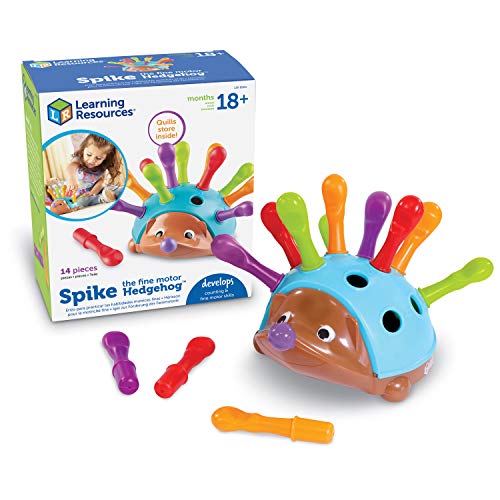
This toy emphasizes fine motor development with colorful quills that children remove and replace, strengthening hand muscles and improving hand-eye coordination. Suitable for ages 18 months and up, it also supports color differentiation, counting, and pattern recognition as children interact with the hedgehog’s back. The design invites longer play sessions and gradual skill progression—from simple pick-and-place to more complex sorting tasks as preschool skills emerge.
Fisher-Price Laugh & Learn Light-Up Vacuum

This push-along toy combines play with learning through music, lights, and educational phrases. Turning the switch on activates vacuum sounds; off reveals songs and phrases that teach colors, counting, and more. The light-up canister button adds a focal point for interaction. The toy encourages toddlers to push, walk, and engage in pretend play, supporting gross motor skills and early language exposure. It’s a dependable option for 12- to 18-month-olds ready for interactive, cause-and-effect play without screens.
Buying Guide: Key Purchase Considerations
Age appropriateness and safety are paramount. Look for toys with rounded edges, non-toxic materials, and minimal small parts that could present choking hazards. For 12- to 18-month-olds, select items that promote:
- Gross motor skills: toys that encourage standing, walking, or pushing on stable bases.
- Fine motor skills: items that involve grasping, pinching, stacking, and manipulating small components.
- Cause-and-effect learning: simple actions that produce immediate results, such as pressing, turning, or sliding.
- Sensory development: bright colors, varied textures, and different sounds to stimulate sight and hearing.
- Durability and cleaning: sturdy construction and washable surfaces for active use and easy maintenance.
Safety materials and toy complexity should align with a child’s growing independence. Start with simpler, battery-free options to build confidence, then progressively introduce slightly more complex toys that challenge hand-eye coordination and early problem-solving. Consider a mix of push toys, stacking shapes, and sensory objects to balance exploration with structured play. Finally, verify that products comply with relevant safety standards and age labeling to ensure suitability for 12- to 18-month-olds.