Finding developmentally appropriate toys for a 15-month-old can support early walking, fine motor skills, language exposure, and sensory exploration. The following picks come from trusted brands and focus on cause-and-effect learning, hand-eye coordination, and imaginative play. Each product is chosen for sturdy construction, age suitability, and engaging features that captivate toddlers without overwhelming them.
| Product | Brand | Key Benefit |
|---|---|---|
| Kidoozie Ball Drop | Kidoozie | Cause-and-effect play with sound and levels |
| LeapFrog Learning Friends 100 Words Book | LeapFrog | Vocabulary building with interactive words |
| Learning Resources Spike The Fine Motor Hedgehog | Learning Resources | Fine motor skills and color recognition |
| BUNMO Pop Tubes | BUNMO | Open-ended STEM play and fine-motor practice |
| Joyreal Montessori Busy Board | Joyreal | Sensory exploration and dexterity on the go |
Kidoozie Ball Drop Tower

The Kidoozie Ball Drop Tower offers multiple levels for balls to travel, delivering fast-paced motion and changing paths with each drop. The six-level design introduces dynamic cause-and-effect learning as children observe how the ball moves through different gaps and ramps. The bright, contrasting colors on each layer help with color recognition and visual tracking. In addition to visual stimulation, the balls produce playful rattling sounds as they descend, providing auditory feedback that can sustain attention during play. This toy is well-suited to toddlers just beginning to explore how their actions cause outcomes, supporting early cognitive development and fine motor skills as little fingers guide the balls through the tower.
LeapFrog Learning Friends 100 Words Book
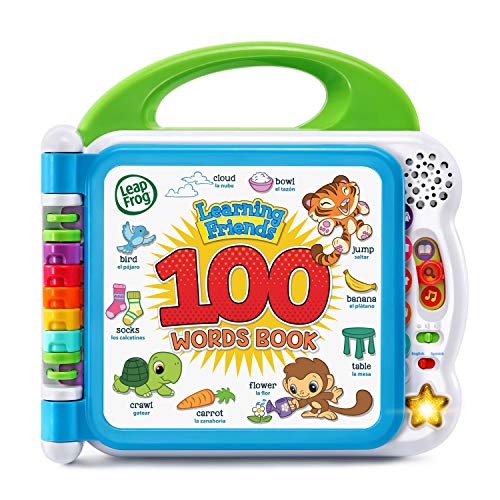
The LeapFrog Learning Friends 100 Words Book blends interactive storytelling with vocabulary expansion. Featuring learning friends Turtle, Tiger, and Monkey, the book introduces over 100 age-appropriate words curated by experts. When children touch words on the pages, they hear pronunciations, sound effects, and fun facts. A light-up star button activates the Learning Friends theme song and a favorite word, reinforcing word recognition through multisensory cues. This toy supports language development, listening skills, and early literacy in an engaging, book-based format ideal for independent or guided play sessions.
Learning Resources Spike The Fine Motor Hedgehog
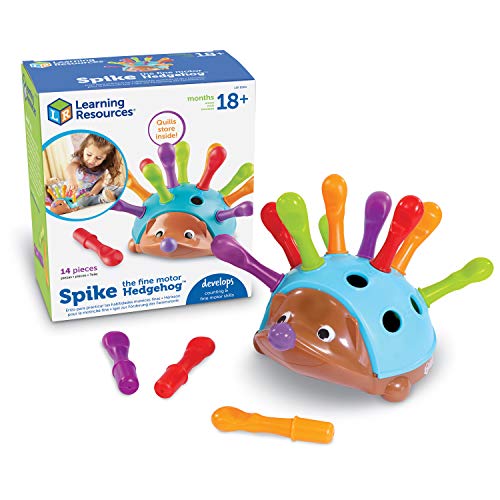
Spike The Fine Motor Hedgehog is designed to grow with a child, starting with simple placement of colorful quills and advancing toward color sorting, counting, and pattern recognition as children reach preschool age. The hedgehog’s back provides a tactile activity that strengthens hand muscles and hand-eye coordination, while the varied colors and textures stimulate sensory exploration. Suitable for ages 18 months and up, this toy can be used in short, focused play sessions or as part of larger early learning activities, helping toddlers practice precise manipulations in a fun, low-pressure format.
BUNMO Pop Tubes – Large 4-Pack

BUNMO Pop Tubes encourage creative, open-ended STEM play. Toddlers can stretch, bend, connect, and shape the tubes to form letters, numbers, spirals, or abstract structures. The satisfying pull-and-pop action supports grip strength, bilateral coordination, and cause-and-effect learning, making it a strong option for developing fine motor skills. The large 4-pack provides ample materials for solo play or collaborative activities with siblings, promoting cooperative play and early spatial thinking in a safe, non-toxic toy set.
Joyreal Montessori Busy Board

The Joyreal Montessori Busy Board provides a compact, portable sensory experience with 10 switches and 19 LED bulbs that respond to touch. The busy board is designed to improve dexterity and hand-eye coordination while offering quiet, screen-free entertainment during travel or routine routines. The LED lights add visual interest, and the wooden construction emphasizes durability for active toddlers. This toy is ideal for developing fine motor skills and tactile exploration without loud or distracting noise, making it suitable for car rides, plane travel, or quiet play at home.
Buying Guide: Key Purchase Considerations
Choosing the right toys for a 15-month-old involves evaluating safety, developmental fit, and engagement. Consider age-appropriateness, materials, and potential choking hazards. Toys should have smooth edges, non-toxic finishes, and sturdy construction. Look for features that promote cause-and-effect learning, fine motor skills, and early language development without being overly complex. Consider whether a toy offers multi-sensory experiences—sound, touch, sight, and motion—to hold a toddler’s attention. Finally, assess portability for travel and the ease of cleaning, as kids at this age tend to explore with hands and mouths.
How To Choose For Your Child: Different Angles
- Developmental Pace: Some toddlers benefit from simple, repetitive action, while others enjoy more varied tasks. Choose toys that provide incremental challenges.
- Safety First: Verify that small parts are secured and that the toy is appropriate for 15-month-olds or older. Check for loose components and choking hazards.
- Educational Value: Look for toys that explicitly support language, motor, or cognitive development, rather than toys that rely solely on passive entertainment.
- Durability And Cleanliness: Ensure materials are easy to wipe down and durable enough to withstand rough handling and occasional drops.
- Portability: For families on the go, select compact or travel-friendly options with minimal setup.
Across these selections, a child’s preferences may vary. Favor toys that encourage active participation, provide safe exploration, and align with daily routines to maximize learning opportunities. Parents and caregivers should balance structured play with open-ended exploration to support holistic development during the toddler years.