Finding engaging, safe, and soothing toys for an eight-year-old on the autism spectrum can be challenging. This guide highlights popular sensory and fidget toys designed to support focus, calmness, and fine motor skills. Each product is selected for its potential to reduce anxiety, promote engagement, and encourage exploratory play while staying appropriate for school and home environments.
The following table provides a quick snapshot of the five chosen products. It can help you compare sensory impact, usability, and portability at a glance.
| Product | Brand | Key Benefit | Use Case |
|---|---|---|---|
| Musical Light Up Wand | LoveHugs | Multi-sensory lights with music | Calming visual stimulation and auditory cue |
| Scientoy Fidget Toy Set | Scientoy | Comprehensive sensory toolkit | Classroom rewards, travel, daily anxiety relief |
| Transformable Fidget Spinners | Gokeey | Shape-changing spinners for tactile play | Fine motor planning and focus |
| BABAMU Spinning Chair | BABAMU | Movement-based sensory seating | Balance, coordination, indoor/outdoor play |
| LESONG Sensory Textured Toys | LESONG | Stretchy, tactile noodles | Overstimulation management and calm-down tool |
Musical Light Up Wand

The LoveHugs Musical Light Up Wand offers a multi-sensory experience designed to soothe and captivate. Its spinning color-changing lights create a kaleidoscopic display, while a gentle musical melody provides an auditory backdrop. This combination can help children regulate sensory input, promote visual tracking, and sustain attention during playtime or calming routines. The wand’s loops of light show can be used as a focal point during transitions, making it a practical option for home, therapy settings, or classroom demonstrations.
Features emphasize soothing, continuous engagement: a mesmerising light show coupled with a soothing melody. The product is compact and portable, enabling quick setup for travel or waiting rooms. Parents often choose this type of toy to provide predictable sensory input that can reduce anxiety and support self-regulation during periods of overwhelm or routine changes.
Scientoy Fidget Toy Set
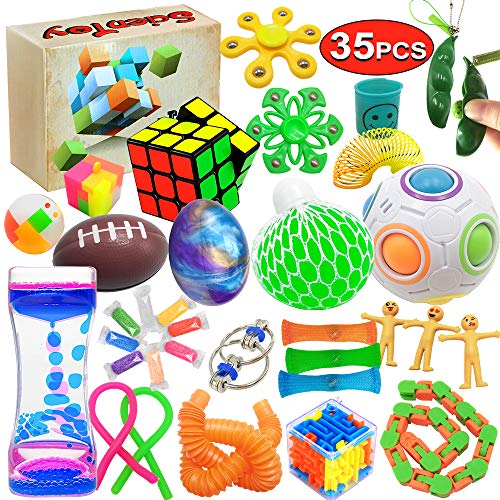
The Scientoy 35-piece sensory toy set provides a broad array of fidget items designed for sensory processing, focus, and stress relief. The package includes a mix of tactile, visual, and manipulable items such as a rainbow magic ball, liquid motion timer, mesh and marble fidgets, foam putties, and constructible shapes. This variety supports repeated sensory stimulation without overloading, offering options for different environments—classrooms, therapy sessions, or quiet corners at home.
Key advantages include safety and quality—materials are non-toxic and meet common toy safety standards. The assortment supports different play methods: squeezing, stretching, flipping, and rotating. For an eight-year-old, this set can act as a flexible toolkit to help with transitioning between tasks, staying seated during work, or taking mindful breaks when anxiety spikes. The variety also makes it suitable for siblings or classmates who may want to join in cooperative play.
Transformable Fidget Spinners

These four-color transformable finger gyros are crafted from eco-friendly ABS plastic and feature six deformable chains that can be shaped into a variety of forms. The spinners include a high-speed central bearing for smooth rotation, which can be fun to manipulate while improving hand-eye coordination and fine motor planning. The variable shapes encourage creative play, making it easier to sustain attention during therapeutic or classroom activities.
For children who benefit from tactile feedback, the ability to morph the toy into different configurations provides a kinetic activity that reduces restlessness. The included deformation options allow kids to experiment with problem-solving, spatial awareness, and executive function as they decide how to configure and spin each piece. In group settings, these can also function as ice-breakers or rewards for task completion, blending sensory input with motivation.
BABAMU Spinning Chair

The BABAMU Spinning Chair is a compact sensory chair designed to support balance and movement during seated tasks. Its rotating action provides vestibular input while children sit, kneel, or lie prone, offering a versatile option for indoor and outdoor play. The design emphasizes durability and anti-slip features to ensure safety, with a weight tolerance suitable for a range of kids.
Spinning has been linked to better self-regulation for some children on the spectrum, and the chair’s portability means it can be used in therapy rooms, classrooms, or living spaces. The chair’s flexible use cases support posture control and multi-sensory exploration, potentially aiding focus during homework, screen time, or conversation-based activities. Parents may appreciate its resilience and the quiet, consistent sensory output it provides.
LESONG Sensory Textured Toys

The LESONG textured stretchable toys blend tactile stimulation with visual appeal. The stretchy noodles glow in the dark and shimmer in light, offering a heightened sensory experience that can be calming and engaging. Each noodle provides a distinct texture and tension, allowing children to explore different grips and pulls. With eight colors and generous length, these stretchy strings are versatile for quiet play, desk work, or group activities.
Stretchy sensory tools like these are commonly used to manage stress, anxiety, or sensory-seeking behavior. They are portable for travel and school use, making them suitable for a child who benefits from hands-on interaction during transitions, independent work, or downtime. As a low-risk option, they pair well with other fidget sets to create a customizable sensory toolkit.
Buying Guide: Key Purchase Considerations
When selecting toys for an eight-year-old on the autism spectrum, consider sensory profile, safety, durability, and practicality. Here are several perspectives to help guide decisions:
- Sensory needs: Some children seek tactile input, others crave auditory or visual stimuli. A mix of fidget, light, and movement-based toys often works well, but tailor to your child’s preferences to avoid overwhelm.
- Safety and materials: Look for non-toxic materials, smooth edges, and durable construction. Check age recommendations and cleaning instructions to maintain hygiene.
- Portability: Toys that travel well (compact wands, small fidget sets, weighted blankets) can ease transitions in cars, airplanes, or waiting rooms.
- Durability and maintenance: Reusable items with minimal parts reduce choking hazards and breakage. Consider replacing small pieces if frequently dropped or bent.
- Educational value: Some toys promote fine motor skills, hand-eye coordination, or problem solving, which can support school tasks alongside sensory goals.
- Cost and storage: A balanced selection across price points helps build a versatile kit without clutter. Plan for a dedicated storage space to keep items organized.
- Customization: Toys that can be configured or combined (like transformable spinners) offer ongoing novelty, which can sustain engagement over weeks or months.
- Social aspects: Provide options for shared play with siblings or peers to foster social interaction and cooperative skills.
In sum, the best selections balance calming sensory input with opportunities for active engagement. For an eight-year-old, a mix of visual, auditory, and tactile toys—paired with a stable routine and clear expectations—can support focus, self-regulation, and enjoyable exploration.