Finding effective, engaging tools to help kids with ADHD manage attention, anxiety, and sensory needs can be challenging. This article highlights carefully chosen toys that are designed to calm, focus, and soothe. Each option listed below emphasizes safety, durability, and multi-sensory engagement, making them suitable for home, school, and therapy settings. Explore five top picks that cater to different age ranges and sensory preferences, with guidance on how to use them effectively in daily routines.
| Product | Brand | Key Benefit | Best Use |
|---|---|---|---|
| Scientoy Fidget Toy Set, 35 Pcs | Scientoy | Comprehensive sensory variety with safe materials | Classroom rewards, therapy sessions |
| JOYIN 4-Pack Fidget Tubes | JOYIN | Visual and tactile calm, easy to manipulate | Quiet time, classroom calm corners |
| Flybar My First Foam Pogo Jumper | Flybar | Gross motor exercise and balance | Indoor and outdoor play |
| Transformable Fidget Spinners (4 Pcs) | Gokeey | Shape-shifting play and focus | Therapeutic and classroom use |
| Pushpeel Sensory Activity Board | Pushpeel | Screen-free, portable cognitive engagement | Travel, waiting rooms, public spaces |
The following sections describe each product in detail, outlining why it can be a practical tool for children with ADHD and related sensory needs. Each entry includes usage ideas, safety notes, and how to integrate the toy into routines to improve focus, reduce stress, and support emotional regulation.
Scientoy Fidget Toy Set: 35 Pieces For Sensory Kids
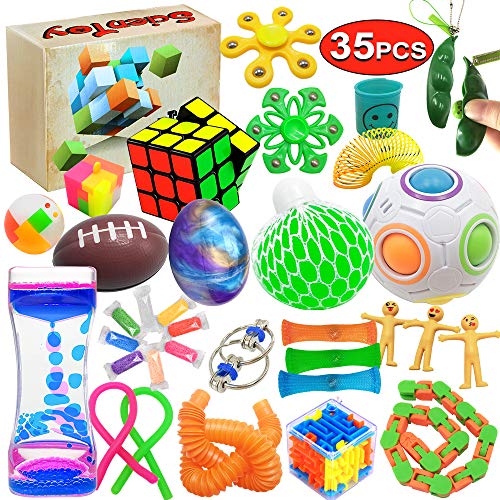
The Scientoy Fidget Toy Set provides a broad spectrum of tactile experiences in one box. It includes items such as a rainbow magic ball, liquid motion timer, squeeze grape ball, maze puzzle, mesh and marble toys, foam putties, a pop tube, a squeeze foam football, and slime putty. Made from ABS and other child-safe materials, the set is designed to meet common toy safety standards. For children with ADHD, rotating through different textures and modes of interaction can help sustain attention and ease anxiety. The gift-ready packaging also makes it a convenient reward option for teachers and parents. Use in short, structured sessions: give a child 5–10 minutes with a few options, then switch to a quieter activity to close the session.
Safety and age considerations are important. While the set is designed for broad use, supervise younger children during initial play to ensure small parts aren’t swallowed and to help model safe handling. The variety supports focus by offering frequent micro-tidgets that can be used as flexible timers during tasks, study breaks, or classroom transitions. In classrooms, rotate toys to break monotony and keep engagement high without causing overstimulation.
JOYIN 4-Pack Fidget Tubes: Calming Sensory Toys

JOYIN’s Fidget Tubes offer a compact, visually engaging way to support self-regulation. The tubes provide tactile feedback and sensory stimulation that can help children learn to calm down, focus, and regulate their emotions. They’re suitable for quiet corners in classrooms, therapy sessions, and home use. The tubes promote fine motor skills through twisting, rolling, and manipulating the tubes, while their bright colors can aid visual tracking and attention. For effective use, pair each tube with a simple breathing or counting routine to create predictable sensory breaks during school tasks or transitions.
These tubes are designed to be durable and safe for children, with cleaning instructions that support reuse in school settings. They are particularly beneficial for children who benefit from structured, repetitive sensory input to manage anxiety and maintain attention during tasks or group activities.
Flybar My First Foam Pogo Jumper

The Flybar My First Foam Pogo Jumper is a soft, safe option for building balance, coordination, and gross motor skills. Its foam construction minimizes impact while delivering a satisfying bounce that can reduce restlessness in a controlled way. The rhythmic jumping and the audible squeak provide sensory feedback that some children find comforting, supporting focus during play and learning activities. Suitable for ages 3 and up, it encourages active movement—an important outlet for children with high energy levels. Use as a structured physical break between seated tasks to help reset attention.
Indoor and outdoor versatility makes it a practical choice for homes, classrooms, and playgrounds. Monitor weight limits and space to ensure safe use, and incorporate short, supervised sessions to prevent fatigue while maximizing beneficial physical engagement.
Transformable Fidget Spinners: Shape-Shift Fun

Gokeey’s Transformable Fidget Spinners bring hands-on creativity to the fidget experience. Each set includes four colors with deformable chains and multiple shapes that can be reassembled into figures like robots or even a phone holder. This dynamic shape-changing aspect can engage children with ADHD by offering varied entry points into focus, encouraging problem-solving, and boosting fine motor coordination. The spinners include a high-speed bearing for smooth rotations that can sustain attention for longer play sessions. They’re suitable for therapy, classroom activities, and personal downtime.
Best use is as short, task-linked activities: assign a specific creative shape to accompany a 5-minute focus interval, then rotate to a new shape. The ability to alter the toy’s form supports cognitive flexibility and sustained attention without overwhelming the user.
Fidget Classroom Must Have Sensory Toys (6 Pack)

UIIOPJIOM’s 6-pack features sensory stones designed for quiet classroom use. Each stone offers a distinct texture and color, enabling tactile exploration without noise or mess. These tools support students with autism, ADHD, and anxiety by offering a physical outlet that can be squeezed, rubbed, or stroked during lessons, potentially reducing disruptive behaviors and improving engagement. The non-toxic silicone material is easy to clean and travel-friendly, making these stones versatile for backpacks, purses, and counselor offices. Use them as quick sensory breaks between tasks or as calming rewards for completed goals.
Because they’re designed for minimal disruption, these stones fit in pocket-sized formats and can be used discreetly during tests, lectures, or tutoring sessions. They also serve well as sensory check-ins at the start of a class period to help students regulate their energy levels before learning activities begin.
Schylling NeeDoh Nice Cube

The Schylling NeeDoh Nice Cube is a compact sensory squeeze toy with a 2.25-inch cube form. Its squish-and-stretch texture provides immediate tactile feedback and can be a calming tool during transitions or moments of heightened anxiety. The simple, sturdy design makes it well-suited for quick sensory pauses in classrooms, therapy rooms, or at home. Because it’s small and portable, it’s easy to incorporate into daily routines as a discreet anti-stress tool that supports focus and emotional regulation during tasks requiring attention.
When introducing NeeDoh, teachers and caregivers can pair it with a quick breathing exercise or a countdown to help children associate squeezing with a calm, controllable action. It can also serve as a preferred choice for students who respond well to hands-on, solitary activities during quiet times or independent work.
Pushpeel Sensory Activity Board

The Pushpeel Sensory Activity Board is a compact, screen-free tool designed for calming, focus, and cognitive development. Its silicone surface offers silent, tactile engagement through a variety of strings and textures. The travel bag adds portability, making it suitable for planes, cars, or waiting rooms. The design supports children and adults dealing with ADHD, ADD, autism, or OCD by encouraging open-ended exploration and problem-solving in a low-disruption format. Use it for quiet time, as a classroom reward, or during therapy sessions to reinforce calm, controlled play.
Because it emphasizes Montessori-inspired, hands-on learning, the board can also support cognitive development and fine motor skills. Consider pairing it with short guided tasks that connect tactile exploration with task completion, helping learners transition between activities with less anxiety and more focus.
Buying Guide: Key Purchase Considerations for ADHD and Sensory Needs
When selecting toys for kids with ADHD or related sensory challenges, consider the following factors to maximize effectiveness and safety:
- Age and safety: Verify age recommendations and safety standards. Look for non-toxic materials, smooth edges, and durability designed for frequent handling.
- Sensory modality: Choose a mix of tactile, visual, auditory, and proprioceptive stimuli. A varied toolkit supports broad sensory processing needs and can prevent overstimulation by offering alternatives.
- Texture and resistance: Toys with different textures and levels of resistance (soft putties, firm squeeze objects, smooth spinners) can help regulate arousal levels and sustain attention during tasks.
- Portability and availability: Portable tools are useful for classrooms, travel, and therapy sessions. Check whether the items are easy to clean and maintain in daily environments.
- Structure vs. open-ended play: Some children benefit from guided routines and time-bound activities, while others prefer open-ended exploration. A mix allows adaptability across settings.
- Washability and durability: In school settings, toys must withstand frequent handling and cleaning. Materials should be easy to sanitize without degrading over time.
- Discreet use: For environments like classrooms or offices, consider toys that can be used quietly and without drawing attention while still providing sensory input.
- Therapeutic alignment: Some products align with occupational therapy goals, such as improving fine motor control, hand-eye coordination, and self-regulation strategies. Use as complements to professional guidance where appropriate.